
B. R. Ambedkar Biography Quotes 21 Report mistakes
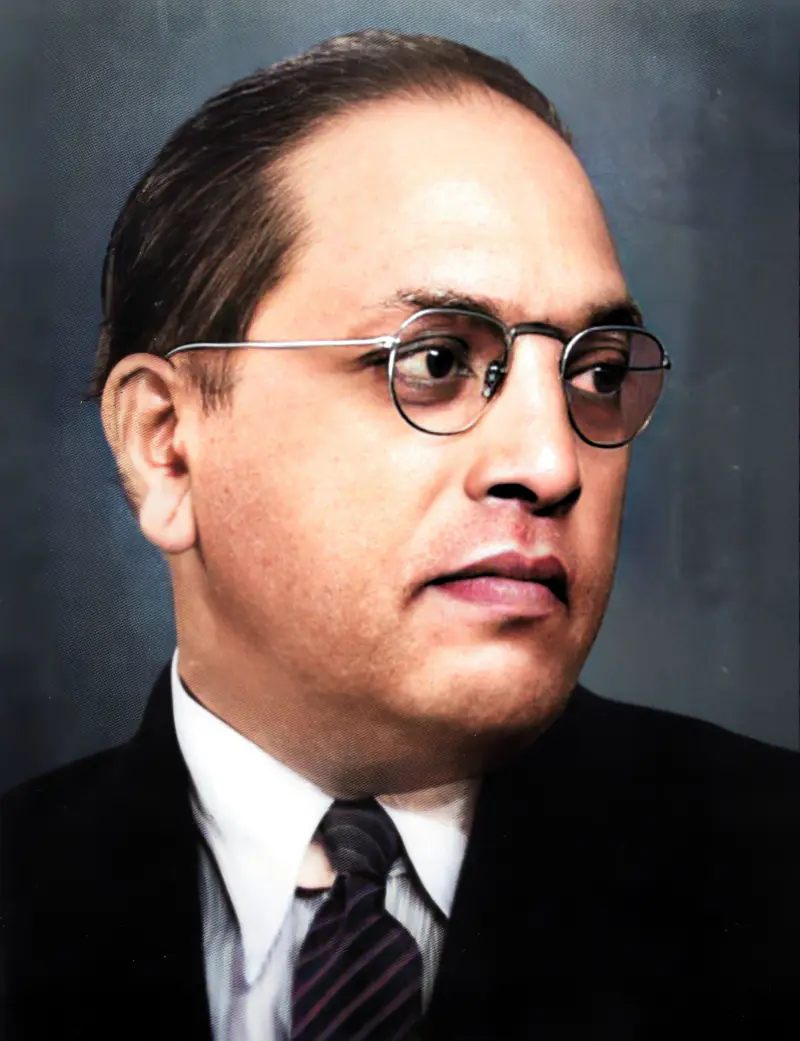
| 21 Quotes | |
| Born as | Bhimrao Ramji Ambedkar |
| Occup. | Politician |
| From | India |
| Spouse | Ramabai Ambedkar |
| Born | April 14, 1891 Mhow, Madhya Pradesh, India |
| Died | December 6, 1956 New Delhi, India |
| Cause | Natural Causes |
| Aged | 65 years |
Bhimrao Ramji Ambedkar was born on 14 April 1891 in Mhow, in the Central Provinces of British India (now Madhya Pradesh), into a Mahar family that faced systematic exclusion under the caste order. His father, Ramji Maloji Sakpal, served in the British Indian Army, and his mother, Bhimabai, nurtured his early love of learning. Despite exceptional talent, Ambedkar encountered segregation in school: he was often made to sit apart and denied access to basic amenities. In 1906 he married Ramabai, who remained a steady presence through years of hardship until her death in 1935. The experience of social humiliation and familial resilience shaped the moral urgency that later defined his public life.
Education and Intellectual Formation
Selected for higher study by reform-minded patrons, Ambedkar attended Elphinstone High School and Elphinstone College in Bombay. A scholarship from Sayajirao Gaekwad III, the Maharaja of Baroda, took him to Columbia University in New York in 1913. At Columbia he studied economics, history, sociology, politics, and philosophy. He was deeply influenced by the pragmatism of John Dewey and the public finance theories of Edwin R. A. Seligman. He moved to London to study at the London School of Economics and at Gray's Inn, training as an economist and a barrister. His early scholarly work explored currency and provincial finance, culminating in studies such as The Problem of the Rupee. Ambedkar's international exposure, including friendships and exchanges with scholars across disciplines, gave him comparative tools that he later applied to Indian social questions.
Early Career and Social Mobilization
Returning to India to fulfill his obligation to Baroda State, Ambedkar entered government service but soon left after facing blatant caste prejudice. He taught at Sydenham College in Bombay and later at Government Law College, where he also served as principal. In 1924 he founded the Bahishkrit Hitakarini Sabha to promote education and socio-political rights for the so-called Untouchables, and in 1927 he led the Mahad Satyagraha asserting the right to draw water from the Chavdar tank. Campaigns at Mahad and later at Nashik's Kalaram temple dramatized the everyday violence of exclusion and transformed social reform into mass politics.
National Politics, Gandhi, and the Poona Pact
Ambedkar emerged as a principal representative of the "Depressed Classes" at the Round Table Conferences in London (1930, 1932). There he argued that without separate electorates and political safeguards, the oppressed would remain voiceless under majority domination. British Prime Minister Ramsay MacDonald's Communal Award granted separate electorates, which Mohandas K. Gandhi opposed, leading to his fast in prison. The crisis ended with the Poona Pact of 1932, which replaced separate electorates with joint electorates and increased reserved seats. Ambedkar signed under intense moral and political pressure, later judging the Pact a compromise that blunted autonomous representation. He nonetheless used the new framework to build institutional protections.
Party-Building, Labor, and Constitutional Thought
Ambedkar founded the Independent Labour Party in 1936 to connect caste emancipation with workers' rights and agrarian reform, collaborating with socialists and trade unionists such as N. M. Joshi on labor questions. He served in the Bombay Legislative Council and produced policy analyses on land ceilings, industrial relations, and civil liberties. During these years he wrote Annihilation of Caste, a searing critique of the religious foundations of the caste order, as well as texts like Thoughts on Pakistan (later Pakistan or the Partition of India), States and Minorities, Who Were the Shudras?, and The Untouchables. He corresponded with international thinkers, including W. E. B. Du Bois, exploring parallels and contrasts between caste and race.
Constitution-Making and Governance
In 1946 Ambedkar entered the Constituent Assembly and was appointed chairman of its Drafting Committee in 1947. Working with colleagues such as B. N. Rau, Alladi Krishnaswamy Ayyar, K. M. Munshi, Rajendra Prasad, and Jawaharlal Nehru, he steered debate toward a rights-based constitutional order. He argued for equal citizenship, universal adult franchise, protection of civil liberties, and an independent judiciary. The Constitution of India abolished untouchability (Article 17), enabled affirmative measures for historically oppressed groups, and balanced federalism with a strong center. Ambedkar served as the country's first Law and Justice Minister in Nehru's cabinet, helping to establish the institutional grammar of the new republic.
Resignation and the Hindu Code Bill
Ambedkar's effort to reform Hindu personal law through a comprehensive Hindu Code Bill aimed to secure women's equality in marriage, inheritance, and guardianship. Facing stiff resistance from conservative legislators and delays in government scheduling, he resigned from the cabinet in 1951. The core of these reforms was enacted in stages later in the decade, but Ambedkar regarded the lost momentum as emblematic of deeper social conservatism. Outside the cabinet, he continued to serve in the Rajya Sabha and to advocate for electoral reforms, economic planning focused on the poor, and safeguards for civil liberties.
Religion, Buddhism, and Ethical Vision
From the mid-1930s Ambedkar publicly declared that he would not die a Hindu, searching for a religious-philosophical basis for dignity and fraternity. After long study, he embraced Buddhism as a rational, ethical path. On 14 October 1956 in Nagpur he converted to Buddhism alongside a vast gathering of followers, guided by Bhante Chandramani. He articulated his interpretation in The Buddha and His Dhamma, emphasizing social morality, non-hierarchy, and a community anchored in equality rather than ritual. His second wife, Savita Ambedkar (Dr. Sharada Kabir), supported him through years of ill health, and his son Yashwant helped steward the movement's institutional legacy.
Final Years and Passing
Ambedkar struggled with chronic illness but maintained a punishing schedule of writing and public engagement. He worked on writings in economics, constitutionalism, and religion, and pursued campaigns for irrigation, industrialization, and land reform as engines of social transformation. He passed away in Delhi on 6 December 1956, only weeks after his conversion. His cremation site at Dadar, now known as Chaitya Bhoomi, became a place of pilgrimage for millions who saw in his life a route from subjugation to citizenship.
Legacy
Ambedkar's legacy spans law, economics, politics, and moral philosophy. He reimagined democracy as a way of life grounded in liberty, equality, and fraternity, insisting that social democracy must underwrite political democracy. His debates with Gandhi reshaped the vocabulary of rights and representation, even where they disagreed. As a lawgiver he helped craft institutions that guard minorities and extend opportunities; as a social reformer he exposed the everyday tyranny of caste; as a thinker he offered an ethics of reasoned compassion. Generations of activists, scholars, and public leaders in India and beyond continue to draw on his work to confront inequality and to widen the ambit of human dignity.
Our collection contains 21 quotes who is written by R. Ambedkar, under the main topics: Ethics & Morality - Justice - Meaning of Life - Freedom - Equality.
Other people realated to R. Ambedkar: Mahatma Gandhi (Leader), Arundhati Roy (Novelist)
Source / external links