
Claud Cockburn Biography Quotes 7 Report mistakes
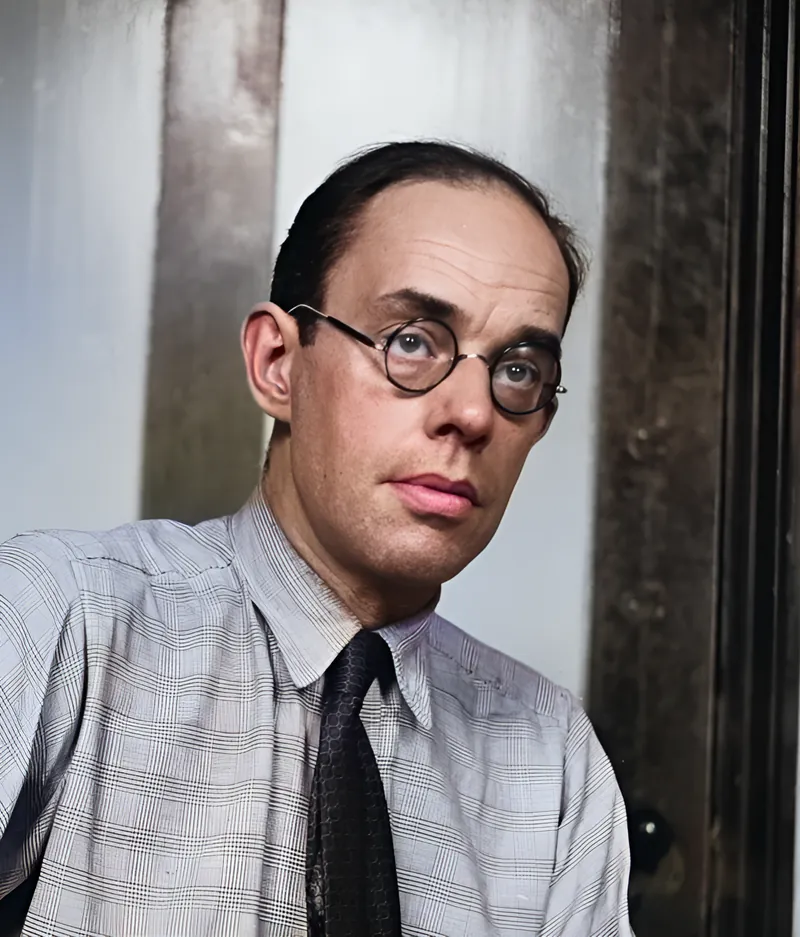
| 7 Quotes | |
| Born as | Francis Claud Cockburn |
| Occup. | Journalist |
| From | United Kingdom |
| Born | April 12, 1904 Peking, Qing Dynasty |
| Died | December 15, 1981 Andalusia, Spain |
| Aged | 77 years |
Francis Claud Cockburn was born on 12 April 1904 in Peking (now Beijing), the son of a British diplomat. He grew up between postings abroad and schools in Britain, absorbing a cosmopolitan outlook and a sharp ear for language that would later define his prose. Descended from a notable Scottish family that included the jurist Lord Cockburn, he inherited a strong sense of public life and its obligations. By his early twenties he was committed to journalism, a field that offered both a livelihood and a platform for his fierce curiosity about power, secrecy, and the way official narratives shape the lives of ordinary people.
Entering Journalism
Cockburn joined The Times in the late 1920s, quickly distinguishing himself as a talented reporter and editor. He served as a correspondent in New York and on the European continent, where the rise of authoritarianism sharpened his political focus. Although the paper operated under a restrained, establishment voice, he developed a more combative style that questioned official sources and looked for the motives behind policy. Disillusioned with the limits of big-paper orthodoxy, he left The Times and set up independently.
The Week and the Politics of the 1930s
In 1933 he founded The Week, a privately circulated intelligence bulletin that drew on a web of informants in Whitehall, Fleet Street, diplomatic circles, and European capitals. The Week specialized in context and inference: it was less about headlines and more about patterns and the networks behind them. Cockburn wrote about appeasement, the rearmament of Germany, and the coteries of influence around figures such as Nancy Astor, helping to popularize the idea that a pro-German elite, often summarized as the Cliveden Set, had the ear of government. Admirers saw The Week as a bracing antidote to complacency; detractors regarded it as tendentious and irresponsible. Its sharp tone and leaks attracted official displeasure, and wartime pressures eventually forced it to close in the early 1940s.
Spain, Party Politics, and Controversy
Cockburn joined the Communist Party of Great Britain during the decade and wrote for the Daily Worker under the pseudonym Frank Pitcairn. As a correspondent in the Spanish Civil War, he reported from the Republican side at a time when antifascist unity often masked bitter disputes on the left. His dispatches emphasized discipline and the necessity of defeating Franco, a stance that drew criticism from anti-Stalinist socialists and anarchists. George Orwell, who fought in Spain and later chronicled his experience, accused the Daily Worker and writers like Cockburn of suppressing uncomfortable truths in the service of a party line. Cockburn rejected such charges, insisting that the immediate fight against fascism mattered more than internal polemics. The episode left a lasting mark on his reputation: he was admired for courage and clarity of purpose, and attacked for partisanship.
War and Postwar Years
During the Second World War and after, Cockburn continued to write widely, refining a voice that mixed wit, skepticism, and a relish for puncturing the pretensions of the powerful. He settled in Ireland after the war, seeking a quieter base from which to write. There he continued journalism and turned to fiction. Under the pseudonym James Helvick he published the novel Beat the Devil, a sardonic tale of adventurers and schemes that was adapted for the screen by John Huston. The 1953 film, with a screenplay associated with Huston and Truman Capote and a cast led by Humphrey Bogart and Jennifer Jones, gave Cockburn a curious, enduring footnote in cinema history.
Personal Life and Family
Cockburn's private life intertwined with the literary and political worlds he inhabited. He had a relationship with Jean Ross, the journalist and activist often cited as the real-life inspiration for Christopher Isherwood's character Sally Bowles, and their daughter, Sarah, became the crime novelist known as Sarah Caudwell. He later married Patricia Cockburn, a gifted writer and artist, and the couple made a home in Ireland that doubled as a workshop for writing and conversation. They raised three sons who each became distinguished journalists: Alexander Cockburn, noted for his acerbic columns and later work in the United States; Andrew Cockburn, a writer and documentary producer with a focus on national security; and Patrick Cockburn, a leading correspondent on the Middle East. The household's debates, manuscripts, and visitors linked generations of writers and reporters, and Patricia's own creative career added a second strand to the family's cultural life.
Style, Themes, and Influence
Cockburn's writing blended satire with a detective's feel for motive and opportunity. He favored short, sharp sentences, used irony as a scalpel, and believed that the best journalism followed the money and the private promise rather than the public statement. He prized sources but distrusted official briefings, a posture forged in the volatile 1930s and carried through the Cold War. The Week exemplified his method: he sought to connect dots long before such an approach became a staple of investigative reporting. Even critics conceded his knack for sensing where events were heading, and admirers credited him with challenging the air of inevitability that often hangs about government policy.
Later Writings and Memoir
From his base in Ireland he produced columns, commentary, and a series of memoirs that combined reportage with personal history. In them he revisited the newsroom battles of interwar London, the clandestine feel of The Week, and the fields and alleys of wartime Europe. The books showed him at ease with self-critique, admitting to misjudgments while defending the central conviction that journalism should worry those in charge. His recollections of editors, diplomats, and literary contemporaries preserved a gallery of portraits from a turbulent century without lapsing into score-settling. They also offered a record of how a reporter made a life at the edge of politics and literature without belonging entirely to either.
Reputation and Legacy
Cockburn died in Ireland on 15 December 1981. By then he had become a reference point whenever British journalism discussed the boundaries between advocacy and reporting, or the proper stance of a writer amid rising authoritarianism. The controversies around his Spanish Civil War work never entirely faded, but neither did the influence of The Week on later investigative newsletters and columns. Through the careers of Alexander, Andrew, Patrick, and Sarah, his sensibility continued to ripple across newspapers, magazines, and books. Colleagues remembered his conversation as much as his copy: quick, sly, and anchored by a moral suspicion of euphemism and secrecy. For readers, he remains the figure who, in a decade when it was unfashionable, insisted that the real story was rarely the official one, and that a journalist's job was to find the threads and pull.
Our collection contains 7 quotes who is written by Claud, under the main topics: Witty One-Liners - Dark Humor - War - Career.
Other people realated to Claud: Olivia Wilde (Actress)
Claud Cockburn Famous Works
- 1956 A Discord of Trumpets (Memoir)
- 1951 Beat the Devil (Novel)
- 1951 Union Power (Non-fiction)
- 1950 Crossing the Line (Autobiography)
Source / external links