
E. Stanley Jones Biography Quotes 26 Report mistakes
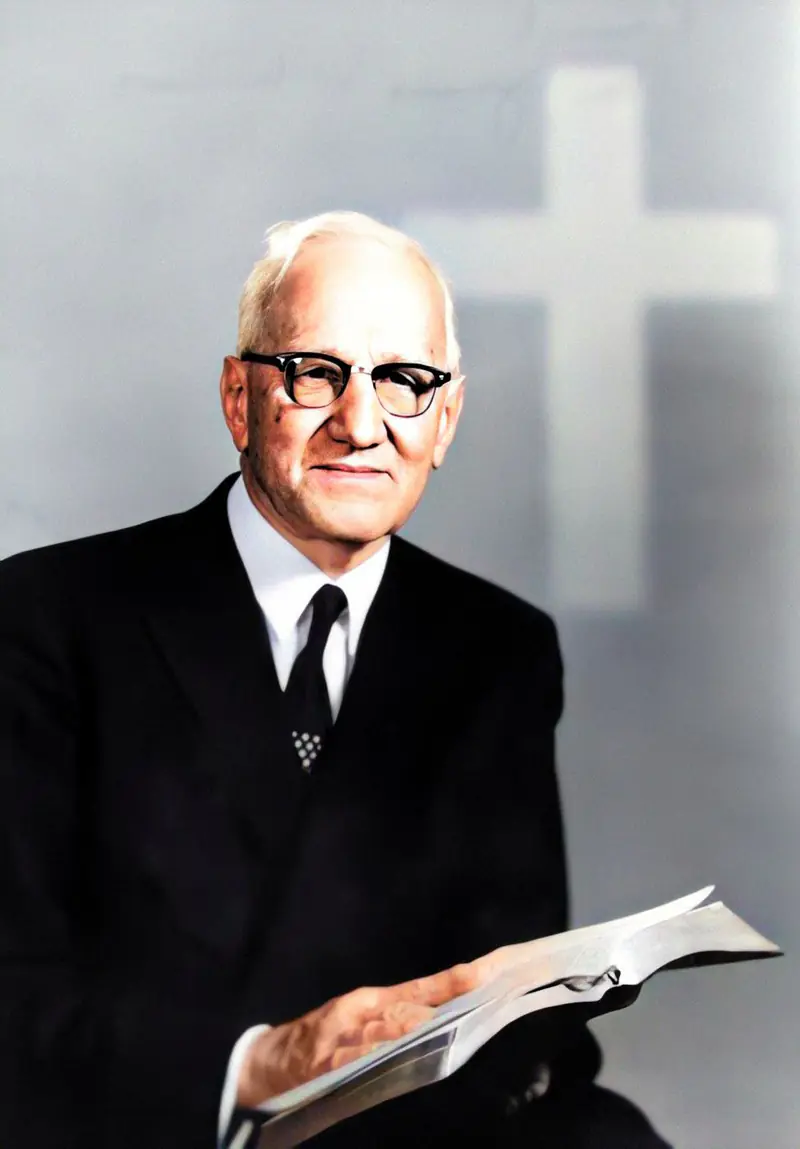
| 26 Quotes | |
| Born as | Eli Stanley Jones |
| Occup. | Theologian |
| From | USA |
| Born | December 18, 1884 Baltimore, Maryland, USA |
| Died | January 25, 1973 Mumbai, India |
| Aged | 88 years |
Eli Stanley Jones was born on December 18, 1884, in Baltimore, Maryland, into a Methodist household shaped by late-19th-century American Protestant confidence and the era's expanding missionary imagination. The United States was industrializing, cities were swelling, and churches were debating modern science, social reform, and the meaning of evangelism in a changing world. Jones grew up with the practical piety of Methodist revivalism - prayer meetings, testimony, and a conviction that faith should produce visible moral courage.
That early environment also gave him a lifelong tension: the warmth of inherited religion versus the demand for personal, decisive faith. He carried an acute awareness of how easily "Christian culture" can mimic conversion, and he learned to read the inner weather of the soul - fear, pride, and the desire to matter - as seriously as doctrine. In later decades, as he became famous for public addresses and private counsel, friends noticed the same boyhood trait: a restless insistence that religion must be tested in experience, not merely repeated as tradition.
Education and Formative Influences
Jones trained in Methodism's intellectual and devotional disciplines at Asbury College in Wilmore, Kentucky, and then at Asbury Theological Seminary, absorbing both evangelical preaching and a growing interest in psychology and comparative religion. The Student Volunteer Movement and the broader Protestant missionary enterprise framed his sense of calling, while the ferment of the early 20th century - nationalism in Asia, the rise of mass movements, and Western colonial pressure - pushed him toward a faith that could meet other worldviews without panic or contempt.
Career, Major Works, and Turning Points
Commissioned as a Methodist missionary to India in 1907, Jones spent decades traveling widely across the subcontinent, speaking in universities, public halls, and interfaith settings, often in dialogue with Hindu and Muslim leaders as India moved toward independence. He became known for presenting Jesus as a living reality rather than a Western possession, and for translating conversion into the language of psychological integration and social responsibility. Among his best-known books are The Christ of the Indian Road (1925), The Way (1930), and Victorious Living (1936), works that made him a transatlantic voice in the interwar years and beyond; later, he founded the Christian Ashram movement to model disciplined community, prayer, and candid conversation across cultural lines. World wars, decolonization, and the Cold War all formed the backdrop, but his major turning point was consistent: he chose persuasion over coercion and spiritual depth over partisan certainty, even when critics on both sides wanted simpler slogans.
Philosophy, Style, and Themes
Jones wrote and spoke with a missionary's urgency and a counselor's diagnostic eye. He treated faith as a whole-person reorientation, not a tribal badge, and he was unsparing about religious complacency. "Being born in a Christian home does not make you a Christian". That sentence was not only theological; it revealed his psychology - a man wary of the ego's ability to hide behind inherited respectability. For Jones, the self had to be unmasked before it could be remade, and the decisive moment of conversion had to become a sustained pattern of surrendered living.
His style blended plain speech, case-study realism, and a disciplined focus on interior motives. He insisted that spiritual life includes reflexes as well as decisions: "The conscious mind determines the actions, the unconscious mind determines the reactions; and the reactions are just as important as the actions". The statement shows why he appealed to modern listeners wrestling with anxiety and divided selves - he gave them a map for why they failed even when they "meant well". Prayer, in his framing, was not a technique but a total posture of availability: "Prayer means that the total you is praying. Your whole being reaches out to God, and God reaches down to you". Behind the warmth is a rigorous demand - that the believer bring not only words, but the whole interior life, under the gravity of God.
Legacy and Influence
E. Stanley Jones died on January 25, 1973, having become one of the 20th century's most influential Methodist interpreters of Christianity to a pluralistic world. He helped prepare Western Protestants for interfaith encounter without surrendering evangelistic conviction, and he anticipated later emphases on holistic spirituality, psychological awareness, and community disciplines. His books remained staples in devotional and pastoral settings, while the Christian Ashram ideal continued to inspire experiments in renewal, dialogue, and simplicity. Above all, his enduring influence lies in the moral seriousness with which he treated the inner life: conversion as a real change of relationship, prayer as total engagement, and witness as love offered with clarity rather than domination.
Our collection contains 26 quotes who is written by Stanley Jones, under the main topics: Ethics & Morality - Wisdom - Faith - Honesty & Integrity - Learning from Mistakes.
Other people realated to Stanley Jones: Sherwood Eddy (Author)
Source / external links