
Hideki Tojo Biography Quotes 22 Report mistakes
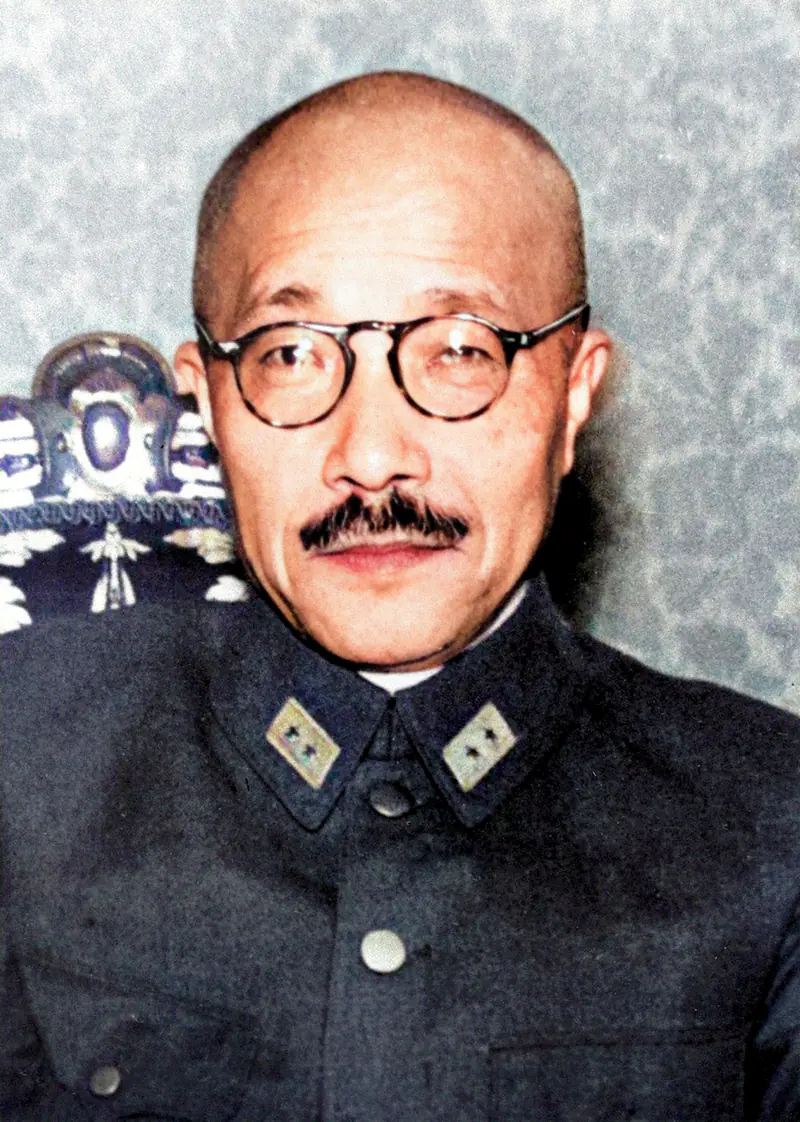
| 22 Quotes | |
| Born as | Hideki Tōjō |
| Occup. | Soldier |
| From | Japan |
| Born | December 30, 1884 Hamachi district of Tokyo, Empire of Japan |
| Died | December 23, 1948 Tokyo, occupied Japan |
| Cause | Executed by hanging |
| Aged | 63 years |
Hideki Tojo (Hideki Tojo), born December 30, 1884, in the Kojimachi district of Tokyo, came of age in a Japan that had turned modernization into a national creed and military service into a ladder of status. His father, Hidenori Tojo, was an army officer, and the household expectation was not merely patriotism but professional competence - the idea that the state endured through disciplined men who could translate policy into orders and orders into action.
Contemporaries and later observers often noted Tojo's severe, workmanlike demeanor: not charismatic, not flamboyant, but relentless. That temperament suited an era when the Imperial Japanese Army prized obedience and method over improvisation. It also shaped his inner life - a man who treated ethics as duty, emotions as noise, and personal ambition as inseparable from institutional success, even when the institution steered toward catastrophe.
Education and Formative Influences
Tojo entered the Imperial Japanese Army Academy and graduated in 1905, just after the Russo-Japanese War had validated Japan's belief that willpower and organization could overturn material disadvantage. He later attended the Army War College, absorbing a culture that fused Prussian-style staff logic with a Japanese ethos of loyalty to the emperor, and he married Katsuko Ito in 1909, building a conventional family life that contrasted with the hard edge of his public role. His early postings and staff training taught him to think in mobilization tables, police powers, and national "total war" readiness - an orientation that would later make him effective in government and unforgiving in dissent.
Career, Major Works, and Turning Points
Rising through the interwar army, Tojo became known as a strict administrator and an advocate of domestic control in service of national strength; he served as military attache in Switzerland and Germany (1919-1922), gaining firsthand exposure to European postwar instability, and later held key staff roles in Manchuria as Japan consolidated its position after the 1931 Mukden Incident. In 1938 he became Vice Minister of War, in 1940 Minister of War under Fumimaro Konoe, and in October 1941 he was appointed Prime Minister while retaining the War Ministry - a concentration of authority that made him the face of Japan's decision to go to war with the United States and Britain. After early victories gave way to attrition, he increasingly micromanaged, but strategic reality outpaced bureaucratic control; blamed for mounting defeats, he resigned in July 1944. Arrested after Japan's surrender, he attempted suicide, survived, and was tried by the International Military Tribunal for the Far East; he was convicted and hanged on December 23, 1948.
Philosophy, Style, and Themes
Tojo's governing style was that of a staff officer elevated into political crisis: he sought coherence, centralized authority, and moral certainty, and he treated ambiguity as weakness. He believed national survival required a mobilized society - tight policing, rationing, ideological unity - and he interpreted diplomacy largely through the lens of coercive leverage. This was not merely personal rigidity but a symptom of his milieu: an army that increasingly believed history rewarded states willing to preempt, endure hardship, and subordinate pluralism to a single strategic story.
Yet Tojo's postwar explanations reveal a psychological pattern of justification that illuminates how he lived with his own decisions. He framed conflict as an almost natural eruption under pressure - "It goes without saying that when survival is threatened, struggles erupt between peoples, and unfortunate wars between nations result". - a sentence that shifts agency from leaders to fate and transforms policy into inevitability. He also defended the Pearl Harbor decision as careful calculation under uncertainty, even bordering on providence: "When reflecting upon it today, that the Pearl Harbor attack should have succeeded in achieving surprise seems a blessing from Heaven". The language is telling: it blends operational realism with quasi-religious relief, as if the moral burden of initiating war could be softened by the idea that success was granted rather than seized. Finally, Tojo cast himself as a spokesman for universal standards even while defending a militarized empire: "Justice has nothing to do with victor nations and vanquished nations, but must be a moral standard that all the world's peoples can agree to". In that claim, one can hear both genuine resentment toward "victor's justice" and a deeper need to believe that duty-driven action remains righteous even when history condemns it.
Legacy and Influence
Tojo endures as a symbol of Japan's wartime state - the disciplined bureaucrat-soldier whose administrative competence helped convert regional aggression into total war, and whose tenure as prime minister made him the most identifiable architect of Japan's final break with the Western powers. In Japanese memory he is contested: reviled as a principal war leader and invoked by some as a scapegoat for broader institutional failures, with debates reignited whenever wartime responsibility, the emperor's role, or Yasukuni Shrine becomes political. Internationally, his name anchors the narrative of militarist Japan, and his trial and execution remain central to arguments about postwar justice. His life offers a sobering case study in how duty, organizational loyalty, and a survivalist worldview can narrow moral vision until strategy and conscience collapse into the same command: obey, endure, and prevail, whatever the cost.
Our collection contains 22 quotes who is written by Hideki, under the main topics: Justice - Military & Soldier - Equality - Peace - Human Rights.
Source / external links