
Maya Lin Biography Quotes 44 Report mistakes
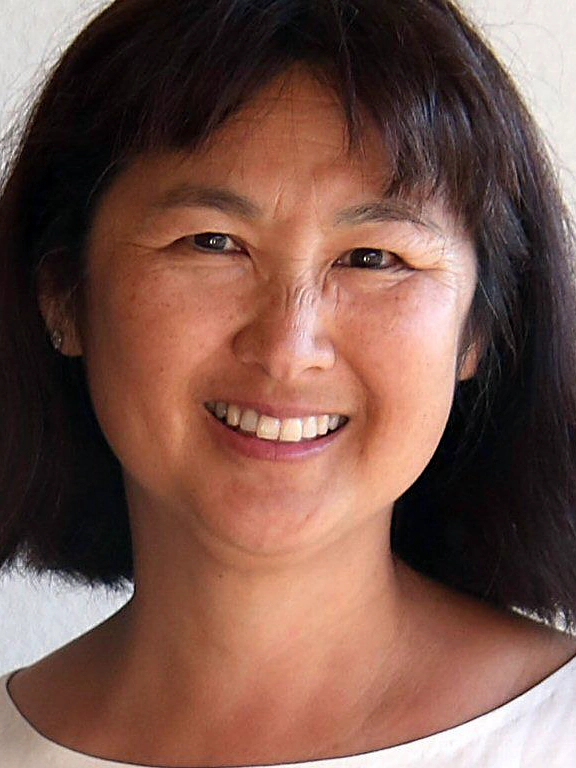
Attr: thoughtco.com
| 44 Quotes | |
| Born as | Maya Ying Lin |
| Occup. | Architect |
| From | USA |
| Born | October 5, 1959 Athens, Ohio, USA |
| Age | 66 years |
| Cite | |
Citation Formats
APA Style (7th ed.)
Maya lin biography, facts and quotes. (2026, March 12). FixQuotes. https://fixquotes.com/authors/maya-lin/
Chicago Style
"Maya Lin biography, facts and quotes." FixQuotes. March 12, 2026. https://fixquotes.com/authors/maya-lin/.
MLA Style (9th ed.)
"Maya Lin biography, facts and quotes." FixQuotes, 12 Mar. 2026, https://fixquotes.com/authors/maya-lin/. Accessed 4 Apr. 2026.
Early Life and Background
Maya Ying Lin was born on October 5, 1959, in Athens, Ohio, a university town whose rhythms of teaching, making, and debate would quietly shape her sense that ideas could become objects. The child of Chinese immigrants who had fled the upheavals of mid-20th-century China, she grew up inside a household where art and scholarship were not hobbies but daily labor - her mother, Julia Chang Lin, a poet and professor of literature, and her father, Henry Lin, a ceramist who became dean of the College of Fine Arts at Ohio University. That combination of exile, intellectual seriousness, and craft gave her an early model of identity built through work rather than spectacle.Athens also gave Lin a formative solitude. Away from coastal art capitals, she learned to look closely at topography, light, and the quiet persistence of materials. In later reflection she would acknowledge how memory edits experience: “It's only in hindsight that you realize what indeed your childhood was really like”. The remark fits her biography because it hints at an inner method she would keep - returning to a place, an event, or a scar in the land and re-seeing it with the distance that turns private feeling into public form.
Education and Formative Influences
Lin studied at Yale University, earning a BA in 1981 and a Master of Architecture in 1986, and she absorbed two climates at once: the late-modern discipline of formal rigor and the post-Vietnam unease about national narratives. At Yale she moved between architecture, sculpture, and drawing, interested less in buildings as icons than in how a body reads space over time. She also carried the skepticism learned at home toward received hierarchies: “My parents are both college professors, and it made me want to question authority, standards and traditions”. That questioning, paired with a precise hand for mapping and contour, prepared her for a career defined by the friction between institutional power and a young designer insisting on restraint, ambiguity, and emotional clarity.Career, Major Works, and Turning Points
Lin became internationally known at 21 when her undergraduate design won the 1981 national competition for the Vietnam Veterans Memorial in Washington, D.C.; completed in 1982, its black granite walls cut into the earth list the names of the dead and missing and force visitors to encounter their own reflections among them. The commission detonated a public controversy sharpened by her youth, her Asian American identity, and the memorial's refusal of heroic figuration; compromises added Frederick Hart's figurative statue and a flag, but Lin's concept remained intact and permanently changed American memorial language. She later expanded her practice across media and scale: The Civil Rights Memorial (1989) in Montgomery translated names and dates into water, stone, and touch; The Women's Table (1993) at Yale inscribed the slow arithmetic of women entering the university; large-scale earthworks and installations such as Wave Field (University of Michigan, 1995) and Storm King Wavefield (2007-08) turned land itself into a drawn surface; and later projects, including What is Missing? (begun 2009), pushed her toward environmental elegy and data-driven remembrance. Throughout, she built a career not around a signature facade but around a signature experience - entering, descending, tracing, emerging.Philosophy, Style, and Themes
Lin's work is often described as minimalist, but its true engine is temporal. She treats meaning as something the viewer walks into and slowly assembles, a stance she states directly: “A lot of my works deal with a passage, which is about time. I don't see anything that I do as a static object in space. It has to exist as a journey in time”. The Vietnam wall is the template: a wound in the landscape that becomes, through movement, a ritual of reading, touching, and self-recognition. That approach reveals an inner psychology attuned to grief without theatrics - a preference for structure over confession, and for the body as the instrument that converts abstraction into feeling.Her style also carries a disciplined distrust of mastery. Lin repeatedly emphasizes that making is negotiation, not command: “For the most part things never get built the way they were drawn”. The sentence is practical, but it doubles as worldview - a recognition that materials, politics, budgets, and public expectation will resist the designer's will, and that art survives by adapting without surrendering its core idea. Even her sense of art's function refuses a single doctrine: “The role of art in society differs for every artist”. Read together, these remarks sketch a temperament both stubborn and flexible: she demands conviction about the experience she wants to create, yet accepts contingency as part of ethical practice, especially when the subject is collective memory or environmental loss.
Legacy and Influence
Lin's enduring influence lies in how decisively she expanded what a public monument can be: not a pedestal for certainty, but a landscape for encounter, doubt, and participation. The Vietnam Veterans Memorial became a model for late-20th- and 21st-century commemorative design worldwide, proving that abstraction can carry mass grief without numbing it, and that the visitor's journey can be the narrative. Her later environmental work helped link memorial thinking to extinction and climate change, suggesting that the next civic elegies may be for species and ecosystems as much as for soldiers and martyrs. For architects, artists, and civic leaders, Lin remains a touchstone for integrity under scrutiny - an example of how quiet form, exacting craft, and moral attention can outlast controversy and redraw the public imagination.Our collection contains 44 quotes written by Maya, under the main topics: Wisdom - Art - Mortality - Nature - Freedom.
Other people related to Maya: J. Carter Brown (American)
Source / external links