
Sean O'Casey Biography Quotes 12 Report mistakes
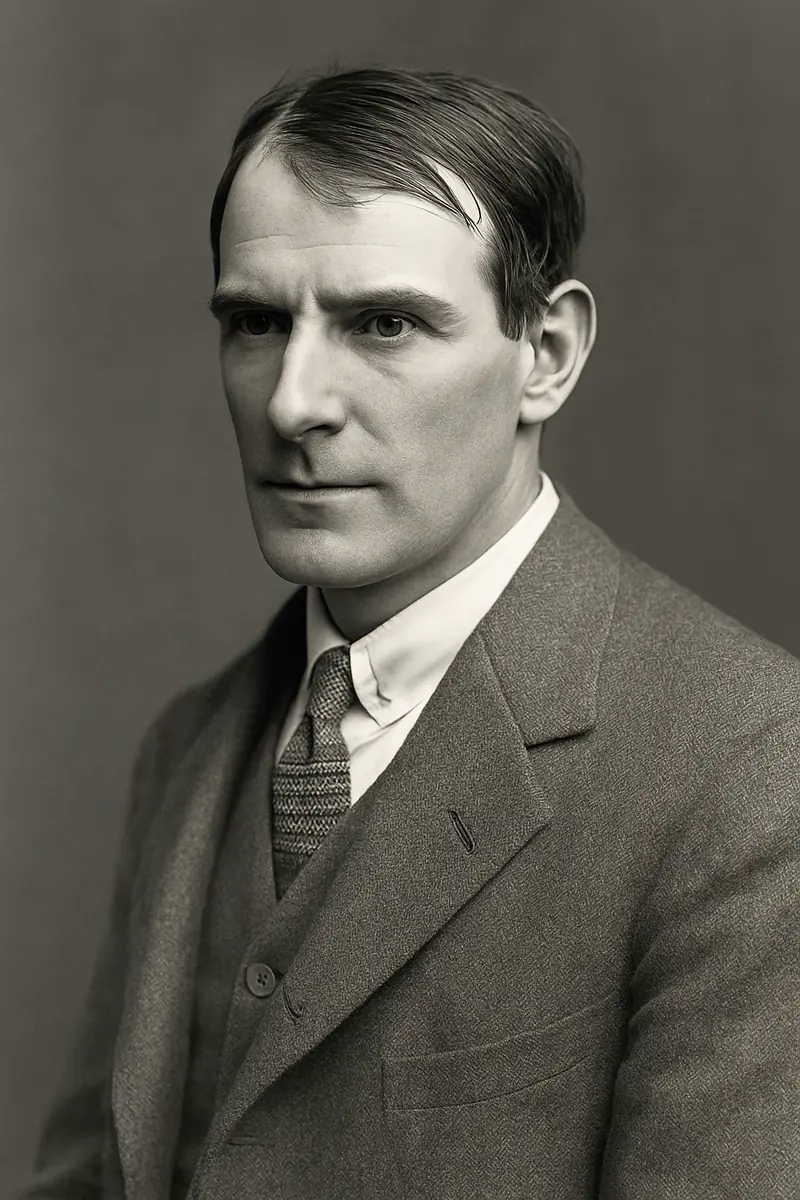
| 12 Quotes | |
| Born as | John Casey |
| Known as | Seán O'Casey |
| Occup. | Playwright |
| From | Ireland |
| Spouse | Eileen Carey Reynolds (1927) |
| Born | March 30, 1880 Dublin, County Dublin, Ireland |
| Died | September 18, 1964 Torquay, Devon, England |
| Cause | Heart attack |
| Aged | 84 years |
Sean O'Casey was born John Casey on 30 March 1880 in Dublin, Ireland, into a lower-middle-class Church of Ireland (Protestant) family. His father, Michael Casey, died when Sean was a child, and the family slipped into precarious circumstances, moving frequently across the city's northside. O'Casey suffered from trachoma, an eye disease that left his vision permanently impaired and forced him to leave school early. He became largely self-educated, developing a lifelong habit of voracious reading and a keen ear for the cadences of Dublin speech, both of which would shape his writing.
Self-Education, the Gaelic Revival, and Radical Politics
As a young man, O'Casey gravitated toward the Gaelic Revival and taught himself Irish through the Gaelic League, Gaelicising his name to Seán Ó Cathasaigh (later anglicized as Sean O'Casey). His passion for social justice drew him into the labor movement. He worked closely with trade-union leader James Larkin and, later, socialist organizer James Connolly. During the 1913 Dublin Lockout he was active in labor agitation and became involved with the Irish Citizen Army (ICA), for which he served as secretary and helped draft its constitution. Disillusioned by what he saw as a drift toward nationalist militarism, he left the ICA before the 1916 Easter Rising. These years supplied the bedrock of experience that he would refine into his most celebrated dramas, where the lives of ordinary Dubliners collide with political upheaval.
The Abbey Theatre and Breakthrough Plays
O'Casey's earliest dramatic efforts in the 1910s were rejected, but perseverance paid off when the Abbey Theatre, home to the Irish Literary Revival under W. B. Yeats and Lady Gregory, accepted The Shadow of a Gunman (1923). This play, set in a tenement during the War of Independence, established his signature mix of tragic intensity and comic vitality. It was followed by Juno and the Paycock (1924), a huge success centered on the Boyle family and their feckless patriarch, Captain Boyle. The play's authentic Dublin idiom and its portrayal of working-class resilience in the face of civil war resonated deeply; the Abbey's performers, among them Sara Allgood, F. J. McCormick, Barry Fitzgerald, and Arthur Shields, helped turn it into a landmark of modern Irish theatre. Alfred Hitchcock adapted Juno and the Paycock for film in 1930. The Plough and the Stars (1926), which dramatized events around the 1916 Rising, completed what is often called O'Casey's Dublin trilogy. It affirmed his stature as a playwright unafraid to scrutinize patriotic myth through the lens of everyday suffering.
Riots, Reputation, and a Fractured Relationship with the Abbey
The Plough and the Stars provoked riots at the Abbey in 1926, with critics, among them prominent nationalist figures, condemning O'Casey's unvarnished depiction of idealism, hypocrisy, and poverty. Yeats famously confronted the audience from the stage, defending the theatre's right to challenge received ideas. The controversy boosted O'Casey's profile but strained his relations with sections of the public. His next major play, The Silver Tassie, an experimental, anti-war drama set during and after the First World War, was rejected by the Abbey in 1928, prompting a decisive break. George Bernard Shaw championed the piece, which premiered in London in 1929 and confirmed O'Casey's growing international reputation.
Life in England and Later Dramatic Work
O'Casey left Ireland in the mid-1920s and settled in England, where he lived for the rest of his life, eventually in Torquay, Devon. In 1927 he married the actress Eileen Carey Reynolds. He continued to write prolifically, often experimenting with form and incorporating pageantry, song, and expressionist techniques. Within the Gates (1934), set in a city park over the course of a day, explored morality and modern urban life. During and after the Second World War he wrote a series of politically charged plays, The Star Turns Red (1940), Purple Dust (written 1940, produced later), Red Roses for Me (1942/43), and Oak Leaves and Lavender (1946), that addressed fascism, labor struggle, and wartime society. Cock‑a‑Doodle Dandy (1949), a "devil comedy" about joy versus repression in rural Ireland, and The Bishop's Bonfire (1955) met with censorship and official hostility in Ireland. The Drums of Father Ned (written in the 1950s) became a flashpoint at the 1958 Dublin Theatre Festival and was withdrawn amid controversy; Behind the Green Curtains (1962) continued his critique of provincialism and clerical influence.
Prose, Autobiographies, and Essays
Alongside drama, O'Casey wrote essays, stories, and a multi-volume autobiography later collected as Autobiographies. The early volumes, such as I Knock at the Door (1939), Pictures in the Hallway (1942), Drums Under the Windows (1945), and Inishfallen, Fare Thee Well (1949), trace his childhood, self-education, political awakening, and theatrical breakthrough with vivid portraits of Dublin life. He also published The Story of the Irish Citizen Army (1919) and later collections of essays, including The Green Crow (1956) and Under a Coloured Cap (1963), which mingle reminiscence with polemic.
People Around Him
O'Casey's career unfolded amid a constellation of notable figures. In politics and labor he worked alongside James Larkin and James Connolly. In literature and theatre he engaged with W. B. Yeats, Lady Gregory, Lennox Robinson, and George Bernard Shaw. The Abbey's great actors, Sara Allgood, F. J. McCormick, Barry Fitzgerald, and Arthur Shields, were crucial to the early success of his plays. Public figures such as Constance Markievicz featured in the debates around The Plough and the Stars. In film, Alfred Hitchcock adapted Juno and the Paycock, while John Ford directed a 1936 screen version of The Plough and the Stars. At home, Eileen O'Casey was a steady collaborator and memoirist in her own right; their children included Breon (an artist), Shivaun (later a theatre practitioner and documentarian), and Niall, whose early death in 1957 deeply affected the family.
Politics, Belief, and Censorship
A lifelong socialist with roots in the labor movement, O'Casey distrusted dogma, whether nationalist, clerical, or militarist. His plays celebrate the tenacity and wit of ordinary people while exposing cant and cruelty in public life. That stance made him a frequent target of censorship and clerical denunciation in mid‑century Ireland, even as it endeared him to international audiences who recognized the modernist daring beneath his comic-tragic surface.
Style and Themes
O'Casey fused lyrical colloquial speech with music-hall humor, farce, and tragedy. He created indelible characters, Juno Boyle, "Captain" Boyle, Joxer Daly, whose vitality anchors his exploration of poverty, gender, heroism, and the human cost of political conflict. His work ranges from realistic tenement drama to expressionist and allegorical theatre, but throughout he insists on the dignity of the marginalized and the necessity of joy.
Final Years and Death
O'Casey spent his later years in Devon, continuing to write and to debate public questions with undiminished energy. He died in Torquay on 18 September 1964, aged 84. He was survived by his wife, Eileen, who helped safeguard and interpret his legacy.
Legacy and Influence
Sean O'Casey is widely regarded as one of the 20th century's most important Irish dramatists and a principal architect of modern social drama in English. His Dublin trilogy remains central to Irish theatre and an enduring resource for actors and directors. His example, melding vernacular brilliance, formal experiment, and political conscience, influenced later playwrights such as Brendan Behan and helped shape postwar British and Irish stages. Beyond individual plays, O'Casey's voice stands for a humane, skeptical, and jubilant belief in art's power to confront myths, champion the poor, and enlarge the space for truth in public life.
Our collection contains 12 quotes who is written by Sean, under the main topics: Witty One-Liners - Wisdom - Justice - Writing - Life.
Frequently Asked Questions
- Sean o Casey pronunciation: Shawn oh-KAY-see.
- Sean O Casey Dublin Trilogy: The Shadow of a Gunman; Juno and the Paycock; The Plough and the Stars.
- Sean o casey books: Plays and memoirs, incl. Juno and the Paycock; The Plough and the Stars; The Shadow of a Gunman; The Silver Tassie; The Green Crow (essays); his six-volume autobiography.
- Sean O'Casey autobiography: Six-volume memoir: I Knock at the Door; Pictures in the Hallway; Drums Under the Windows; Inishfallen, Fare Thee Well; Rose and Crown; Sunset and Evening Star.
- Sean o Casey plays: The Shadow of a Gunman; Juno and the Paycock; The Plough and the Stars; The Silver Tassie; Red Roses for Me.
- eileen o'casey: Eileen Carey O'Casey (1902–1995), Irish actress and Sean O'Casey's wife.
- Sean O'Casey famous works: Juno and the Paycock; The Plough and the Stars; The Shadow of a Gunman; The Silver Tassie.
- How old was Sean O'Casey? He became 84 years old
Sean O'Casey Famous Works
- 1928 The Silver Tassie (Play)
- 1926 The Plough and the Stars (Play)
- 1924 Juno and the Paycock (Play)
- 1923 The Shadow of a Gunman (Play)
Source / external links