
William Pennington Biography Quotes 3 Report mistakes
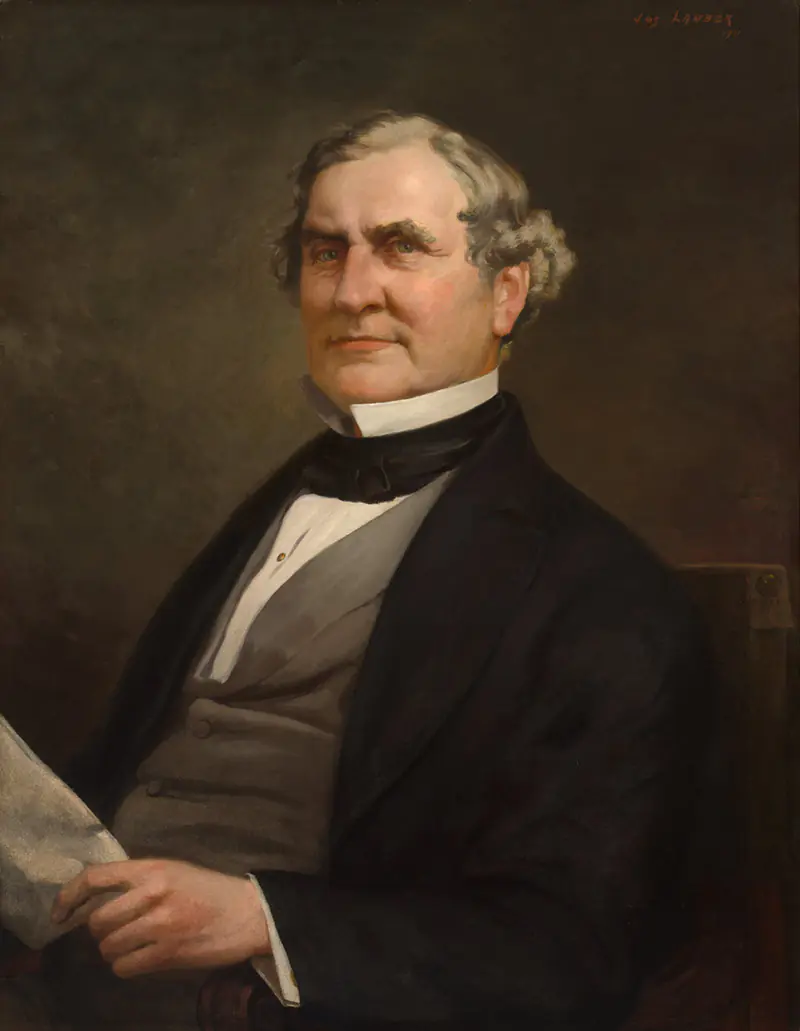
| 3 Quotes | |
| Occup. | Politician |
| From | USA |
| Born | May 4, 1796 USA |
| Died | February 16, 1862 USA |
| Aged | 65 years |
William Pennington was born in Newark, New Jersey, in 1796, into a household where law and public service were part of everyday life. His father, William S. Pennington, had been a Revolutionary War officer, later serving as governor of New Jersey and as a federal judge. Growing up amid the rhythms of courtrooms and legislative chambers, the younger Pennington absorbed a respect for institutions and a lawyerly patience that would later define his style. He pursued the study of law in New Jersey, read in the offices of established practitioners, and was admitted to the bar. Newark, bustling with commerce and civic ambition, provided both clients and a political stage. Early mentors and associates included prominent New Jersey Whigs such as Theodore Frelinghuysen, whose blend of moral seriousness and constitutional caution Pennington admired.
Legal Apprenticeship and Entry into Public Life
As a lawyer, Pennington developed a reputation for diligence, clear writing, and a meticulous approach to statutes and procedure. He had little taste for demagoguery and preferred careful argument. In the political spheres of Essex County and Trenton, he aligned with the Whig Party, which was oriented toward internal improvements, prudent finance, and the rule of law. He moved steadily from local responsibilities into statewide prominence. His calm demeanor and evident integrity made him a reliable choice for legislative partners who wanted a steady hand rather than a firebrand. With allies such as William L. Dayton and other New Jersey Whigs, Pennington was part of a cohort that tried to balance economic development with fiscal restraint.
Governor of New Jersey
Pennington served multiple consecutive one-year terms as governor, beginning in 1837, a period marked by the Panic of 1837 and its long aftermath. The crisis tested the state's banks, threatened public credit, and complicated ambitions for canals and railroads. Pennington took a characteristically cautious line: preserve credit, steady the banks, and keep improvement projects aligned with the state's real capacity to pay. He worked through legislative committees rather than through sweeping personal proclamations, engaging persistently with lawmakers in Trenton to maintain basic services and support commerce. New Jersey's industrial centers, including Newark and Paterson, required attention to infrastructure, and Pennington supported improvements when he deemed the financing credible. Contemporaries in the gubernatorial orbit, including figures such as Philemon Dickerson and Daniel Haines, represented other shades of policy emphasis, but Pennington's style was consistent: careful, incremental, and faithful to process.
The 1850s Realignment and a Return to National Affairs
After leaving the governor's office, Pennington returned to legal practice, but the fracturing of the national party system in the 1850s drew him back into public life. The unraveling of the Whig Party and the rise of the Republican coalition created space for moderates who opposed the spread of slavery while insisting on constitutional methods. In New Jersey, Pennington's name conveyed steadiness rather than radicalism, and that profile helped him secure election to the United States House of Representatives in the tense months before the Civil War. He traveled to Washington as a freshman representative at a moment when tempers were high and sectional suspicion saturated the Capitol.
Speaker of the House in a Season of Deadlock
When the 36th Congress convened in late 1859, the House plunged into a prolonged struggle to elect a Speaker. The initial Republican favorite, John Sherman of Ohio, faced intense resistance from Southern members, who denounced antislavery agitation and bristled over recent controversies in print and politics. Ballot followed ballot without a result. Pennington, new to Washington but known as a moderate with a judicial temperament, emerged as a consensus alternative among Republicans seeking to break the stalemate while maintaining party principles. With the support of his colleagues and the acquiescence of some Opposition members, he was elected Speaker after weeks of impasse.
As Speaker, Pennington inherited a chamber on edge. He enforced rules with an even hand and put a premium on decorum, often consulting quietly with experienced Republicans such as Thaddeus Stevens and Galusha Grow while keeping lines open to border-state and Opposition members. To address the secession crisis that accelerated after the 1860 election, he helped the House establish the Committee of Thirty-Three, chaired by Thomas Corwin of Ohio, an effort to explore compromise and hold the Union together. While the Senate wrestled with proposals associated with John J. Crittenden, the House under Pennington managed to keep business moving: appropriations were passed, committees functioned, and floor debates, though heated, were guided back into parliamentary order. Southern Democrats such as Thomas S. Bocock remained adversaries in policy and outlook, but Pennington's reputation for fairness made him a Speaker opponents could not easily dismiss as partisan alone.
Leadership Style and Principles
Pennington's approach reflected the best habits of the old Whig legal mind: cautious, institutional, and resistant to theatrical politics. He did not indulge in sweeping rhetoric about destiny or catastrophe; instead, he leaned on process, rulings, and committee work. That posture made him an unlikely national figure in an age of rising passions, but it also allowed colleagues to trust that he would not manipulate the rulebook to advantage one faction at every turn. He was a Republican by the end of the 1850s, opposed to the expansion of slavery, and firmly attached to the Union. Yet he tried to give space for negotiation and to signal to doubtful members that the House would be governed, not inflamed. In private conversations and caucus meetings, he worked alongside party leaders such as John Sherman, who after the speakership contest remained a central Republican voice, and he watched closely as the national horizon shifted with the ascent of Abraham Lincoln.
Defeat and Final Years
Pennington's speakership did not guarantee his political future at home. New Jersey's electorate was divided, and his moderation did not always translate into electoral security. After serving one House term, he left Congress as the country moved from crisis into war. He returned to Newark and to the law, carrying the burdens of a nation whose problems had outgrown the tools of compromise he had spent his career refining. He died in 1862, with the Civil War raging and with the fruits of his careful stewardship at the House overshadowed by events none of his generation could fully contain.
Legacy
William Pennington's career is a study in government by steadiness. As governor, he navigated financial panic without wrecking the state's credit; as Speaker, he accepted one of the most difficult jobs in American politics and performed it with restraint. He was not a system-builder like Henry Clay, nor a tribune like Thaddeus Stevens, nor a grand strategist like the president whose election precipitated secession. He was instead a reliable steward who kept the machinery of government functioning when it might have seized. His circle and collaborators, from Theodore Frelinghuysen and William L. Dayton in New Jersey to Thomas Corwin and John Sherman in Washington, show how he operated: among lawyers, institutionalists, and pragmatic legislators who believed that rules could hold a fractured republic together. History remembers the louder voices of his era, but the House he presided over did its work, and in that work there is a different kind of legacy: the proof that, even at the edge of disunion, disciplined procedure and personal fairness can still matter.
Our collection contains 3 quotes who is written by William, under the main topics: Resilience - Prayer.
Frequently Asked Questions
- Who is William Pennington Jr.? William Pennington Jr. is his son, who continues to represent his family's business and philanthropic interests.
- What is William Pennington Foundation? The William Pennington Foundation is a non-profit organization, established in 2004 after his death to provide grants and support for education and community projects.
- William Pennington Circus Circus: William Pennington co-founded the Circus Circus hotel and casino in Las Vegas, Nevada.
- Was William Pennington in the Navy: William Pennington served in the U.S. Navy during the World War II era.
- How old was William Pennington? He became 65 years old
Source / external links