
Xenophon Biography Quotes 10 Report mistakes
Early Life and Education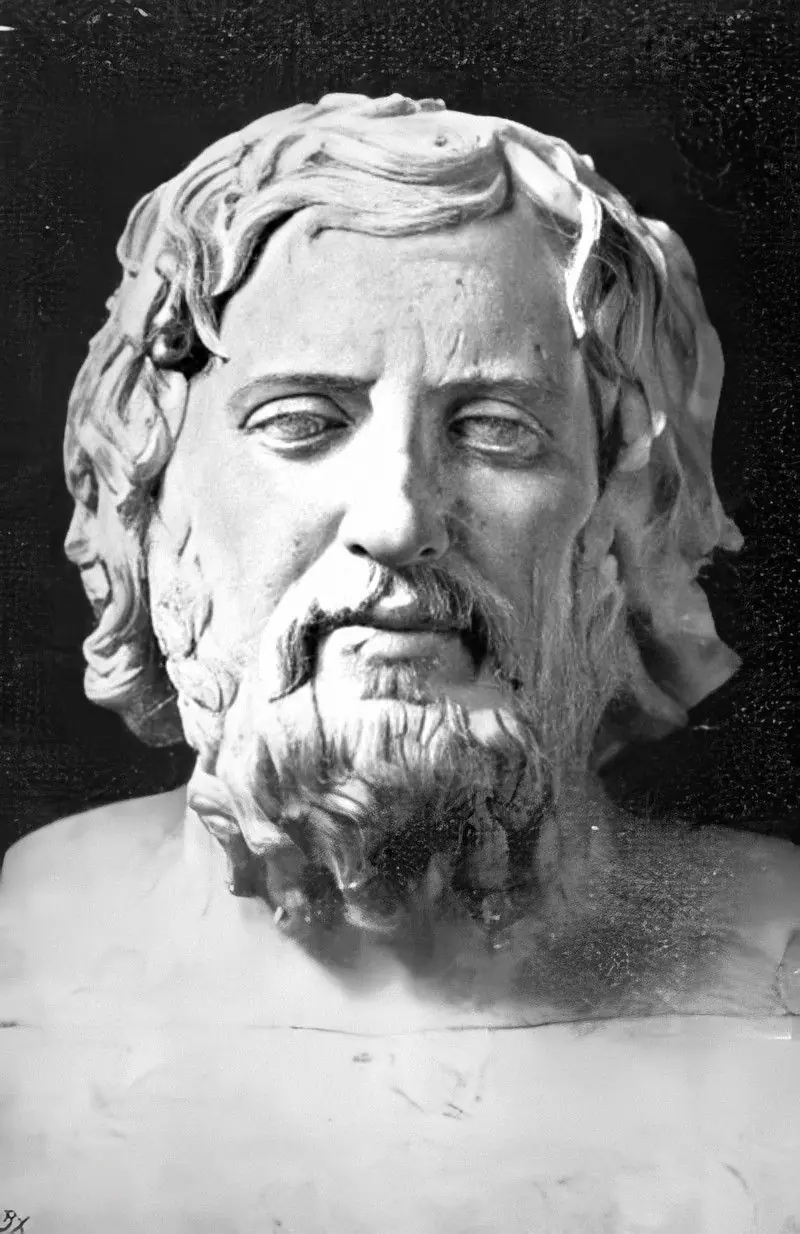
Xenophon, born around 430 BCE and traditionally associated with Athens, emerged from a milieu that afforded him the training and connections of a gentleman with military and intellectual interests. His early formation is closely tied to Socrates, whose conversations and example he later memorialized. Xenophon presents himself as a listener and participant in Socratic dialogues, and he repeatedly emphasizes the practical, ethical, and self-mastery lessons he learned from the philosopher. This grounding in Socratic inquiry would shape Xenophon's distinctive blend of pragmatic leadership advice and moral reflection throughout his career. Living in a city shaped by the Peloponnesian War, he came of age amid civic instability, competing ideologies, and shifting alliances, experiences that sharpened his interest in governance, discipline, and character.
The Expedition of the Ten Thousand
Around 401 BCE Xenophon joined the expedition of Cyrus the Younger, who sought to unseat his brother, Artaxerxes II, from the Persian throne. Xenophon later recounts that he consulted Socrates, and on his mentor's advice sought divine guidance before going. He set out not as commander but as a volunteer attached to Proxenus of Boeotia, one of several Greek leaders including Clearchus, Menon, and Cheirisophus. The enterprise culminated in the battle of Cunaxa, where Cyrus was killed and the Greek officers, lured to a parley by Tissaphernes, were seized and executed. In the crisis that followed, Xenophon emerged as a key leader. Elected among the new commanders, he helped reorganize the stranded mercenaries, later remembered as the Ten Thousand, and conducted a fighting retreat northward to the Black Sea through hostile terrain and fractious allies.
The Anabasis, his narrative of this march, records not only the hazards of the journey but the constant exercise of deliberation, discipline, and negotiated authority among the Greeks, Thracians, and Persians. Figures such as Artaxerxes II, Tissaphernes, and the satrap Pharnabazus appear as adversaries or interlocutors, while Seuthes of Thrace briefly employed the army after it reached safety. Xenophon's portrait of collective decision-making under duress became a classic of leadership literature and an enduring source for the inner workings of mercenary forces in the late classical world.
Service with Sparta and Exile
After the return, Xenophon entered the orbit of Sparta. He accompanied Spartan operations in Asia and formed a lasting attachment to King Agesilaus II, whose energy and discipline he admired. He served alongside Spartan commanders and later fought at Coronea (394 BCE) on the Spartan side during the Corinthian War, a choice that alienated many Athenians. His presence with Agesilaus and his ongoing sympathy for Sparta likely contributed to his exile from Athens, though the precise legal mechanisms are imperfectly known.
The Spartans rewarded Xenophon with an estate at Scillus, near Olympia, where he lived for years and wrote. He describes establishing a sanctuary to Artemis, reflecting both his gratitude for deliverance and his attachment to rural, orderly life. At Scillus he enjoyed a measure of calm, hosting friends and engaging in the rhythms of hunting, agriculture, and letters. The defeat of Sparta at Leuctra (371 BCE) altered the balance of power; the Eleans recovered the district, and Xenophon departed, probably taking refuge in Corinth. By this time his stance toward Athens had softened. His sons, Gryllus and Diodorus, were educated as Athenians and later served in the Athenian cavalry.
Writer and Thinker
Xenophon's writings display a remarkable range. The Anabasis offers a third-person narrative of his own campaign, while the Hellenica continues the story of Greece where Thucydides breaks off, carrying events down to 362 BCE and treating figures such as Lysander, Agesilaus, and Epaminondas. His Memorabilia and Apology of Socrates defend and illuminate Socrates after the philosopher's execution in 399 BCE, offering an image of Socrates distinct from that preserved by Plato yet equally concerned with ethics, self-knowledge, and the uses of conversation.
The Cyropaedia, a partly imaginative education of Cyrus the Great, explores leadership, persuasion, and institution-building. Shorter works examine the skills of command and civic economy: On Horsemanship and The Cavalry Commander address the training of riders and the responsibilities of officers; the Oeconomicus considers the management of households and estates through a dialogue starring Socrates and the gentleman Ischomachus; the Hiero probes the burdens of tyranny; the Agesilaus praises the Spartan king's virtues; and Poroi (Ways and Means) proposes revenue reforms for Athens. The Constitution of the Lacedaemonians sketches Spartan institutions with a mixture of admiration and critique. Throughout, Xenophon stresses practicality, piety, and the power of character, presenting leadership as a craft honed by habit and example.
Relations, Networks, and Influences
Xenophon's circle and subjects included some of the most consequential figures of his age. Socrates provided his moral compass. In Persian affairs he engaged, as foe or ally, with Cyrus the Younger, Artaxerxes II, Tissaphernes, and Pharnabazus. Among Greek commanders he records the strengths and failings of Clearchus, Menon, Cheirisophus, and Proxenus. His admiration for Agesilaus II shaped both his service and his prose, while his Hellenica places him in dialogue with Thucydides as a historian of Greece's long war and uneasy peace. He was a contemporary of Plato, and though the two approached Socrates differently, their works together sustain the philosopher's memory. In the next generation, Theban leaders such as Epaminondas enter Xenophon's narrative as protagonists in the shifting power dynamics he chronicles.
Later Years and Death
In later life Xenophon seems to have resided away from Scillus, probably in Corinth, maintaining ties with both Spartan and Athenian acquaintances. His sons fought on the Athenian side at Mantinea in 362 BCE, where Gryllus fell; some traditions credited him with striking Epaminondas, though reports differ. Xenophon continued to write and revise, reflecting on governance and economic resilience. He died around 357 BCE. The exact place of his death is not certain, but his passage from Athenian youth to Spartan partisan, from soldier to author, had already secured his standing among Greek men of action and letters.
Legacy and Significance
Xenophon's dual identity as soldier and writer gives his works a practical authority. Anabasis remains a touchstone for leadership under pressure; Hellenica, despite its perspective, is indispensable for the history of late fifth- and fourth-century Greece; the Socratic writings preserve a humane, duty-centered ethic; and Cyropaedia models the education of rulers and the art of cooperation. His portraits of Socrates, Agesilaus, Cyrus the Younger, and others provide rare windows onto character and conduct amid war and politics. By weaving observation, experience, and moral reflection, Xenophon fashioned a body of work that guided readers from antiquity onward in thinking about command, community, and the disciplined life.
Our collection contains 10 quotes who is written by Xenophon, under the main topics: Wisdom - Leadership - Free Will & Fate - Work Ethic - Letting Go.
Other people realated to Xenophon: Plato (Philosopher), Aristophanes (Poet)
Source / external links