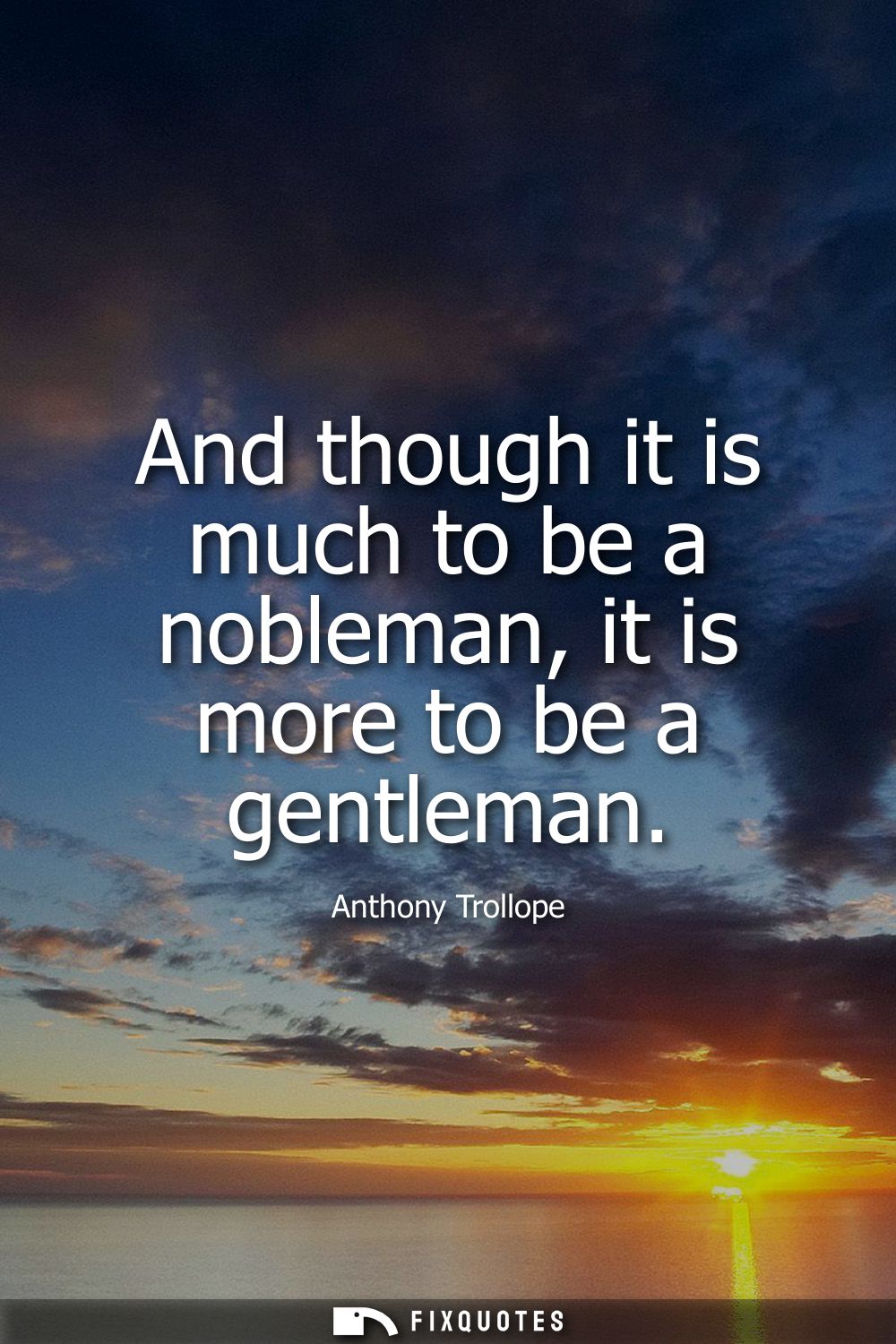
"And though it is much to be a nobleman, it is more to be a gentleman"
About this Quote
Trollope draws a clean line between rank and character. A title can grant precedence, open doors, and command deference; it cannot confer conscience, tact, or self-mastery. He concedes the weight of aristocratic status by saying it is much, but he lifts another standard higher. A gentleman is not a byproduct of pedigree but a daily practice: keeping one’s word, paying one’s debts, restraining power, showing consideration to those who cannot retaliate, resisting swagger, and refusing to trade on privilege. That code, central to Victorian ideals of manhood, is earned rather than inherited and is available to the lawyer, the clerk, and the curate as much as to the earl.
Across his Barsetshire and Palliser novels, Trollope tests this distinction. He fills drawing rooms with titled figures who expose their smallness in petty cruelties, social bullying, or shabby treatment of women and money. He also gives us quieter men of no rank whose steadiness, fairness, and modesty mark true stature. Sometimes a nobleman is a gentleman too, and Trollope is careful to show that the ideals are not incompatible. But when they diverge, moral nobility outranks the coronet. The gentleman governs himself before he governs others; the nobleman, if he forgets this, becomes only a master of ceremonies.
Victorian society was arguing about merit, class mobility, and the legitimacy of inherited privilege. The line answers that debate without revolution or snobbery in reverse. It honors the reality of status while reordering values, asserting that social grace without ethical substance is counterfeit currency. The measure of a man is taken not in a peerage but in the quiet scenes where he honors a promise, yields the last word, or treats the powerless with respect.
Stripped of dukes and dinner bells, the insight still holds. Wealth, fame, and followers are today’s titles. Better, Trollope suggests, to cultivate the unpurchaseable habits that make one truly worthy of respect.
Across his Barsetshire and Palliser novels, Trollope tests this distinction. He fills drawing rooms with titled figures who expose their smallness in petty cruelties, social bullying, or shabby treatment of women and money. He also gives us quieter men of no rank whose steadiness, fairness, and modesty mark true stature. Sometimes a nobleman is a gentleman too, and Trollope is careful to show that the ideals are not incompatible. But when they diverge, moral nobility outranks the coronet. The gentleman governs himself before he governs others; the nobleman, if he forgets this, becomes only a master of ceremonies.
Victorian society was arguing about merit, class mobility, and the legitimacy of inherited privilege. The line answers that debate without revolution or snobbery in reverse. It honors the reality of status while reordering values, asserting that social grace without ethical substance is counterfeit currency. The measure of a man is taken not in a peerage but in the quiet scenes where he honors a promise, yields the last word, or treats the powerless with respect.
Stripped of dukes and dinner bells, the insight still holds. Wealth, fame, and followers are today’s titles. Better, Trollope suggests, to cultivate the unpurchaseable habits that make one truly worthy of respect.
Quote Details
| Topic | Honesty & Integrity |
|---|
More Quotes by Anthony
Add to List