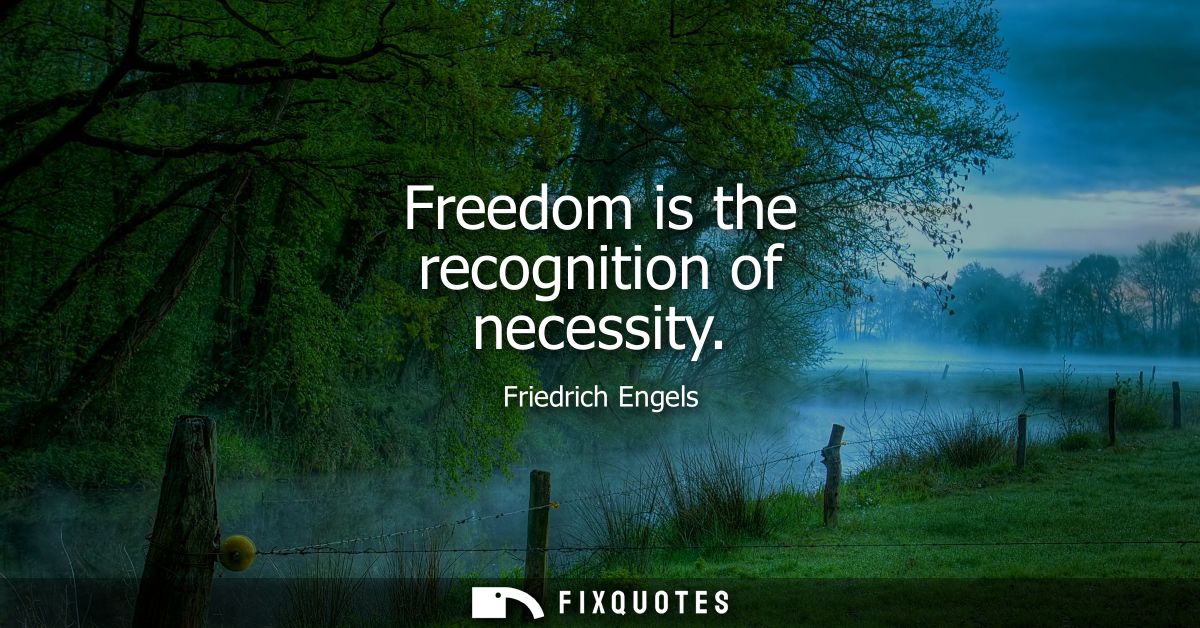
"Freedom is the recognition of necessity"
About this Quote
Engels pulls off a neat rhetorical judo move: he takes a word that usually means pure choice and redefines it as disciplined acceptance. "Freedom" here isn’t the absence of constraint; it’s fluency in constraint. The phrase "recognition of necessity" sounds almost clinical, but that’s the point. Engels is writing against the romantic idea of the sovereign individual who can will themselves beyond conditions. For a Marxist thinker, history isn’t a stage for personal transcendence; it’s a system of material forces-cause, effect, class, production-that sets the menu before anyone orders.
The intent is political as much as philosophical. Engels wants freedom to stop being a moral trophy and start being a practical skill: understand the laws governing society and nature, then act effectively within them. It’s a rebuttal to both fatalism and wishful voluntarism. Fatalism says necessity crushes us, so why bother; voluntarism says we can simply choose otherwise. Engels threads the needle: necessity is real, but ignorance of it is what makes you unfree. Recognize it, and you can intervene.
Subtext: the modern subject loves to imagine they’re free while being pushed around by forces they don’t name-wage labor, markets, ideology, habit. Engels implies that what we call "freedom" in bourgeois society often amounts to blind motion inside a machine. The line also flatters the scientific temperament of the socialist project: liberation comes from analysis, not vibes.
Context matters: Engels is in dialogue with German idealism (especially Hegel) while insisting that "necessity" is material, not metaphysical. Freedom becomes less a private feeling than a collective capacity to grasp conditions-and change them.
The intent is political as much as philosophical. Engels wants freedom to stop being a moral trophy and start being a practical skill: understand the laws governing society and nature, then act effectively within them. It’s a rebuttal to both fatalism and wishful voluntarism. Fatalism says necessity crushes us, so why bother; voluntarism says we can simply choose otherwise. Engels threads the needle: necessity is real, but ignorance of it is what makes you unfree. Recognize it, and you can intervene.
Subtext: the modern subject loves to imagine they’re free while being pushed around by forces they don’t name-wage labor, markets, ideology, habit. Engels implies that what we call "freedom" in bourgeois society often amounts to blind motion inside a machine. The line also flatters the scientific temperament of the socialist project: liberation comes from analysis, not vibes.
Context matters: Engels is in dialogue with German idealism (especially Hegel) while insisting that "necessity" is material, not metaphysical. Freedom becomes less a private feeling than a collective capacity to grasp conditions-and change them.
Quote Details
| Topic | Freedom |
|---|---|
| Source | Friedrich Engels, Anti-Duhring (Herr Eugen Dühring's Revolution in Science), 1878 — contains the line 'Freedom is the recognition of necessity'. |
More Quotes by Friedrich
Add to List