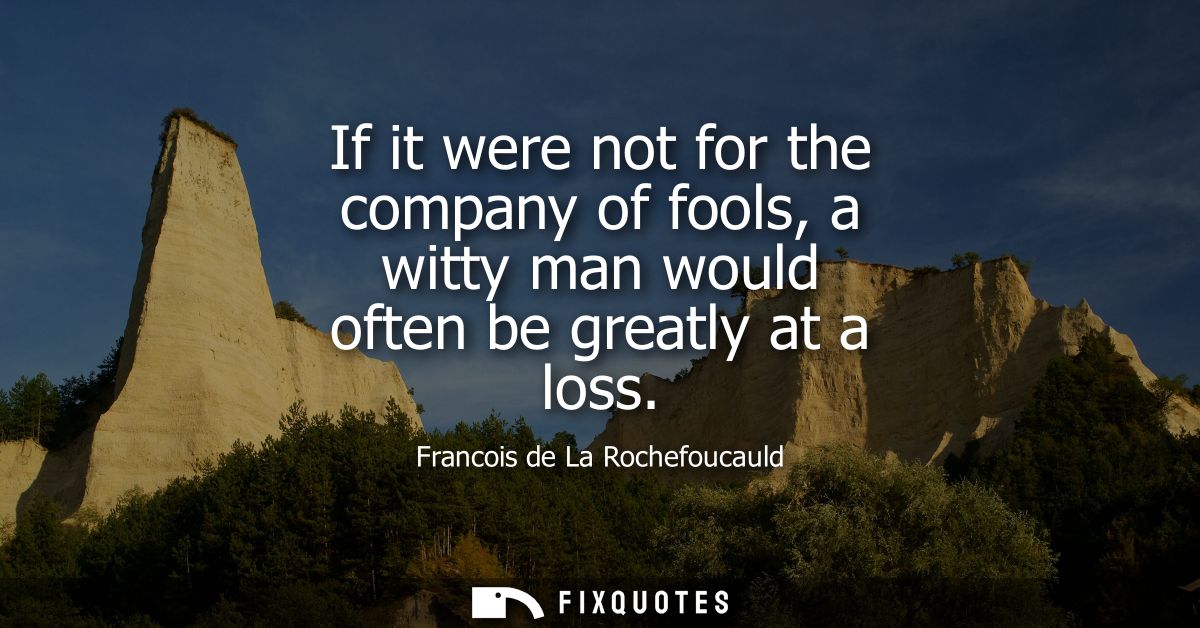
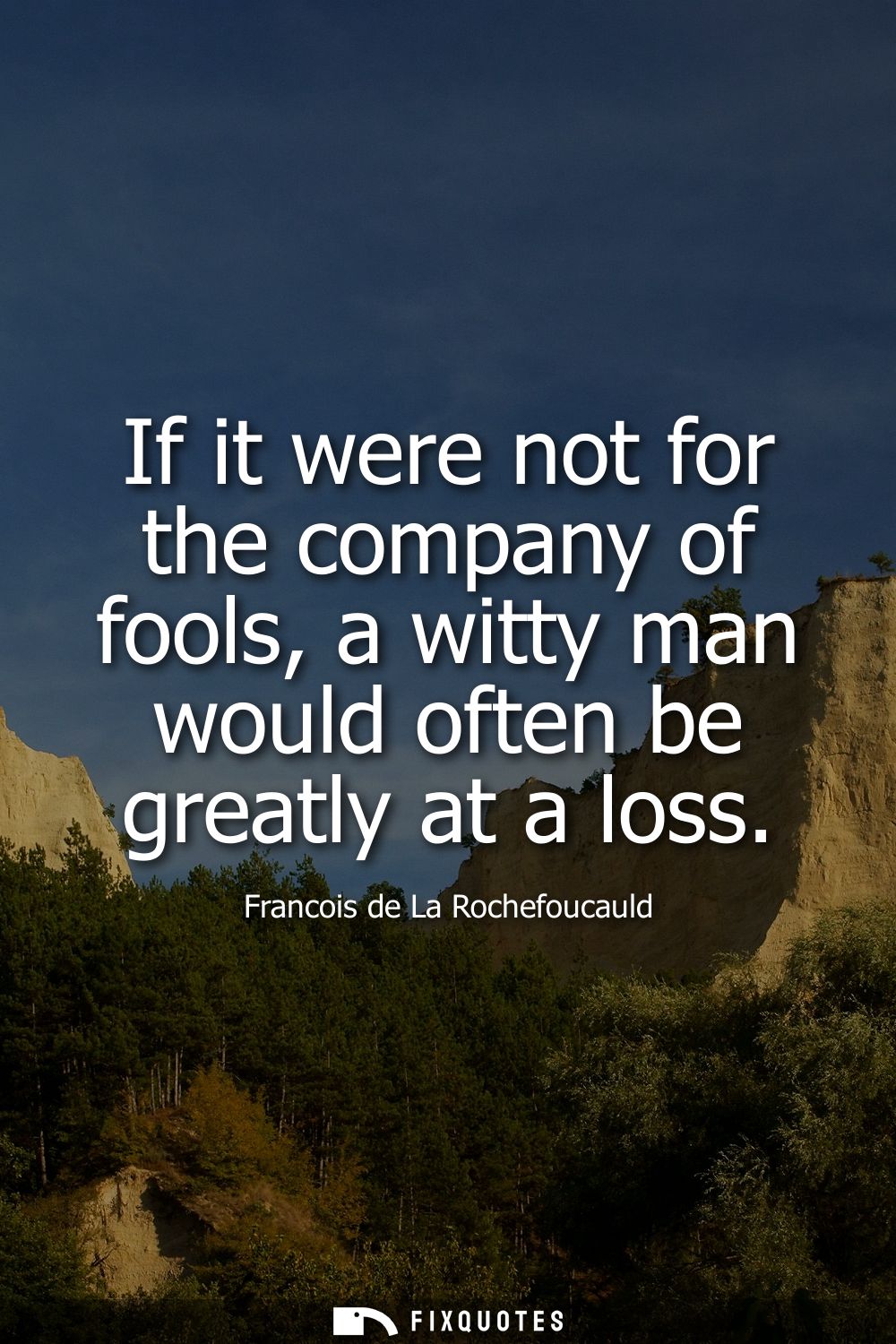
"If it were not for the company of fools, a witty man would often be greatly at a loss"
About this Quote
The phrasing is doing quiet violence. “Company” makes fools sound plentiful, even convivial - a natural habitat. “Often” is the blade: not occasionally, not in rare moments of weakness, but regularly. And “greatly at a loss” flips the expected hierarchy. The fool is supposed to be the confused one; here the “witty man” becomes the needy party, dependent on easy targets to keep his identity intact. There’s an implied accusation of laziness too: how much of what passes for wit is just opportunism, comedy built from asymmetry rather than insight?
Context sharpens the cynicism. La Rochefoucauld’s maxims come out of a 17th-century salon culture where reputation was currency and conversation was combat. In that world, wit wasn’t merely charm; it was leverage. The quote reads like field notes from court life: the “witty” survive by locating the weak point in the room, then calling it intelligence. Under the polish, it’s a moral x-ray - less a celebration of cleverness than a warning about how easily it becomes vanity with good timing.
Quote Details
| Topic | Witty One-Liners |
|---|---|
| Source | Help us find the source |
| Cite |
Citation Formats
APA Style (7th ed.)
Rochefoucauld, Francois de La. (2026, January 17). If it were not for the company of fools, a witty man would often be greatly at a loss. FixQuotes. https://fixquotes.com/quotes/if-it-were-not-for-the-company-of-fools-a-witty-33701/
Chicago Style
Rochefoucauld, Francois de La. "If it were not for the company of fools, a witty man would often be greatly at a loss." FixQuotes. January 17, 2026. https://fixquotes.com/quotes/if-it-were-not-for-the-company-of-fools-a-witty-33701/.
MLA Style (9th ed.)
"If it were not for the company of fools, a witty man would often be greatly at a loss." FixQuotes, 17 Jan. 2026, https://fixquotes.com/quotes/if-it-were-not-for-the-company-of-fools-a-witty-33701/. Accessed 11 Feb. 2026.