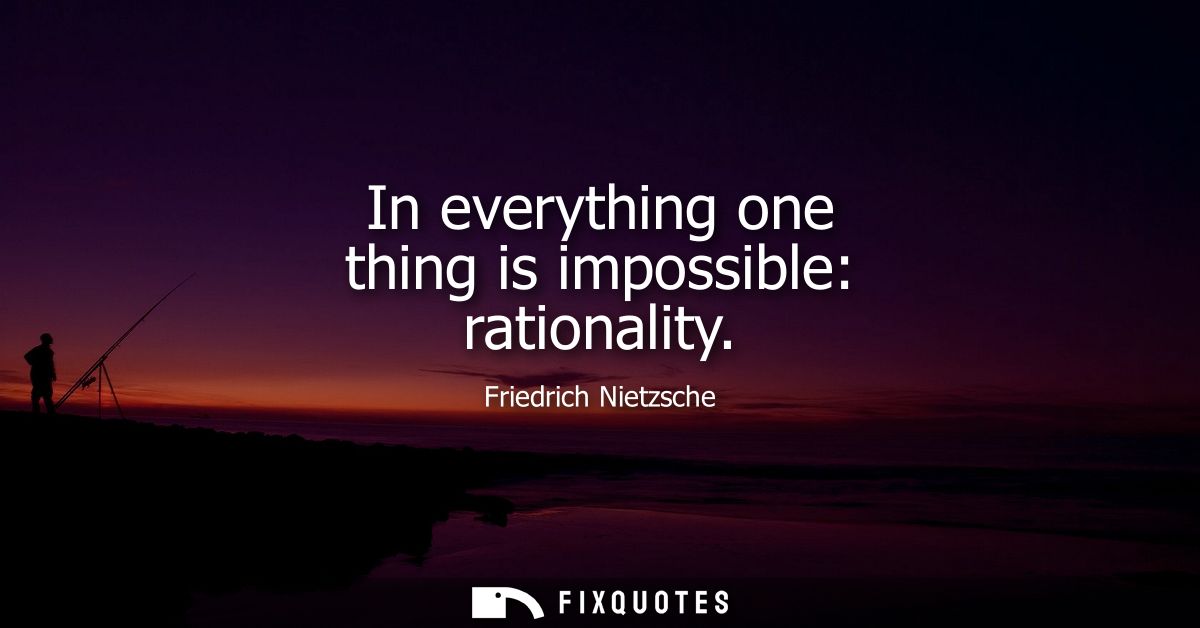
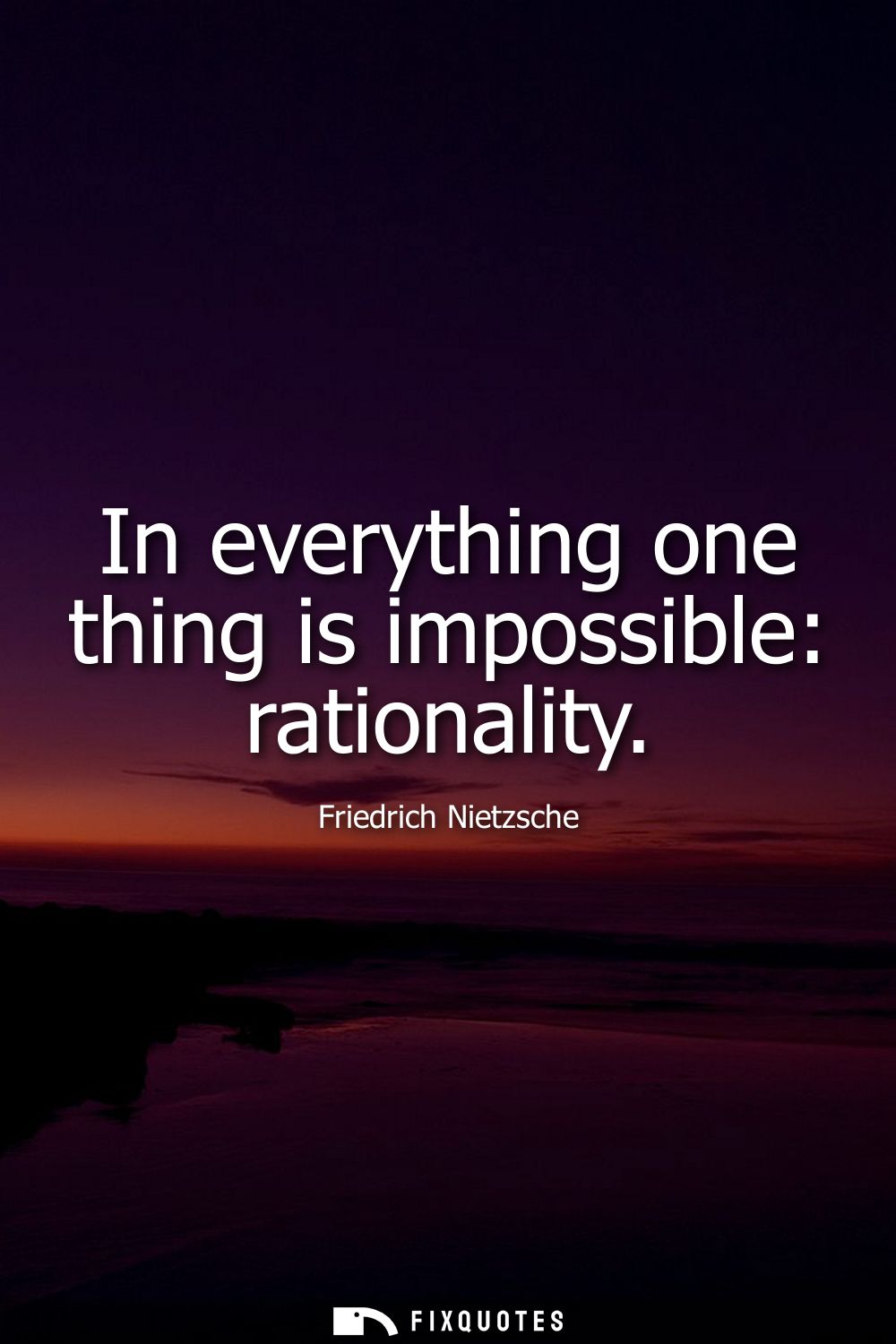
"In everything one thing is impossible: rationality"
About this Quote
Nietzsche’s line lands like a tossed grenade into the tidy parlor of Enlightenment self-confidence. “In everything” is the bait: a sweeping promise that sounds like common sense. Then he flips it. The one thing you can’t actually count on, anywhere, is “rationality” - not as a tool we sometimes use, but as a governing principle behind life, morality, politics, love, art, even “truth.” The aphorism form matters: it’s compressed, declarative, designed to bypass polite debate and hit the reader where their intellectual pride lives.
The intent isn’t anti-thinking so much as anti-comfort. Nietzsche is targeting the nineteenth-century faith that reason can domesticate existence: that ethics can be reduced to rules, that humans are transparent to themselves, that history bends toward sensible outcomes. His subtext is psychological: what we call rationality often arrives after the fact as a justification, a clean narrative plastered over messier forces - desire, fear, status hunger, resentment, the will to power. Reason becomes PR for impulses.
Contextually, this is Nietzsche’s broader war on metaphysical guarantees. If there’s no stable moral order “out there,” rationality can’t function as the referee people want it to be. It’s why the line still feels uncomfortably current: it reads like a diagnosis of modern discourse, where “rational” is less a method than a badge, deployed to launder preferences into inevitabilities. Nietzsche’s cynicism isn’t nihilism; it’s a dare to recognize the real motors first, then decide what kind of honesty you can live with.
The intent isn’t anti-thinking so much as anti-comfort. Nietzsche is targeting the nineteenth-century faith that reason can domesticate existence: that ethics can be reduced to rules, that humans are transparent to themselves, that history bends toward sensible outcomes. His subtext is psychological: what we call rationality often arrives after the fact as a justification, a clean narrative plastered over messier forces - desire, fear, status hunger, resentment, the will to power. Reason becomes PR for impulses.
Contextually, this is Nietzsche’s broader war on metaphysical guarantees. If there’s no stable moral order “out there,” rationality can’t function as the referee people want it to be. It’s why the line still feels uncomfortably current: it reads like a diagnosis of modern discourse, where “rational” is less a method than a badge, deployed to launder preferences into inevitabilities. Nietzsche’s cynicism isn’t nihilism; it’s a dare to recognize the real motors first, then decide what kind of honesty you can live with.
Quote Details
| Topic | Reason & Logic |
|---|
More Quotes by Friedrich
Add to List