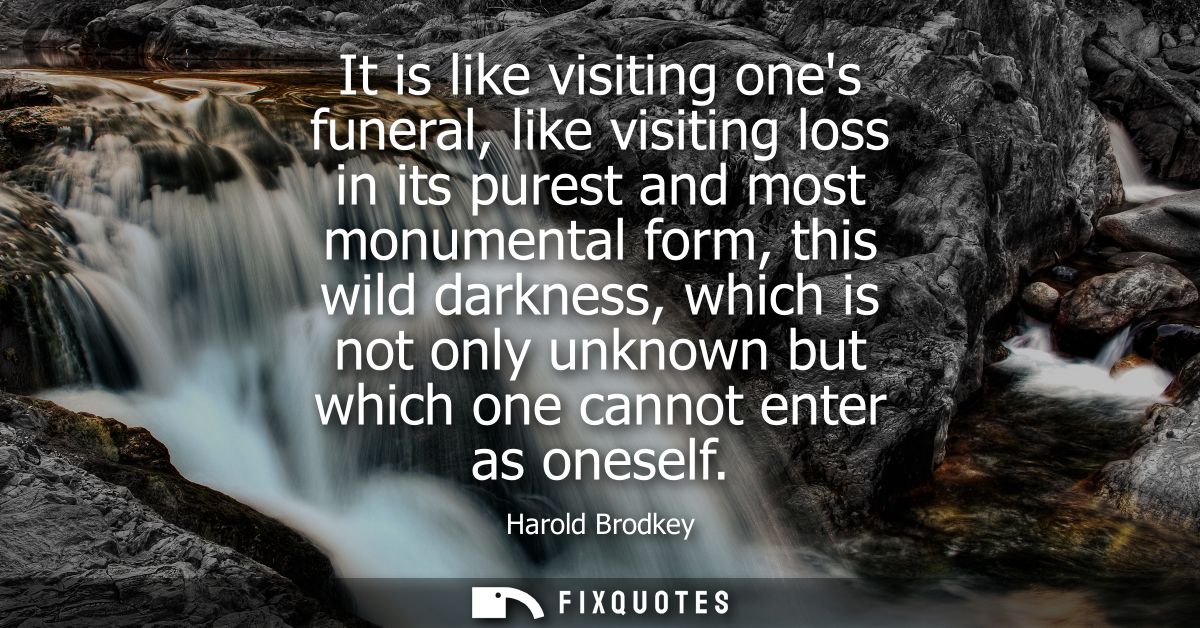
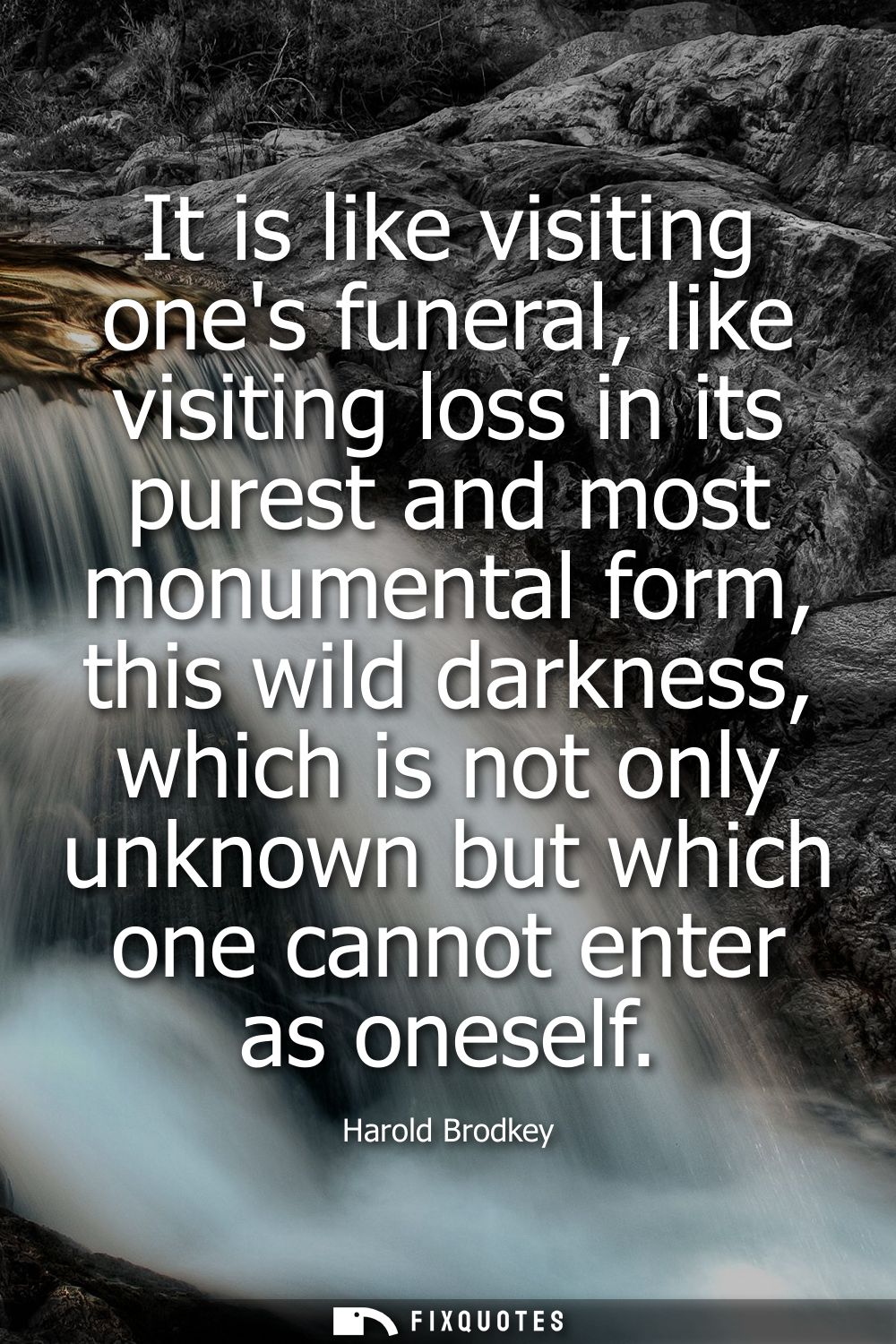
"It is like visiting one's funeral, like visiting loss in its purest and most monumental form, this wild darkness, which is not only unknown but which one cannot enter as oneself"
About this Quote
Harold Brodkey's poignant quote captures an extensive exploration of identity, death, and the unidentified. The imagery starts with the expression "It is like visiting one's funeral", conjuring a circumstance where one witnesses their own end-- a surreal, out-of-body experience. This representation recommends a confrontation with one's death, evoking the inevitable fact of life's finite nature. Just like attending a funeral service, it forces a reflective evaluation of one's existence and legacy.
Brodkey's option of words, "checking out loss in its purest and most monumental kind", speaks to the fundamental, universal experience of loss. This "purest" kind is unblemished, raw, and all-inclusive. It acknowledges a deep, underlying worry of not just death, but the erasure of self-- of identity and presence which resonates as a significant event. This can be interpreted as the ultimate solitude; checking out loss suggests challenging the complete weight of absence and the void it leaves behind.
The passage continues to explain "this wild darkness", suggesting both literal and metaphorical darkness. It represents the unidentified, the abstruse mysteries that lie beyond the limit of life. Explaining it as "wild" indicates something untamed and unforeseeable, lining up with humanity's worry and fascination with what lies beyond mindful understanding.
The last stipulation, "which is not just unknown but which one can not get in as oneself", highlights the transformative, possibly annihilating experience of facing this darkness. It speaks with the loss of self-identity upon entering and even perceiving this realm. The idea of losing oneself highlights the unavoidable improvement or dissolution the self need to go through in the face of the unknown.
Thus, Brodkey contemplates life's supreme transition, emphasizing themes of identity, mortality, and the large, unknowable nature of what follows life. This quote encapsulates a deep existential reflection, inviting self-questioning into how we view life, death, and the essence of being.
About the Author