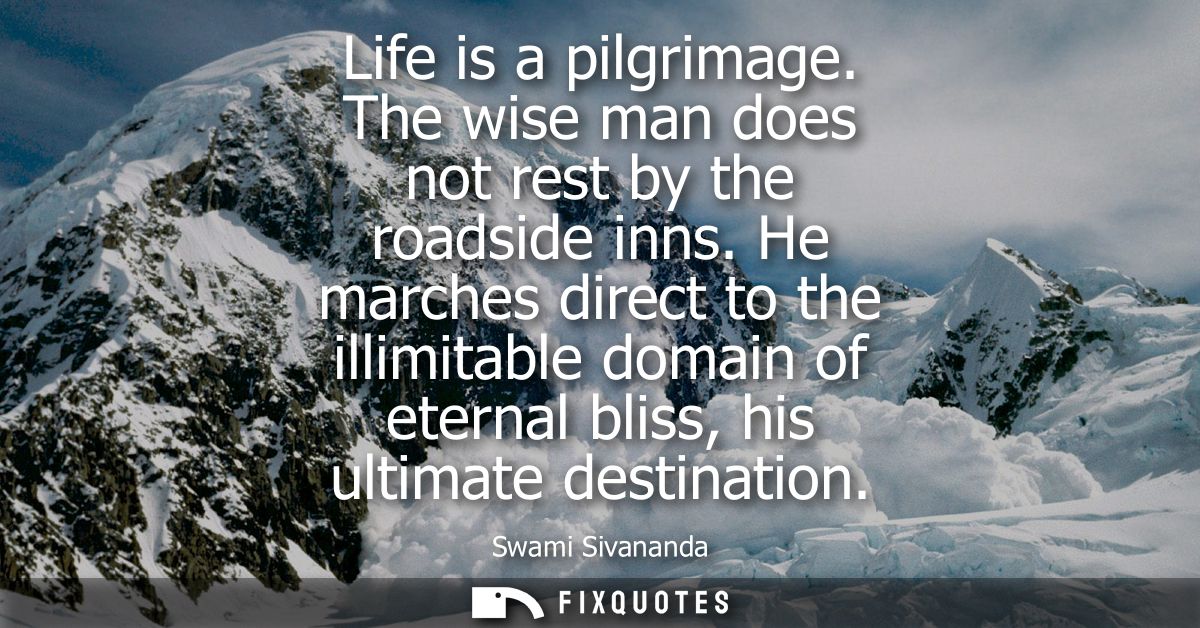
"Life is a pilgrimage. The wise man does not rest by the roadside inns. He marches direct to the illimitable domain of eternal bliss, his ultimate destination"
About this Quote
Sivananda frames living as transit, not tenancy, and that’s the provocation: if you treat the world like a hotel, you’ll start acting like a guest who overstays. The “pilgrimage” metaphor does double duty. It’s spiritual, obviously, but it’s also logistical. A pilgrimage has purpose, austerity, and a map. By choosing that word, he quietly demotes everyday milestones - pleasure, status, even comfort - into waystations that can be mistaken for the destination.
The “roadside inns” are where the subtext sharpens. An inn is legitimate shelter; Sivananda isn’t condemning rest as such. He’s warning against the seductive half-life of stopping: the ego’s tendency to turn temporary relief into permanent identity. The wise person “does not rest” there because rest becomes attachment, attachment becomes delay, and delay becomes forgetting what you were walking toward. There’s an ascetic edge to “marches direct,” a phrase that borrows the discipline of the soldier. Spiritual progress is cast as decision and stamina, not mood or inspiration.
Context matters: Sivananda wrote in a period when Indian spiritual reformers were speaking to audiences negotiating modernity, colonial pressure, and the temptations of a more consumer-facing life. “Illimitable domain of eternal bliss” sounds grandiose to a contemporary ear, but it functions as a rhetorical counterweight to the small, daily bargains that dilute intention. The line is less about rejecting the world than about refusing to let it set your pace.
The “roadside inns” are where the subtext sharpens. An inn is legitimate shelter; Sivananda isn’t condemning rest as such. He’s warning against the seductive half-life of stopping: the ego’s tendency to turn temporary relief into permanent identity. The wise person “does not rest” there because rest becomes attachment, attachment becomes delay, and delay becomes forgetting what you were walking toward. There’s an ascetic edge to “marches direct,” a phrase that borrows the discipline of the soldier. Spiritual progress is cast as decision and stamina, not mood or inspiration.
Context matters: Sivananda wrote in a period when Indian spiritual reformers were speaking to audiences negotiating modernity, colonial pressure, and the temptations of a more consumer-facing life. “Illimitable domain of eternal bliss” sounds grandiose to a contemporary ear, but it functions as a rhetorical counterweight to the small, daily bargains that dilute intention. The line is less about rejecting the world than about refusing to let it set your pace.
Quote Details
| Topic | Meaning of Life |
|---|
More Quotes by Swami
Add to List