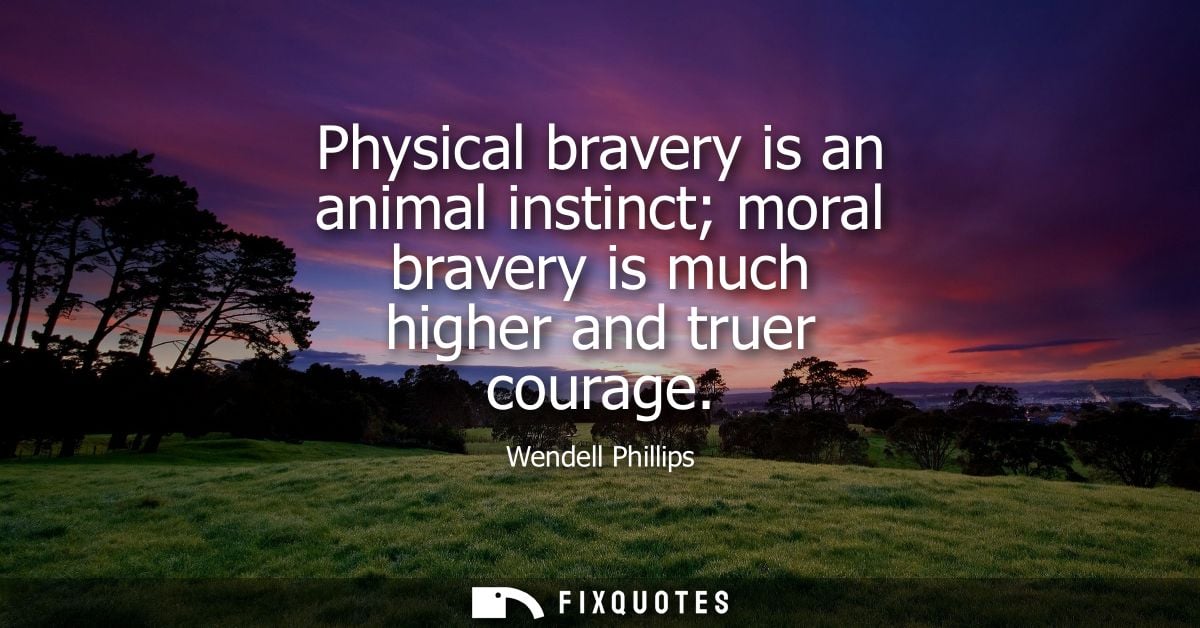
"Physical bravery is an animal instinct; moral bravery is much higher and truer courage"
About this Quote
"Moral bravery", by contrast, is quieter and lonelier. It’s the courage to be unliked, to be called a traitor, to lose work, friends, safety, and still keep your stance. Phillips was an abolitionist speaking into a nation that treated slavery as normal commerce and antislavery speech as social vandalism. In that context, the line reads like a rebuke to respectable moderates who praised valor in war while condemning dissent at home. He’s also implicitly defending the activist’s work as a form of heroism, even when it lacks the props of heroism.
The subtext is strategic: if you redefine "true courage" as the willingness to confront your own side, your own institutions, your own comfort, then the moral high ground shifts toward the reformer. Phillips is not merely praising conscience; he’s weaponizing it. By elevating moral bravery as "higher and truer", he forces the listener to ask an uncomfortable question: if you cheer physical courage, what does your contempt for moral courage say about you?
Quote Details
| Topic | Ethics & Morality |
|---|---|
| Source | Help us find the source |
| Cite |
Citation Formats
APA Style (7th ed.)
Phillips, Wendell. (2026, January 15). Physical bravery is an animal instinct; moral bravery is much higher and truer courage. FixQuotes. https://fixquotes.com/quotes/physical-bravery-is-an-animal-instinct-moral-78272/
Chicago Style
Phillips, Wendell. "Physical bravery is an animal instinct; moral bravery is much higher and truer courage." FixQuotes. January 15, 2026. https://fixquotes.com/quotes/physical-bravery-is-an-animal-instinct-moral-78272/.
MLA Style (9th ed.)
"Physical bravery is an animal instinct; moral bravery is much higher and truer courage." FixQuotes, 15 Jan. 2026, https://fixquotes.com/quotes/physical-bravery-is-an-animal-instinct-moral-78272/. Accessed 7 Feb. 2026.