
W. C. Fields Biography Quotes 52 Report mistakes
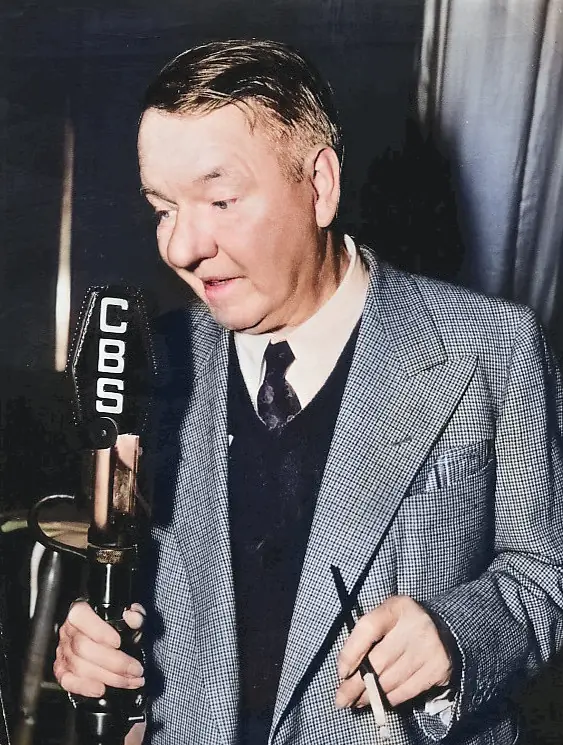
Attr: CBS Radio (Columbia Broadcasting System)
| 52 Quotes | |
| Born as | William Claude Dukenfield |
| Occup. | Comedian |
| From | USA |
| Born | January 29, 1880 Darby, Pennsylvania, USA |
| Died | December 25, 1946 Pasadena, California, USA |
| Cause | Alcohol-related illness |
| Aged | 66 years |
William Claude Dukenfield was born on January 29, 1880, in Philadelphia, Pennsylvania, into a large, cash-strapped family in a city splitting itself between Victorian respectability and hard-edged industrial modernity. His childhood sat close to the street: noisy rowhouses, rough jobs, and the constant arithmetic of rent and food. In later legend he cultivated the image of the irritable loner, but the roots of that stance lay in early exposure to scarcity and humiliation - an environment that trained a boy to watch adults closely, spot weakness quickly, and turn anxiety into a joke before it turned on him.
He ran away young, a decision that reads less like romance than self-preservation. Vaudeville America at the turn of the century was a mobile republic of boardinghouses, train platforms, and dime-a-dance hustle, and Fields entered it as a survivor. The persona that would make him famous - the put-upon connoisseur of his own bad luck, allergic to sentimentality and suspicious of everybody - began as a working strategy: keep moving, keep performing, keep control of the room.
Education and Formative Influences
Fields had little formal schooling; his education was the stage and the lesson plan was failure. He trained himself into a world-class juggler, learning the mathematics of timing and the psychology of attention - how to misdirect, how to recover, how to make a mistake look intentional. Vaudeville, circus bills, and European tours taught him that the audience loves skill but trusts a performer who admits, comically, to being human. That tension between virtuosity and self-sabotage became his signature.
Career, Major Works, and Turning Points
By the 1910s Fields was a celebrated stage headliner, and he moved into Broadway and silent film, notably in D. W. Griffiths "Sally of the Sawdust" (1925). The major turn came with sound: his crabbed diction, drawled insults, and musical timing flowered in talkies, especially at Paramount in the early 1930s. Films such as "The Pharmacist" (1933), "Its a Gift" (1934), "The Bank Dick" (1940), and "Never Give a Sucker an Even Break" (1941) refined him into a uniquely American figure - part con man, part casualty - battling wives, children, bosses, creditors, and his own appetites. Offscreen, drinking, ill health, and a guarded private life narrowed his circle even as his screen identity expanded into myth.
Philosophy, Style, and Themes
Fields comedy is often described as cynicism, but it is closer to defensive intelligence. He played men who had read the fine print of modern life and found it written against them. His famous rule of showmanship - "If you can't dazzle them with brilliance, baffle them with bull". - is less an endorsement of fakery than a confession of how systems work: salesmen, politicians, lawyers, and even family members win by performance, not truth. Fields turned that recognition into art, using verbal clutter, stalling, and mock-formality as weapons for the weak.
Alcohol in the Fields universe is both prop and philosophy, the consoling alternative to a world that demands sincerity while rewarding pretense. When he quipped, "I cook with wine, sometimes I even add it to the food". the laugh lands on excess, but the psychology lands on control: he chooses the terms of comfort, turning dependence into wit before it can be judged. Likewise, "I never drink water because of the disgusting things that fish do in it". converts vulnerability into contempt, a recurring maneuver in his performances. He distrusted uplift, mocked domestic virtue, and treated children and dogs as tiny moral enforcers of a society determined to tame him. Yet beneath the grumbling is a bruised tenderness - a man insisting, in comic form, that dignity can survive only by refusing to beg for it.
Legacy and Influence
Fields died on December 25, 1946, in Pasadena, California, after years of declining health, leaving behind a body of work that still defines a strain of American comedy: the eloquent curmudgeon, the elegant liar, the rebel too tired to be heroic. His influence runs through radio wiseguys, film noir-adjacent comedians, and modern antiheroes who weaponize language against institutions - from Groucho Marx parallels to later figures who build entire characters out of complaint and misdirection. In an era that often sells optimism as a civic duty, Fields endures because he makes disenchantment funny without making it small, reminding audiences that laughter can be a form of self-defense and a sly kind of truth.
Our collection contains 52 quotes who is written by C. Fields, under the main topics: Witty One-Liners - Dark Humor - Mortality - Sarcastic - Self-Discipline.
Other people realated to C. Fields: Bert Williams (Entertainer), Eddie Cantor (Comedian), Evan Esar (Writer), D. W. Griffith (Director), Gene Fowler (Journalist), Anna Held (Entertainer), Florenz Ziegfeld (Producer), Fanny Brice (Comedian)
Source / external links