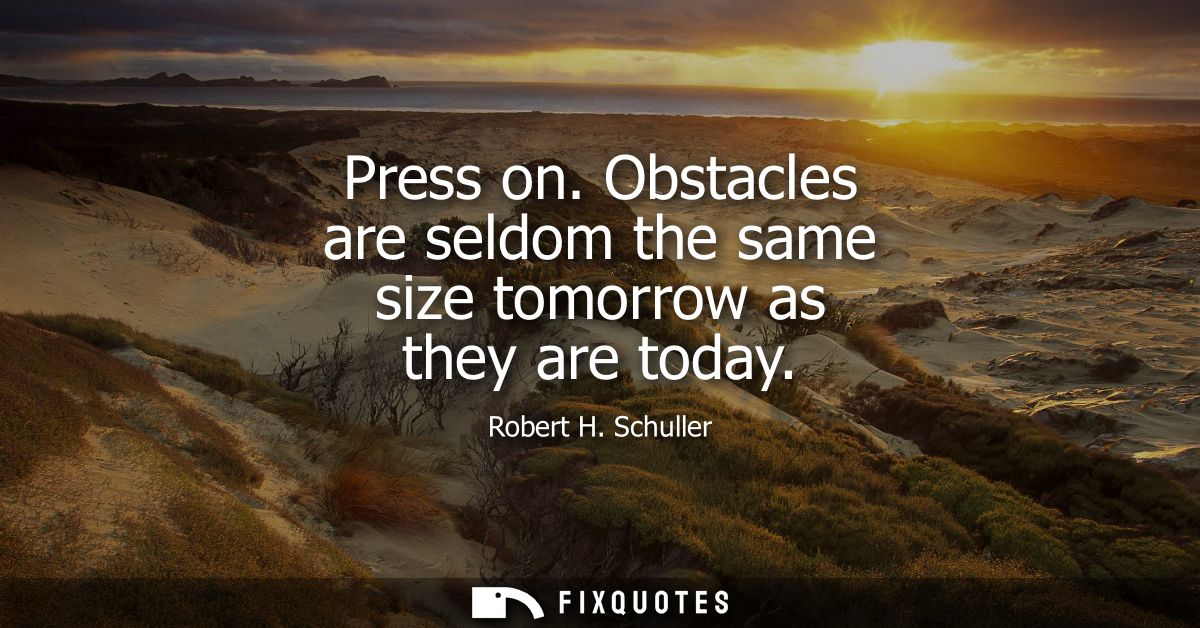
"Press on. Obstacles are seldom the same size tomorrow as they are today"
About this Quote
Schuller’s line is motivational rhetoric dressed in the plain clothes of common sense: keep moving because time shrinks what fear inflates. “Press on” is a preacher’s imperative, less a suggestion than a liturgical command. It assumes you are tired, stalled, maybe embarrassed by your own hesitation, and it offers a simple antidote: motion. The second sentence supplies the psychological trick that makes the command feel reasonable. Obstacles aren’t denied; they’re demoted. They’re “seldom the same size,” which reframes struggle as a matter of perspective and duration rather than destiny.
The subtext is classic Schuller: optimism as a spiritual discipline, self-help as a form of faith. He doesn’t ask you to become stronger so the obstacle becomes smaller. He implies the world itself will change if you keep showing up. That’s comforting, but also strategic. It relocates agency from the problem (which might be structural, unfair, or genuinely dangerous) to the believer’s stamina. Tomorrow becomes a theological asset: proof that God’s economy favors the persistent.
Context matters here. Schuller built a ministry in the postwar American boom, alongside the rise of “positive thinking” Christianity and a consumer-friendly gospel that speaks fluently in the language of personal progress. The line works because it marries prayer to productivity: keep moving, and reality will re-scale itself. It’s pastoral pep talk with a salesman’s timing, a promise that endurance isn’t just noble - it’s pragmatic.
The subtext is classic Schuller: optimism as a spiritual discipline, self-help as a form of faith. He doesn’t ask you to become stronger so the obstacle becomes smaller. He implies the world itself will change if you keep showing up. That’s comforting, but also strategic. It relocates agency from the problem (which might be structural, unfair, or genuinely dangerous) to the believer’s stamina. Tomorrow becomes a theological asset: proof that God’s economy favors the persistent.
Context matters here. Schuller built a ministry in the postwar American boom, alongside the rise of “positive thinking” Christianity and a consumer-friendly gospel that speaks fluently in the language of personal progress. The line works because it marries prayer to productivity: keep moving, and reality will re-scale itself. It’s pastoral pep talk with a salesman’s timing, a promise that endurance isn’t just noble - it’s pragmatic.
Quote Details
| Topic | Overcoming Obstacles |
|---|
More Quotes by Robert
Add to List