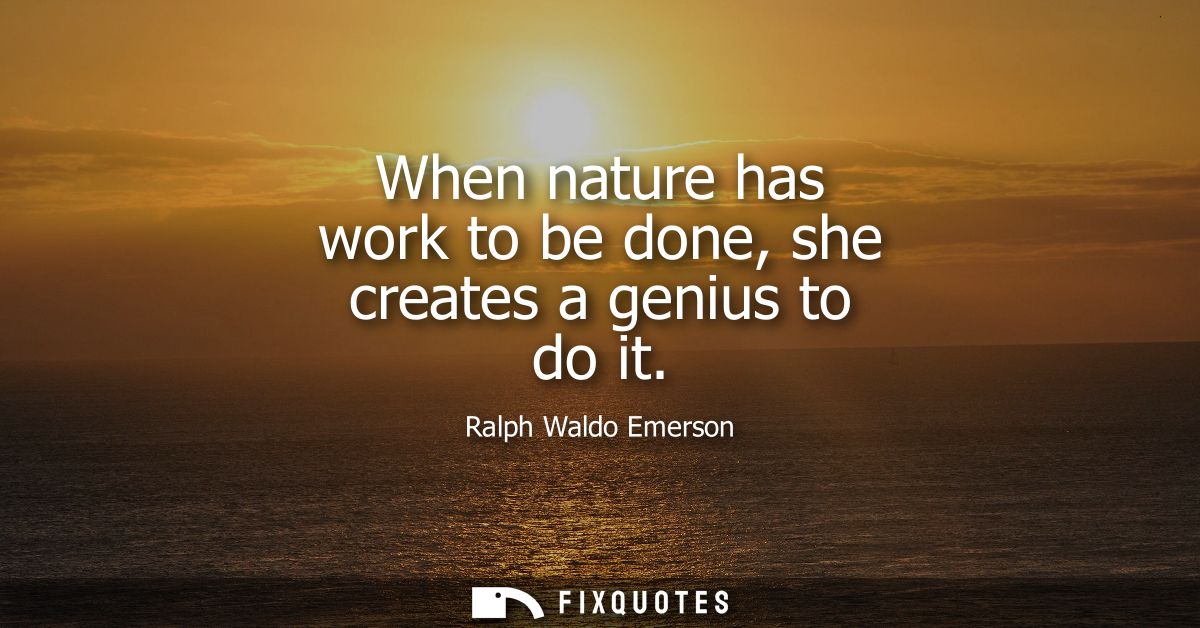
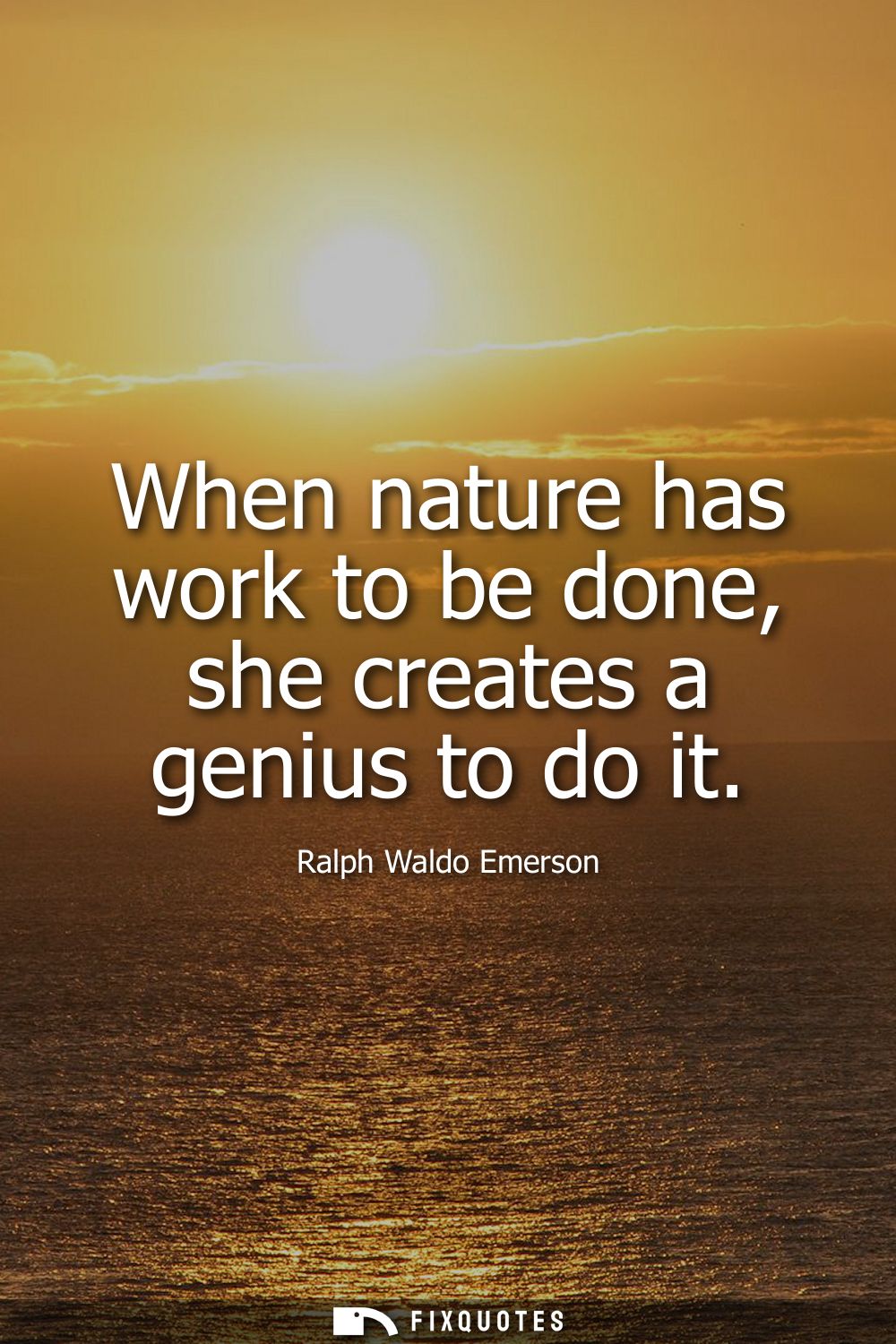
"When nature has work to be done, she creates a genius to do it"
About this Quote
Emerson compresses his Transcendentalist faith into a single, vivid stroke: nature is not a mute backdrop but a living, purposive source, and genius is the instrument it fashions when a task must be accomplished. The feminine pronoun casts nature as a generative mother, suggesting organic timing and fertility rather than mechanical planning. Genius here is not an isolated prodigy hoarding talent, but a conduit for a larger intention, the universal mind speaking through a person at the moment history requires it.
This view reframes the so-called Great Man. Shakespeare, Newton, or Lincoln are not accidents or solitary meteors; they are representatives shaped by the needs and pressures of their eras. When language demands a fuller range, a poet arrives; when the cosmos begs for a grammar, a scientist appears; when a nation confronts moral crisis, a statesman comes forward. Emerson often wrote about such figures as embodiments of a force that exceeds them, and this is as much a message about the period as it is about the person.
There is a democratic edge to the claim. If nature can call forth a genius, it can also distribute sparks widely; the same Over-Soul that seizes a Shakespeare whispers to everyone. The line becomes a charge: cultivate receptivity, character, and self-reliance so that when a necessary work presents itself, you are available to it. Genius, then, is less a possession than a responsiveness, a willingness to align private ability with a public necessity.
At the same time, the sentence pushes back against both cynicism and hero worship. It resists despair by asserting that problems summon their solutions, yet it refuses to make the gifted a race apart. What matters is the harmony between inner law and outer need. Progress happens when nature’s purpose finds a person ready to enact it, and society’s task is to recognize and clear the path for that readiness wherever it appears.
This view reframes the so-called Great Man. Shakespeare, Newton, or Lincoln are not accidents or solitary meteors; they are representatives shaped by the needs and pressures of their eras. When language demands a fuller range, a poet arrives; when the cosmos begs for a grammar, a scientist appears; when a nation confronts moral crisis, a statesman comes forward. Emerson often wrote about such figures as embodiments of a force that exceeds them, and this is as much a message about the period as it is about the person.
There is a democratic edge to the claim. If nature can call forth a genius, it can also distribute sparks widely; the same Over-Soul that seizes a Shakespeare whispers to everyone. The line becomes a charge: cultivate receptivity, character, and self-reliance so that when a necessary work presents itself, you are available to it. Genius, then, is less a possession than a responsiveness, a willingness to align private ability with a public necessity.
At the same time, the sentence pushes back against both cynicism and hero worship. It resists despair by asserting that problems summon their solutions, yet it refuses to make the gifted a race apart. What matters is the harmony between inner law and outer need. Progress happens when nature’s purpose finds a person ready to enact it, and society’s task is to recognize and clear the path for that readiness wherever it appears.
Quote Details
| Topic | Wisdom |
|---|
More Quotes by Ralph
Add to List