
Poem: Mi último adiós
Overview
José Rizal’s “Mi último adiós” (1896) is a valedictory poem written on the eve of his execution in Manila, a farewell to family, friends, and above all his native Philippines. Framed as a calm acceptance of martyrdom, it fuses personal leave-taking with a public testament of love, duty, and hope for national redemption. Composed in Spanish and smuggled from his cell, the poem transforms impending death into a final service to the motherland, presenting sacrifice as seed for freedom’s dawn.
Core Arc
The speaker addresses his “patria adorada, ” offering his life without bitterness and imagining his blood nourishing the soil of the country he loves. He situates his death within a cosmic rhythm: night gives way to day, oppression to liberty, darkness to light. If the nation’s lips lack color, he vows his blood will tint them, an image of individual sacrifice infusing collective life. He welcomes death not as defeat but as timely, even fortunate, because it coincides with the first glimmers of a new day.
From this pledge springs a litany of farewells, to country, parents, siblings, childhood companions, and a beloved “sweet foreigner”, each framed with restraint and generosity. He forgives his executioners, rejects hatred, and urges prayers not only for himself but for all who died nameless, unwept, or far from home. He asks compatriots to remember the cause, continue the struggle with dignity, and draw courage from those who fell before. If his grave goes unmarked, he accepts anonymity, preferring that his memory be absorbed into the land and its people rather than inscribed in stone.
Imagery and Symbolism
Rizal threads nature across the poem as a living memorial. He invites the reader to find him in the murmur of trees, the sigh of the sea, the song of birds at dusk, the moonlight on his tomb, the dawn’s first glow, and the fragrance of flowers and fields. Earth, wind, water, and sky become vessels for a dispersed, enduring presence, as if the sacrifice dissolves the self into the landscape of the nation. Blood becomes both fertilizing rain and the dye of a new morning; the grave becomes garden; silence becomes prayer. By this alchemy, death is reimagined as transfiguration, and martyrdom as a natural element of a country’s rebirth.
Tone and Voice
The voice is serene, fervent, and exacting. It refuses despair, tempers patriotism with humility, and holds faith without fanaticism. Religious undertones appear in the promise of a realm without tyrants, executioners, or slaves, where God reigns and innocence is secure. Yet the poem’s ethical core is civic rather than sectarian: forgiveness, self-giving, and fidelity to an ideal of liberty rooted in reason and compassion. The diction balances tenderness and resolve, making the personal exemplary rather than merely private.
Purpose and Legacy
“Mi último adiós” functions as both epitaph and summons. It consecrates Rizal’s death to a future he will not see while exhorting the living to persevere with courage, prudence, and love of country. Its images have become foundational to Filipino national memory, recited as a ritual of remembrance and as a touchstone for civic virtue. By turning the end of a life into an offering that nourishes collective hope, the poem binds patriotism to ethical restraint and gives political struggle a moral horizon defined by light, renewal, and the quiet power of sacrifice.
Citation Formats
APA Style (7th ed.)
Mi último adiós. (2025, August 22). FixQuotes. https://fixquotes.com/works/mi-ultimo-adios/
Chicago Style
"Mi último adiós." FixQuotes. August 22, 2025. https://fixquotes.com/works/mi-ultimo-adios/.
MLA Style (9th ed.)
"Mi último adiós." FixQuotes, 22 Aug. 2025, https://fixquotes.com/works/mi-ultimo-adios/. Accessed 11 Mar. 2026.
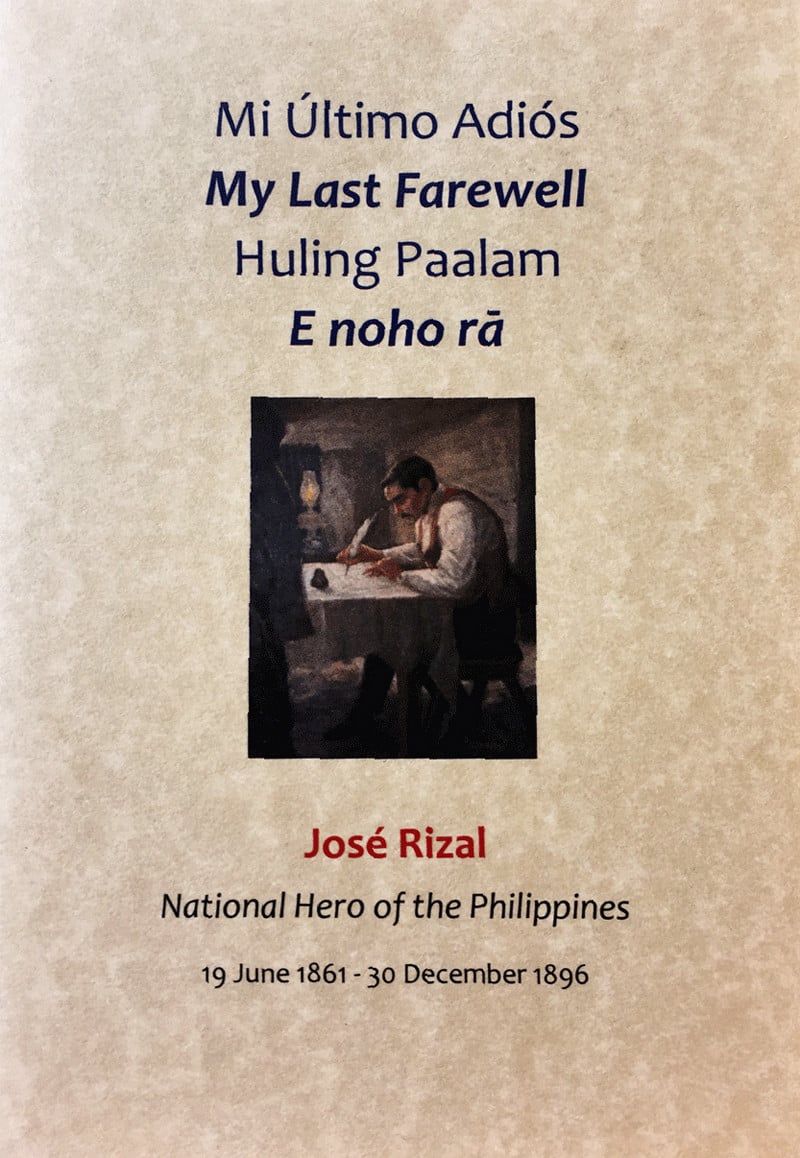
Mi último adiós
Written by Jose Rizal just before his execution, Mi último adiós (My Last Farewell) is a final address to his countrymen, expressing his love for the Philippines and his unending hope for the nation's progress.
- Published1896
- TypePoem
- GenrePoetry
- LanguageSpanish
About the Author

Jose Rizal
Jose Rizal, a key figure and martyr in the fight for Philippine independence and social reform.
View Profile- OccupationWriter
- FromPhilippines
-
Other Works
- Noli Me Tangere (1887)
- Ang pagong at ang matsing (1888)
- El Filibusterismo (1891)