
Claudius Biography Quotes 6 Report mistakes
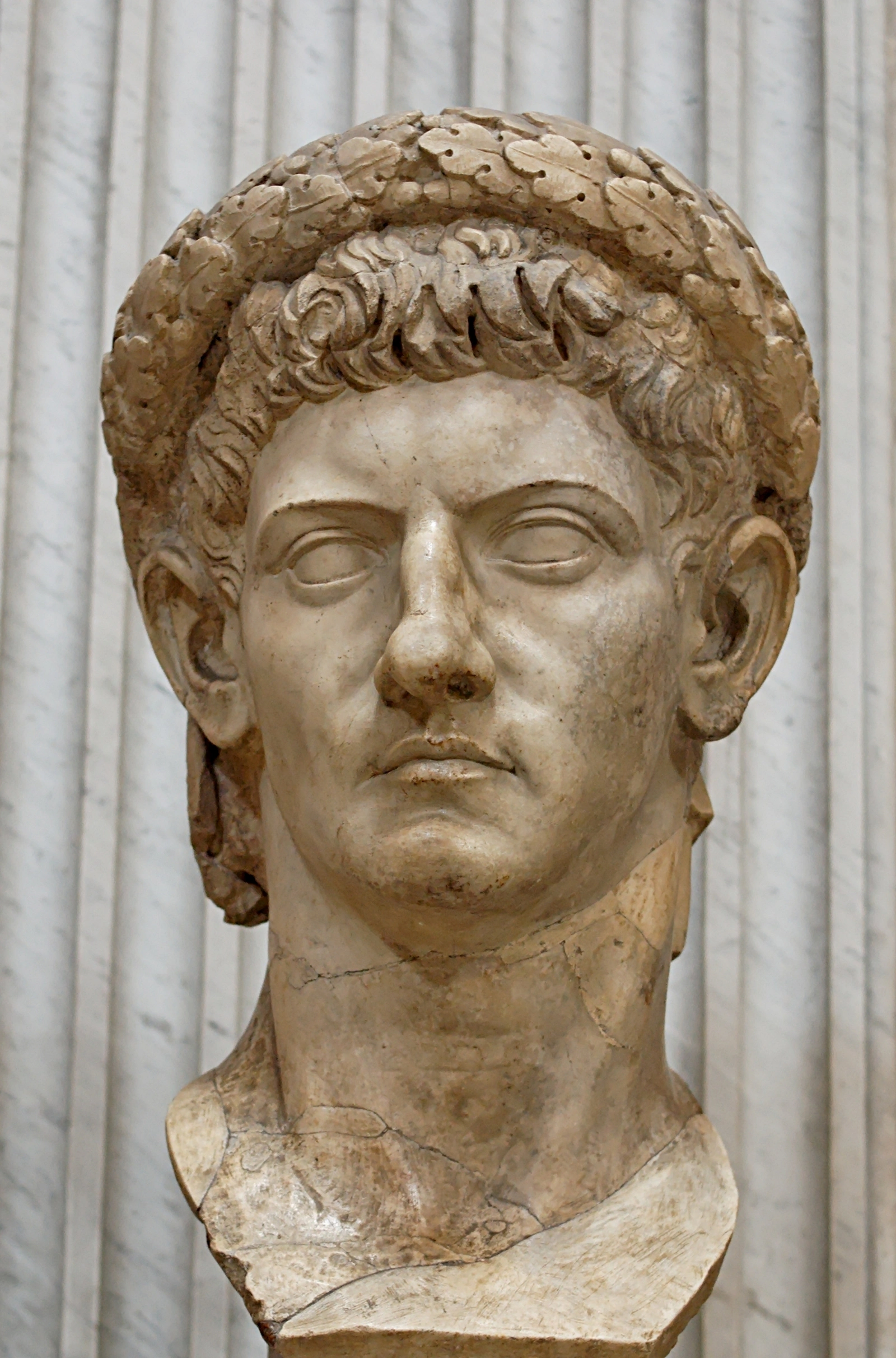
| 6 Quotes | |
| Born as | Tiberius Claudius Nero Caesar Drusus |
| Occup. | Leader |
| From | Rome |
| Born | 10 BC |
| Died | 54 AC |
| Cite | |
Citation Formats
APA Style (7th ed.)
Claudius biography, facts and quotes. (2026, February 11). FixQuotes. https://fixquotes.com/authors/claudius/
Chicago Style
"Claudius biography, facts and quotes." FixQuotes. February 11, 2026. https://fixquotes.com/authors/claudius/.
MLA Style (9th ed.)
"Claudius biography, facts and quotes." FixQuotes, 11 Feb. 2026, https://fixquotes.com/authors/claudius/. Accessed 1 Apr. 2026.
Early Life and Background
Tiberius Claudius Drusus was born at Lugdunum in Gaul on 1 August 10 BCE, into the tight, suspicious inner circle of the Julio-Claudians. His father was Nero Claudius Drusus, the celebrated general and brother of Tiberius; his mother Antonia Minor was niece to Augustus. The dynasty was a family state: power moved through blood, adoption, and marriage, and the household was also a court where reputations were made or ruined. Drusus died when Claudius was a toddler, leaving him with a famous name but no paternal protection.From childhood Claudius was marked as physically awkward - a stammer, tremor, and gait that later observers described as disabling. In a court that prized military charisma and polished speech, these traits became a social sentence. Augustus and Livia alternated between toleration and pity; Tiberius kept him at the margins; and Antonia reportedly called him a "monstrosity" of nature. The result was a strange advantage: while brothers and nephews were groomed, deployed, and eliminated, Claudius survived by being underestimated, growing up more as a watched relation than an heir.
Education and Formative Influences
Shut out of command and public contest, Claudius retreated into study. He worked with tutors and grammarians, read widely, and trained as an antiquarian in the Roman mode, learning to treat archives, pedigrees, and ritual as instruments of political memory. He wrote historical works - including a history of the civil wars and a multi-volume history of the Etruscans and Carthaginians - and he became unusually sensitive to how narratives justify rule. The early Principate taught him that emperors are made as much by paperwork, precedent, and law as by legions.Career, Major Works, and Turning Points
Claudius entered office late. Caligula gave him a consulship, partly as ornament, partly as joke; then Caligula was assassinated in January 41 CE. In the chaos, the Praetorian Guard found Claudius in the palace and proclaimed him emperor. The Senate debated restoring a republic; the Guard decided the question by force and salary. Claudius ruled from 41 to 54, relying on an administrative household - powerful freedmen such as Narcissus, Pallas, and Callistus - and on a legalistic, hands-on approach that expanded imperial government. His major achievements included the conquest of Britain (43 CE) with a triumphal settlement, the annexation of Mauretania, major public works like the Port of Ostia and the attempt to drain Lake Fucine, and reforms that regularized judicial procedure and provincial finance. He extended Roman citizenship and admitted Gallic nobles to the Senate, arguing from precedent and utility. His private life repeatedly shook the state: he executed the promiscuous Messalina after her public "marriage" to Gaius Silius (48), then married Agrippina the Younger, adopted her son Nero, and died in 54 - widely suspected to have been poisoned - leaving succession to the household he had legitimized.Philosophy, Style, and Themes
Claudius governing style was the style of a survivor: cautious in person, relentless on paper. He mistrusted glamour and cultivated competence, turning disability and exclusion into an ethic of control. His reign suggests an internal bargain: if he could not embody the heroic princeps, he would out-administer him. The courts became his theater; petitions, edicts, and hearings were where he could dominate through preparation, memory, and precedent. In that sense his temperament aligns with the maxim, “No one is free who does not lord over himself”. Self-mastery for Claudius was not serene Stoicism but a defensive discipline against a court trained to read weakness as invitation.The same psychology made him both humane and severe. He could be meticulous about legality and unexpectedly generous to provincials, yet swift to execute elites he believed conspiratorial, and susceptible to manipulation by intimates. His speeches and policies often treat speech itself as a moral risk, a weapon in a palace of informers; the safest rhetoric was the most exact. That inward pressure is captured by, “Say not always what you know, but always know what you say”. Under a regime where one sentence could be treason, Claudius leaned into pedantry as protection. Yet he also sensed the tragedy of a ruler whose will is vast but whose means are compromised by family politics and guard loyalty - “No one is more miserable than the person who wills everything and can do nothing”. Much of his cruelty reads as panic at that condition: he expanded the levers of state to ensure that his intentions could become outcomes.
Legacy and Influence
Claudius left Rome more bureaucratic, more provincial, and in many ways more governable. The conquest of Britain reshaped the empire for centuries; the admission of provincial elites into senatorial power anticipated a future in which "Roman" was an administrative identity as much as an Italian one. Yet his dynasty story hardened a darker lesson: the palace household could make and unmake emperors. Later writers, especially senatorial historians, painted him as a learned fool ruled by wives and freedmen, a caricature that long overshadowed his administrative originality. Modern reassessments see a transitional ruler: neither the charismatic founder like Augustus nor the theatrical tyrant like Caligula, but a jurist-emperor who professionalized the machine of empire - and, by doing so, made it possible for successors like Nero to inherit immense power with fewer restraints.Our collection contains 6 quotes written by Claudius, under the main topics: Ethics & Morality - Wisdom - Self-Discipline - Latin Phrases - Free Will & Fate.
Other people related to Claudius: Seneca the Younger (Statesman), Tacitus (Historian), Patrick Stewart (Actor), Derek Jacobi (Actor), Robert Graves (Novelist), John Hurt (Actor), Germanicus (Soldier), Titus (Statesman), Flavius Josephus (Historian)
Source / external links