
Jackie Kennedy Biography Quotes 31 Report mistakes
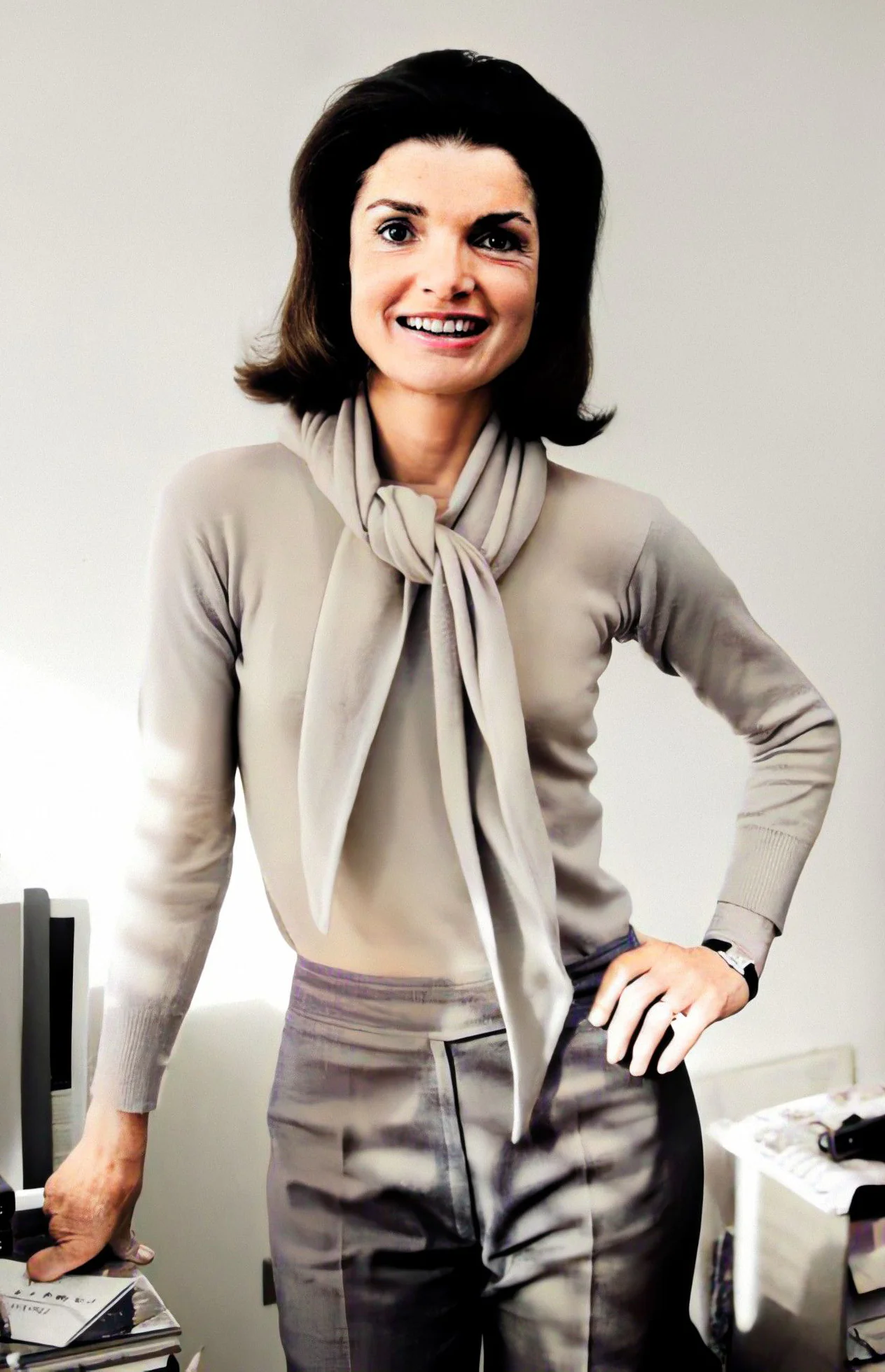
| 31 Quotes | |
| Born as | Jacqueline Lee Bouvier |
| Known as | Jacqueline Lee Kennedy Onassis |
| Occup. | First Lady |
| From | USA |
| Spouses | John F. Kennedy (1953-1963) Aristotle Onassis (1968-1975) |
| Born | July 28, 1929 Bellport, New York, U.S. |
| Died | May 19, 1994 New York City, New York, U.S. |
| Aged | 64 years |
| Cite | |
Citation Formats
APA Style (7th ed.)
Jackie kennedy biography, facts and quotes. (2026, February 11). FixQuotes. https://fixquotes.com/authors/jackie-kennedy/
Chicago Style
"Jackie Kennedy biography, facts and quotes." FixQuotes. February 11, 2026. https://fixquotes.com/authors/jackie-kennedy/.
MLA Style (9th ed.)
"Jackie Kennedy biography, facts and quotes." FixQuotes, 11 Feb. 2026, https://fixquotes.com/authors/jackie-kennedy/. Accessed 12 Feb. 2026.
Early Life and Background
Jacqueline Lee Bouvier was born on July 28, 1929, in Southampton, New York, into a Catholic, socially prominent family shaped by money, ritual, and fracture. Her father, John Vernou "Black Jack" Bouvier III, was a charismatic Wall Street figure with a gambler's appetites; her mother, Janet Lee, prized discipline, poise, and social advancement. The Bouviers world was East Coast privilege with a sharp edge - a place where charm could conceal volatility, and where a child learned early to read rooms as carefully as books.Her parents divorce in 1940 split her loyalties and sharpened her private self. After Janet married Standard Oil heir Hugh D. Auchincloss Jr., Jacqueline moved between households and expectations, mastering the art that would define her public life: presenting serenity while living with loss. An accomplished equestrian and an obsessive reader, she built identity through cultivated taste and controlled speech, a pattern that later made her seem both intimate and unknowable to a nation.
Education and Formative Influences
Educated at Miss Porter's School in Farmington, Connecticut, she became known for composure, wit, and an unusual seriousness about culture. She studied first at Vassar, then spent a formative junior year in Paris (1949-1950), absorbing French history, museums, and the idea that national grandeur could be curated. She completed her degree in French literature at George Washington University in 1951, then worked as the Washington Times-Herald's "Inquiring Camera Girl", interviewing passersby - a job that trained her to compress public feeling into clean, legible scenes while keeping herself just out of frame.Career, Major Works, and Turning Points
She married Congressman John F. Kennedy in 1953, entering a political dynasty while trying to retain an inner life anchored in art and family. After miscarriages and the stillbirth of Arabella (1956), she became fiercely protective of private space even as the Kennedys rose to the presidency in 1961. As First Lady, she turned the White House into a cultural instrument - restoring historic rooms, founding the White House Historical Association, and hosting artists and diplomats with a European sense of ceremony. Her 1962 televised tour of the White House made her a global emblem of taste and authority without overt partisanship. The assassination in Dallas on November 22, 1963 was the central rupture: through the funeral choreography and her evocation of "Camelot", she shaped national mourning into story. In 1968, seeking security amid further political violence, she married Aristotle Onassis, then after his death in 1975 rebuilt stability through work: as an editor at Viking and then Doubleday in New York, she helped shepherd books to publication while guarding her children and her name.Philosophy, Style, and Themes
Kennedy's philosophy fused aesthetic order with emotional containment. She believed the public realm could be improved by elevating symbols - architecture, ceremony, language - yet she resisted being reduced to a symbol herself. "I want to live my life, not record it". That refusal was not mere privacy; it was a strategy for survival in an era that demanded endless access. Her quiet voice and controlled silhouette were forms of authorship, turning restraint into power when overt authority was denied to a First Lady.Under the polish was a moral hierarchy that placed children above image, and image above confession. "If you mess up your children, nothing else you do really matters". The line reveals how she interpreted motherhood as the one domain where consequences were real and irreversible - a corrective to politics, where rhetoric could float free of results. And because she had watched a glamorous world fail to protect women, she assessed love with a flinty realism, sometimes sounding like she was describing a market rather than a romance: "The first time you marry for love, the second for money, and the third for companionship". Her style, then, was not simple elegance but an emotional architecture - building spaces, narratives, and boundaries sturdy enough to hold grief.
Legacy and Influence
Jacqueline Kennedy died on May 19, 1994, in New York City, after lymphoma, leaving behind a paradoxical legacy: the most photographed First Lady of the century who also defined modern privacy. She professionalized the cultural role of the White House, helped spark a broader historic-preservation movement (from the White House to Grand Central Terminal), and set lasting expectations for how presidents' families perform taste, mourning, and dignity in public. Her influence persists not only in fashion and ceremony but in the idea that national memory is partly a curated work - and that, in moments of catastrophe, narrative can be a form of civic care.Our collection contains 31 quotes written by Jackie, under the main topics: Witty One-Liners - Art - Life - Live in the Moment - Parenting.
Frequently Asked Questions
- Was Jackie with Onassis when he died? No, Jackie was not with Aristotle Onassis when he died; they were separated at the time.
- What was Jackie Kennedy last words? Her last words are not publicly known.
- How did Jackie Kennedy die? Jackie Kennedy died from non-Hodgkin's lymphoma, a form of cancer.
- How old was Jackie Kennedy? She became 64 years old
Source / external links