
Jean-Jacques Rousseau Biography Quotes 56 Report mistakes
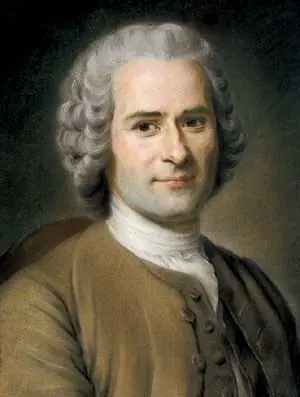
| 56 Quotes | |
| Occup. | Philosopher |
| From | France |
| Born | June 28, 1712 Geneva, Republic of Geneva |
| Died | July 2, 1778 Ermenonville, Kingdom of France |
| Aged | 66 years |
Jean-Jacques Rousseau was born on June 28, 1712, in the small republic of Geneva, a Calvinist city-state whose civic pride and moral rigor would remain stamped on his imagination even after he spent most of his adulthood in France. His mother, Suzanne Bernard, died within days of his birth, a loss he later treated as an origin wound, and his father, Isaac Rousseau, a watchmaker, fed him heroic romances and Plutarch before a quarrel and legal trouble pushed him to leave Geneva when Jean-Jacques was still a boy. The child who would theorize freedom began with abandonment and books, learning early to turn inward, to dramatize his fate, and to measure public institutions against private feeling.
Apprenticed unhappily-first to an engraver-he fled Geneva at sixteen and began years of wandering through Savoy, Switzerland, and France. The decisive early relationship was with Francoise-Louise de Warens, a Catholic convert and patron in Annecy and Chambery who housed him, renamed him, and encouraged him to convert and "make himself" through music and study. Their bond, part maternal shelter and part erotic entanglement, offered security at the cost of dependence; it also gave him a lifelong template: gratitude braided with resentment, intimacy shadowed by fear of domination.
Education and Formative Influences
Rousseau was largely self-taught, assembling his education from voracious reading, musical training, and the hard curriculum of precarious work: tutor, secretary, copyist, and would-be composer. In Paris in the 1740s he entered the orbit of Diderot and the Encyclopedists, absorbing the era's confidence in reason while recoiling from its salon cynicism. He studied ancient republicanism, modern natural law (notably Grotius and Pufendorf), and the theater of social rank that surrounded him, and he learned to transmute humiliation into moral indictment-a habit that made him both a witness to his century and an unstable participant in it.
Career, Major Works, and Turning Points
His public career ignited in 1750 when his Discourse on the Sciences and Arts, written for the Dijon Academy, won acclaim by arguing that progress in refinement often corrupts virtue; it was the first of several works that made him famous by refusing the mood of his peers. The Discourse on Inequality (1755) deepened the attack, locating modern servitude in the rise of property and comparison. After a successful opera, Le devin du village (1752), he withdrew from fashionable Paris, seeking authenticity in a life of modesty, then produced his major trio in 1762: The Social Contract, which grounded political legitimacy in the general will; Emile, a bold treatise on education and conscience; and the novel Julie, or the New Heloise, whose epistolary passions helped create modern emotional literature. Condemned by Paris and Geneva, he fled, passing through Switzerland, Prussia's Neuchatel, and England under David Hume before returning to France in relative obscurity, spending his last years copying music and writing The Confessions, Dialogues, and Reveries of the Solitary Walker, works that turned the courtroom of public opinion into an interior tribunal.
Philosophy, Style, and Themes
Rousseau's philosophy begins with an anthropology of vulnerability: humans are born capable of compassion, then are deformed by institutions that train them to perform for one another. He attacked the social theater of status not because he lacked pride, but because he had too much of it; few writers showed more clearly how shame can turn into doctrine. His political thought seeks a freedom compatible with equality: not the license of the strong, but a civic order in which each person obeys only laws they prescribe to themselves. That vision is inseparable from his fear that liberty, once surrendered, becomes almost unrecoverable; he speaks like a man who knows how quickly necessity becomes habit. "Free people, remember this maxim: we may acquire liberty, but it is never recovered if it is once lost". The sentence carries his private history as much as his public theory-the runaway apprentice warning citizens against the slow drift into dependence.
Stylistically he joined argument to confession, turning philosophical claims into scenes of felt experience: a walk, a memory, a blush, a quarrel. He distrusted secondhand knowing and loved immediate perception, which is why he could sound both like an Enlightenment thinker and its heretic. "I hate books; they only teach us to talk about things we know nothing about". The provocation is less anti-intellectual than therapeutic: he wanted knowledge to cure vanity, not inflate it. Yet he also relied on imagination as a moral instrument, using idealized nature, childhood, and love to expose the narrowness of social convention. "The world of reality has its limits; the world of imagination is boundless". That boundlessness is the engine of Julie's sentiment, Emile's educational fable, and his own self-portraiture-a way to reclaim an inner sovereignty when public life felt hostile.
Legacy and Influence
Rousseau died on July 2, 1778, at Ermenonville near Paris, leaving behind a body of work that helped reorient modern politics, pedagogy, and literature toward the claims of subjectivity. His language of popular sovereignty and civic virtue fed revolutionary republicanism, even as later readers argued over whether the general will protects freedom or licenses coercion. Emile reshaped educational theory by insisting on development, experience, and conscience; Julie and The Confessions helped found the modern culture of feeling and the autobiographical self. He remains enduringly contemporary because his central problem has not gone away: how to build societies that do not require people to betray their best impulses in order to belong.
Our collection contains 56 quotes who is written by Jean-Jacques, under the main topics: Ethics & Morality - Wisdom - Truth - Justice - Meaning of Life.
Other people realated to Jean-Jacques: Jean Paul (Author), Denis Diderot (Editor), John Morley (Statesman), Jean Piaget (Psychologist), Allan Bloom (Philosopher), Irving Babbitt (Critic), Peter Gay (Historian), John Rawls (Educator), Anne Louise Germaine de Stael (Author), Johann G. Hamann (Philosopher)
Jean-Jacques Rousseau Famous Works
- 1782 The Reveries of the Solitary Walker (Book)
- 1782 Confessions (Autobiography)
- 1762 Emile, or On Education (Book)
- 1762 The Social Contract (Book)
- 1761 Julie, or the New Heloise (Epistolary Novel)
- 1755 Discourse on the Origin and Basis of Inequality Among Men (Book)
- 1750 Discourse on the Arts and Sciences (Book)
Source / external links