
Robert Louis Stevenson Biography Quotes 84 Report mistakes
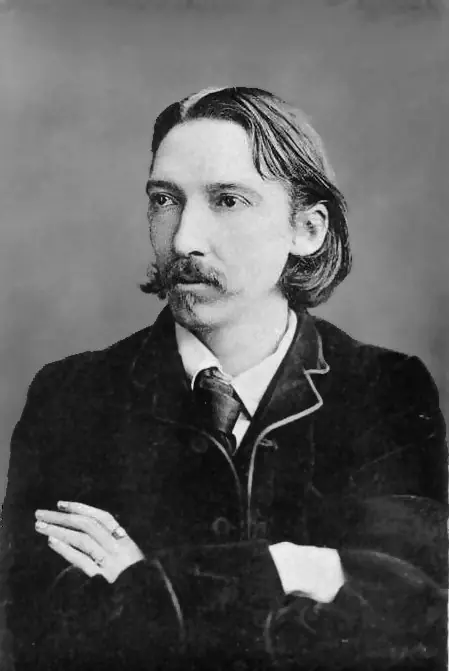
| 84 Quotes | |
| Occup. | Writer |
| From | Scotland |
| Born | November 13, 1850 |
| Died | December 3, 1894 |
| Aged | 44 years |
Robert Louis Stevenson was born on 13 November 1850 in Edinburgh, Scotland, into a distinguished family of lighthouse engineers. His father, Thomas Stevenson, and his grandfather, Robert Stevenson, had shaped the Scottish coasts with their designs, and expectations for the boy initially leaned toward engineering. His mother, Margaret Isabella Balfour, came from a clerical family, and the piety and tales of his maternal relatives mingled with the maritime lore of the Stevensons. Frail health shadowed his childhood; chronic respiratory illness made him a frequent invalid, tended with devotion by his nurse, Alison Cunningham, whom he later commemorated in his verse.
Education and the Turn to Literature
Stevenson entered the University of Edinburgh to study engineering, accompanying his father on lighthouse inspections and learning the family craft. Yet his interests veered to letters and the citys nocturnal byways. He shifted to law, was called to the Scottish bar in 1875, and never practiced. Instead he pursued literature, encouraged by the critic Sidney Colvin and by Leslie Stephen, editor of the Cornhill Magazine. Early essays later gathered in Virginibus Puerisque revealed a voice supple, conversational, and morally alert. He cultivated a cosmopolitan education as well, reading French prose and admiring Daniel Defoe, Sir Walter Scott, and Alexandre Dumas as models for narrative speed and clarity.
Continental Wanderings and a Transatlantic Marriage
Seeking health and independence, Stevenson traveled in France and Belgium, recording youthful adventures in An Inland Voyage (1878) and Travels with a Donkey in the Cevennes (1879). In the artists colony at Grez-sur-Loing he met the American Fanny Van de Grift Osbourne, separated and with two children. Their companionship became the central partnership of his life. In 1879 he crossed the Atlantic in humble circumstances to join her in California, a journey reflected in The Amateur Emigrant and Across the Plains. After Fanny obtained a divorce, they married in 1880 in San Francisco. Their honeymoon in the California hills furnished material for The Silverado Squatters. Stevenson embraced life as stepfather to Lloyd Osbourne and Isobel (Belle), and the household became his creative workshop.
Breakthrough and Major Works
The early 1880s were productive. He fashioned a modern romance in New Arabian Nights, then achieved popular fame with Treasure Island (first serialized as Captain George North, 1881-82; book, 1883). The pirates resourceful leader, Long John Silver, owed something to the vigor and independence of his friend W. E. Henley. A Childs Garden of Verses (1885) distilled his memory of childhood into lucid, musical stanzas. In 1886 he published two masterpieces: Strange Case of Dr Jekyll and Mr Hyde, a tale of moral duality that he rapidly rewrote after discarding an initial draft, and Kidnapped, followed by its sequel Catriona (also known as David Balfour, 1893). The Black Arrow and The Master of Ballantrae explored historical romance and fraternal rivalry. Essays such as Memories and Portraits and Familiar Studies of Men and Books showed his reflective, critical side.
Illness, Restlessness, and the Search for Climate
Stevensons health drove the geography of his life. He wintered in Davos, stayed in the south of France, and settled for a time in Bournemouth, where the family home, named Skerryvore after a celebrated lighthouse, became a center of work and companionship. Friends and correspondents included Colvin, Henley, and Henry James, with whom he discussed the art of fiction even as their temperaments differed. He and Henley collaborated on plays including Deacon Brodie, drawing on Edinburgh lore. Despite intermittent relapses, he pursued a disciplined routine, often dictating or writing in bed.
Pacific Voyages and the Samoan Home
In 1887 the family sailed for America and soon set out across the Pacific in search of a better climate. Stevenson chartered a schooner and cruised the Marquesas, Tahiti, and the Paumotu archipelago, later voyaging on other vessels through Micronesia and Polynesia. He stayed in Hawaii, met King Kalakaua, and wrote in defense of Father Damien, denouncing Reverend C. M. Hydes criticisms in a passionate open letter. In 1889 he made his home at Vailima, near Apia in Samoa, where he became known to his Samoan neighbors as Tusitala, the teller of tales. He involved himself in local affairs during a turbulent period of international rivalry, publishing A Footnote to History (1892), a measured but urgent account of Samoan politics and foreign interference.
Household, Collaborations, and Working Methods
The Vailima household was a complex creative enterprise. Stevenson dictated stories on the veranda, drafted chapters at a fierce pace, and turned increasingly to collaboration. With his stepson Lloyd Osbourne he coauthored The Wrong Box (1889), The Wrecker (1892), and The Ebb-Tide (1894), combining sensation, satire, and seafaring realism. Belle often assisted as secretary, and visitors, officials, and Samoan friends came and went in a steady stream. Though far from Edinburgh and London, he remained connected to literary life through a wide correspondence; Colvin managed his affairs in Britain, and James maintained a transoceanic friendship that testifies to Stevensons blend of romance and craft.
Themes, Style, and Reputation
Stevensons prose is marked by clarity, rhythm, and an emphasis on action governed by ethical choice. He revived romance at a moment when realism dominated, exploring doubleness in the self, the drama of conscience, and the seductions of adventure. His essays defend play, style, and the pleasures of narrative, while acknowledging the costs of experience. During his lifetime he was both a bestselling storyteller and a subject of critical debate; in the twentieth century, renewed attention to his artistry, letters, and unfinished work affirmed his stature.
Final Years and Death
Even in Samoa, illness never entirely released him. He continued to work ambitiously, beginning Weir of Hermiston, which many consider his most promising novel. On 3 December 1894, while at Vailima, he collapsed suddenly from a cerebral hemorrhage and died within hours. Samoan friends bore him to the summit of Mount Vaea and buried him there. The epitaph he had written for himself, the poem Requiem, closes with lines that became inseparable from his legend: Home is the sailor, home from sea, and the hunter home from the hill.
Legacy
Stevenson left a body of fiction, poetry, travel writing, and essays that reshaped the possibilities of narrative for readers young and old. Adventure tales such as Treasure Island and Kidnapped endure in popular memory, while Dr Jekyll and Mr Hyde continues to inform conversations about identity and morality. His letters illuminate a life of courage and courtesy in the face of illness. Through the advocacy of friends like Sidney Colvin and the esteem of peers such as Henry James, and through the devoted labor of his family at Vailima, his work reached a wide audience and has remained in print, inviting each generation to discover a teller of tales who made romance modern.
Our collection contains 84 quotes who is written by Robert, under the main topics: Witty One-Liners - Motivational - Ethics & Morality - Wisdom - Truth.
Other people realated to Robert: George Meredith (Novelist), Samuel Hoffenstein (Writer), Richard Le Gallienne (Poet), John Singer Sargent (Artist), John Walters (Musician)
Robert Louis Stevenson Famous Works
- 1889 The Master of Ballantrae (Novel)
- 1888 The Black Arrow (Novel)
- 1886 Kidnapped (Novel)
- 1886 Strange Case of Dr. Jekyll and Mr. Hyde (Novella)
- 1883 Treasure Island (Novel)
Source / external links