
Ryan White Biography Quotes 30 Report mistakes
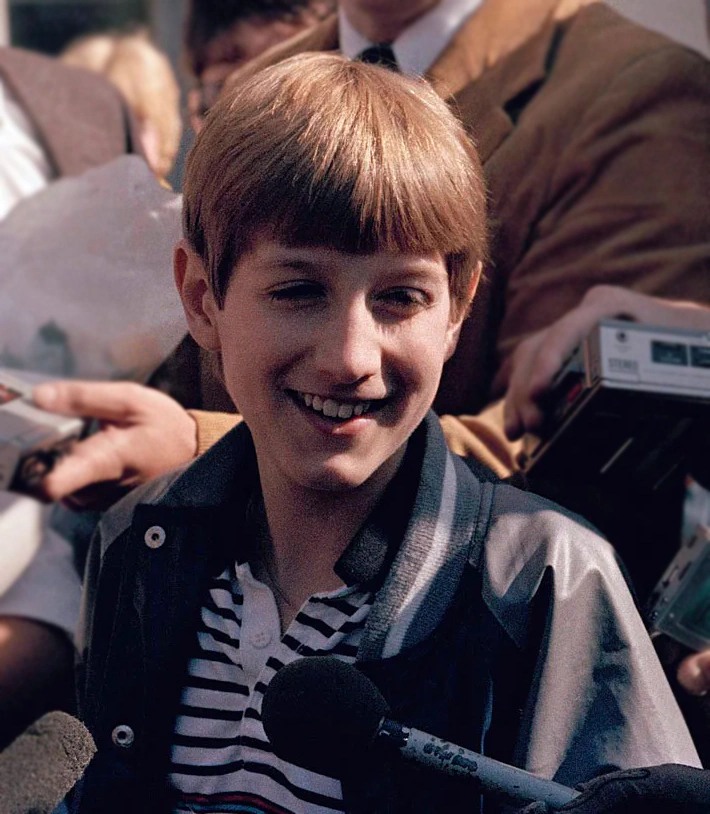
| 30 Quotes | |
| Born as | Ryan Wayne White |
| Occup. | Celebrity |
| From | USA |
| Born | December 6, 1971 Kokomo, Indiana, USA |
| Died | April 8, 1990 Indianapolis, Indiana, USA |
| Cause | AIDS-related complications |
| Aged | 18 years |
| Cite | |
Citation Formats
APA Style (7th ed.)
Ryan white biography, facts and quotes. (2026, March 29). FixQuotes. https://fixquotes.com/authors/ryan-white/
Chicago Style
"Ryan White biography, facts and quotes." FixQuotes. March 29, 2026. https://fixquotes.com/authors/ryan-white/.
MLA Style (9th ed.)
"Ryan White biography, facts and quotes." FixQuotes, 29 Mar. 2026, https://fixquotes.com/authors/ryan-white/. Accessed 3 Apr. 2026.
Early Life and Background
Ryan Wayne White was born on December 6, 1971, in Kokomo, Indiana, and grew up in the industrial Midwest at a moment when American medicine could prolong fragile lives but not yet dispel fear. He had severe hemophilia A, a disorder that prevented normal blood clotting and required frequent transfusions of Factor VIII, then derived from pooled human plasma. For boys like White, survival depended on a medical system that was itself vulnerable: before blood products were effectively screened and heat-treated, they could carry deadly infection. His childhood was therefore shaped by two opposite realities - ordinary small-town routines and constant medical risk. He was the younger child of Jeanne White-Ginder and Hubert Wayne White, and from the beginning his family life demanded discipline, vigilance, and unusual resilience.
That private struggle became public after December 1984, when White was diagnosed with AIDS at age thirteen following treatment for pneumonia. At the time, AIDS was still widely associated in the public mind with gay men, intravenous drug use, and moral panic; a child in Indiana with the disease did not fit the crude national script. Doctors initially gave him only months to live. Instead, he recovered enough to want what he had wanted before - to return to school, see friends, and resume a normal adolescence. The collision between that simple wish and his community's fear transformed him from a sick teenager into a national figure. White did not seek celebrity in the conventional sense; it was imposed on him by a culture that turned his body into a referendum on science, stigma, and belonging.
Education and Formative Influences
White's decisive education came less from classrooms than from exclusion from them. In 1985, Western Middle School in Russiaville, near Kokomo, barred him after his diagnosis, despite medical evidence that AIDS could not be transmitted through casual contact. The legal and civic battle that followed taught him how institutions behave under pressure: school boards bow to panic, neighbors can become hostile, and expertise alone rarely settles moral questions. Yet it also introduced him to lawyers, physicians, journalists, and activists who helped him find a public voice. His mother was his chief ally, combining maternal ferocity with practical intelligence as she fought to reintegrate him into school and protect his dignity. The ordeal accelerated White's maturity. While many adults around him spoke in rumor and reflex, he learned to speak in facts, to endure scrutiny, and to understand that visibility could be converted into persuasion.
Career, Major Works, and Turning Points
White's "career" was the work of witness. After a court battle, he returned to school, though harassment continued, and his family eventually moved to Cicero, Indiana, where Hamilton Heights schools received him more humanely. National media attention made him a symbol of the human face of AIDS in Reagan-era America, a period notorious for governmental slowness and public misunderstanding. White appeared on television, gave interviews, and became friendly with prominent supporters including Elton John, who would later perform at his funeral. He met public figures from Michael Jackson to Barbara Walters, but fame never ceased to revolve around one central demand: that he be treated as a boy, not a biohazard. In 1988 he published his autobiography, Ryan White: My Own Story, fixing his own account against sensationalism. His final years coincided with a broader shift in public consciousness, and after his death on April 8, 1990, Congress passed the Ryan White Comprehensive AIDS Resources Emergency Act, linking his name permanently to care, treatment access, and public health policy.
Philosophy, Style, and Themes
White's public philosophy was disarmingly plain: he insisted on facts, fairness, and ordinary human contact. That plainness was his power. “My name is Ryan White. I am sixteen years old. I have hemophilia, and I have AIDS”. The sentence is notable for its lack of self-pity or euphemism; he names the conditions directly, as if clarity itself were a moral act. In a country inclined to turn AIDS into allegory, White kept returning it to lived reality - medical, social, and personal. His struggle was never only against illness but against the social fantasies projected onto illness. “Listening to medical facts was not enough. People wanted one hundred percent guarantees”. captures his early understanding that prejudice often survives evidence because it is emotional before it is intellectual.
Just as important was White's refusal to let injury harden into hatred. He recognized the cruelty around him, but he analyzed it as ignorance rather than essence. “Eventually, I won the right to attend school, but the prejudice was still there”. is not merely a recollection of victory qualified by pain; it shows his grasp of the difference between legal inclusion and social acceptance. Equally revealing is his later judgment that his family “held no hatred for those people because we realized they were victims of their own ignorance”. That stance was not passive forgiveness but strategic moral steadiness. It allowed him to become, in effect, a teacher to adults, converting personal ordeal into civic instruction. His style, whether in interviews or memoir, was direct, Midwestern, almost understated - but beneath that calm was a fierce insistence that dignity belongs even to those whom a frightened society would isolate.
Legacy and Influence
Ryan White's legacy lies in the way a brief life altered the emotional grammar of an epidemic. He helped move AIDS in the American imagination from abstraction and blame to empathy and policy. For many families, he was the first person with AIDS they felt they knew; for many institutions, he was the case that exposed how ignorance could masquerade as caution. The federal program that bears his name remains one of the most durable responses to HIV/AIDS in the United States, but his influence exceeds legislation. He made the sick child, the excluded student, and the public witness into one figure, and by doing so he forced Americans to confront what fear does to community. His story endures because it is not only about disease. It is about citizenship, the ethics of attention, and the rare authority of someone who asked for nothing grander than the right to live among others without being treated as less than human.
Our collection contains 30 quotes written by Ryan, under the main topics: Never Give Up - Mortality - Meaning of Life - Equality - Movie.
Source / external links