
Albert Schweitzer Biography Quotes 60 Report mistakes
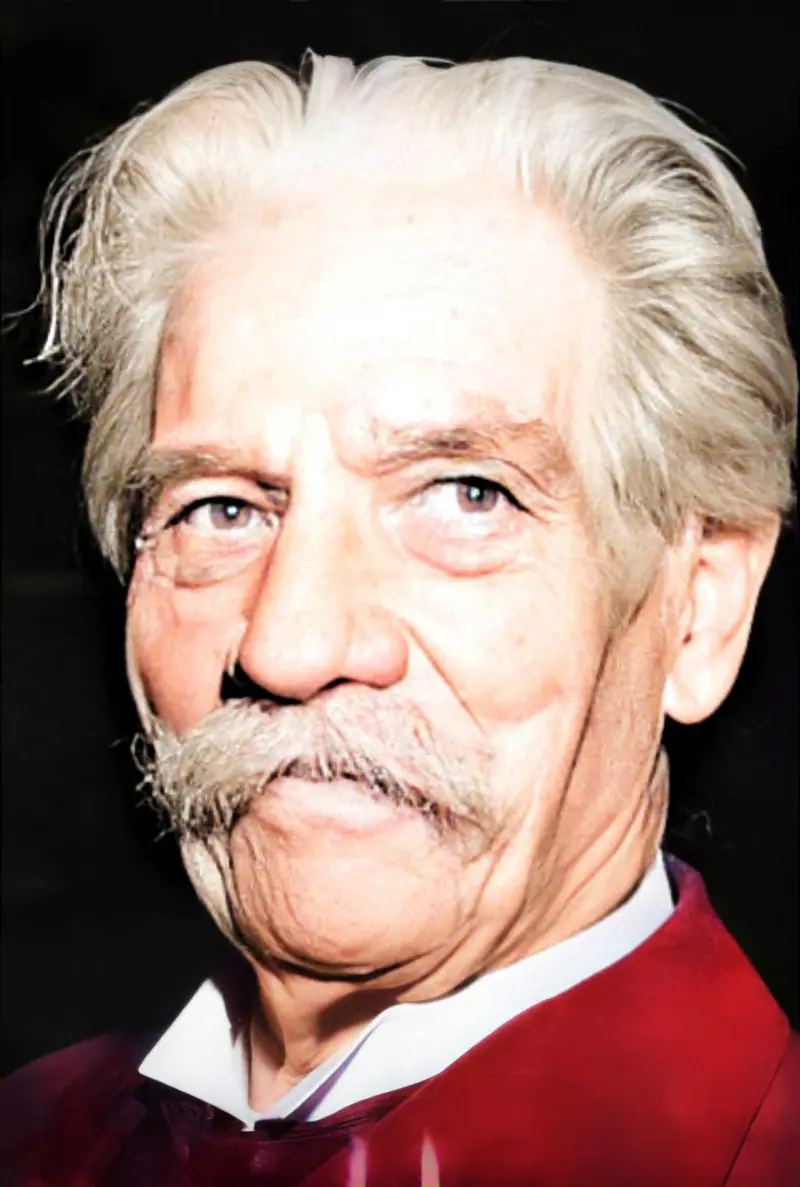
| 60 Quotes | |
| Occup. | Theologian |
| From | Germany |
| Spouse | Helene Bresslau |
| Born | January 14, 1875 Kaysersberg, Alsace-Lorraine, Germany |
| Died | September 4, 1965 Lambaréné, Gabon |
| Cause | Natural Causes |
| Aged | 90 years |
Albert Schweitzer was born on January 14, 1875, in Kaysersberg in Alsace, a borderland whose identity shifted between France and Germany and trained him early in cultural doubleness. He grew up mainly in the village of Gunsbach, where his father served as a Lutheran pastor. The parsonage gave him a front-row seat to sermon, sacrament, and village need, while the region's contested politics quietly impressed on him how easily nations turn neighbors into symbols.
From childhood he showed two lifelong traits: disciplined inwardness and an instinct to serve. Music became his earliest language of devotion - not as ornament, but as a moral practice, a way to order feeling. He also absorbed a practical Christianity that judged faith less by confessional precision than by whether it relieved suffering, a standard that would later press him beyond the study and pulpit into medicine.
Education and Formative Influences
Schweitzer studied theology and philosophy at the University of Strasbourg and in Paris, earning doctorates in both fields (his philosophy dissertation examined Kant's philosophy of religion). He also trained rigorously as an organist, studying in Paris with Charles-Marie Widor, who became a mentor and helped launch Schweitzer's reputation as an interpreter of J.S. Bach. In his early academic years he moved between critical scholarship and reverence - reading the New Testament with modern historical tools while seeking a faith credible after the shocks of modernity. That tension, sharpened by fin-de-siecle debates about progress, science, and the authority of Scripture, shaped the question that would dominate his inner life: what kind of ethic could command allegiance across creeds and empires?
Career, Major Works, and Turning Points
Schweitzer first rose as a scholar and musician: his book on Bach and his work restoring interest in historical organ building established him as a serious cultural figure, and his theological breakthrough came with The Quest of the Historical Jesus (1906), which argued that many portraits of Jesus mirrored the biographers more than the first-century figure. In 1905 he resolved to spend his life in direct service, and in 1913, after studying medicine at Strasbourg, he and his wife Helene Bresslau traveled to Lambarene in French Equatorial Africa (now Gabon) to found a hospital. World War I interrupted everything - as German citizens in a French colony they were interned and later repatriated - but he returned in the 1920s to rebuild and expand the hospital into a long-running medical mission. By mid-century he had become an international moral celebrity, awarded the 1952 Nobel Peace Prize (accepted in 1953), and he used that platform to speak forcefully against nuclear weapons while continuing to work in Lambarene until his death on September 4, 1965.
Philosophy, Style, and Themes
Schweitzer's hallmark idea, "Reverence for Life", emerged from his dissatisfaction with ethics built only on rules, nations, or metaphysics. He argued that morality begins in the raw fact of living will meeting other living will, and that the modern world, for all its achievements, was in danger of anesthetizing conscience. His work as a physician gave his ethic its grain: not abstract pity, but daily choices about pain, sanitation, triage, and dignity. When he wrote, "The first step in the evolution of ethics is a sense of solidarity with other human beings". he was describing the movement he wanted in himself - from solitary brilliance into binding obligation.
His style was both prophetic and self-auditing, a blend of scholarly severity and pastoral urgency. He distrusted moralizing that did not cost the speaker anything, insisting that credibility is earned through a lived wager: "My life is my argument". That sentence functions as psychology as much as motto - a confession that his mind would not rest unless his body also testified. Yet he also understood the emotional economy of vocation: fatigue, discouragement, and the need for renewal through others. "At times our own light goes out and is rekindled by a spark from another person. Each of us has cause to think with deep gratitude of those who have lighted the flame within us". In Schweitzer's world, gratitude was not sentiment; it was a discipline against pride, and a way to keep service from curdling into martyrdom.
Legacy and Influence
Schweitzer left a complicated but durable inheritance: a model of the public intellectual who crossed professions, a renewed emphasis on historical honesty in Jesus research, and a global symbol of medical service joined to ethical critique. Admirers saw in Lambarene proof that learning could be converted into mercy; critics noted paternalistic strains typical of his era and questioned the hospital's organization. Still, "Reverence for Life" traveled far beyond Alsace and Gabon - into humanitarian medicine, interfaith ethics, environmental thought, and anti-nuclear activism - because it offered modern people a stringent, portable test: does your progress deepen solidarity with the living, or merely enlarge your power over them?
Our collection contains 60 quotes who is written by Albert, under the main topics: Witty One-Liners - Ethics & Morality - Wisdom - Truth - Friendship.
Other people realated to Albert: Norman Cousins (Author), W. Eugene Smith (Photographer)
Source / external links