
Andrew Jackson Biography Quotes 48 Report mistakes
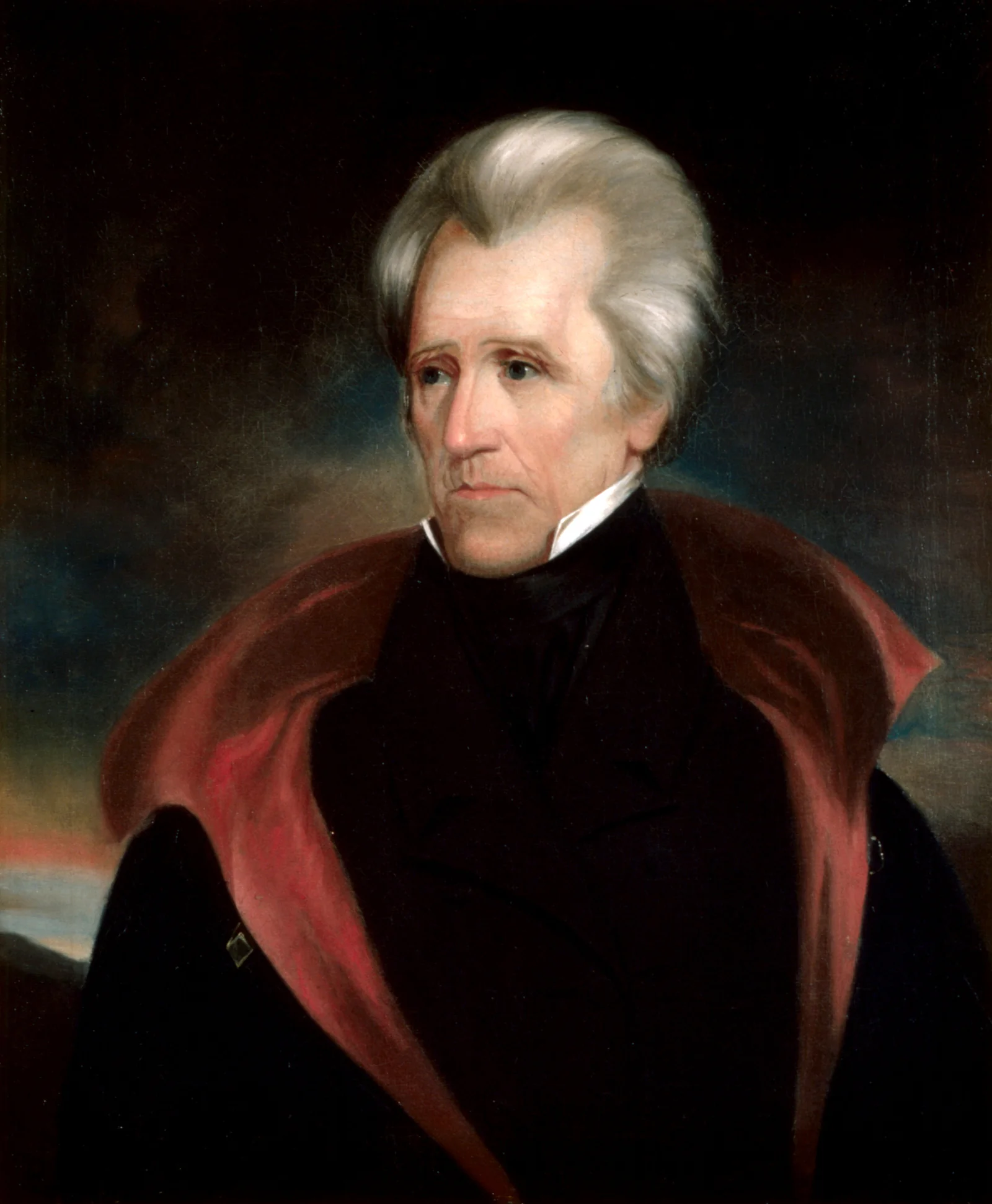
| 48 Quotes | |
| Occup. | President |
| From | USA |
| Born | March 15, 1767 |
| Died | June 8, 1845 |
| Aged | 78 years |
| Cite | |
Citation Formats
APA Style (7th ed.)
Andrew jackson biography, facts and quotes. (2026, February 1). FixQuotes. https://fixquotes.com/authors/andrew-jackson/
Chicago Style
"Andrew Jackson biography, facts and quotes." FixQuotes. February 1, 2026. https://fixquotes.com/authors/andrew-jackson/.
MLA Style (9th ed.)
"Andrew Jackson biography, facts and quotes." FixQuotes, 1 Feb. 2026, https://fixquotes.com/authors/andrew-jackson/. Accessed 1 Apr. 2026.
Early Life and Background
Andrew Jackson was born March 15, 1767, in the Waxhaws region along the Carolina border, a backcountry world of small farmers, militia musters, and Presbyterian seriousness. His parents were Scotch-Irish immigrants; his father died before his birth, and the family lived with the constant precarity of the frontier. That early absence and the thin margin between dignity and dependence helped form a man for whom honor was not an abstraction but a daily defense.The Revolutionary War arrived as a personal catastrophe. As a teenage courier for local patriots, Jackson was captured by the British; when he refused to polish an officers boots, he was cut with a sword, scars he carried as a lifelong credential of resistance. Disease and loss followed - his mother and two brothers died during or soon after the conflict - leaving him, in effect, self-invented. The combination of grievance, pride, and a fierce sense of having survived what others could not became the emotional engine of his later politics: he trusted loyalty, despised condescension, and met threats with escalation.
Education and Formative Influences
Jacksons formal education was patchy, but he read law and, more importantly, absorbed the courthouse culture of the early republic, where reputation could matter more than paperwork and a persuasive voice could substitute for pedigree. He moved west to Nashville in the 1780s, practiced as an attorney and prosecutor, and learned the language of land claims, debt, and political connection in a rapidly expanding slaveholding society. Frontier violence, the code of dueling, and the opportunities of speculation trained him to see government as both shield and weapon - something to be seized before it was used against you.Career, Major Works, and Turning Points
In Tennessee Jackson rose quickly: militia leader, congressman, senator, then judge, but his defining ascent came through war and crisis. He built national fame by defeating the Creek Red Sticks at Horseshoe Bend (1814), then by holding New Orleans against the British in 1815, an iconic victory that turned him into a symbol of popular deliverance. His Florida campaign (1818) displayed both strategic daring and a willingness to test legal boundaries, foreshadowing a presidency that treated executive power as an instrument of national will. After a bitter, disputed election in 1824 and a sweeping victory in 1828, he entered the White House as the avatar of a broadened electorate, then steered the country through the Nullification Crisis, destroyed the Second Bank of the United States, and signed the Indian Removal Act (1830) - achievements and tragedies that still define his reputation.Philosophy, Style, and Themes
Jacksons inner life was a compound of tenderness and ferocity. His marriage to Rachel Donelson Jackson, shadowed by accusations of bigamy, made politics feel like personal persecution; his grief later was absolute and devotional: “Heaven will be no heaven to me if I do not meet my wife there”. That private dependence helped explain his public hardness - he could forgive slights to himself less easily than wounds to those he loved, and he treated enemies as moral threats rather than mere rivals.His governing philosophy mixed democratic suspicion with a near-religious nationalism. He cast concentrated financial power as a conspiracy against ordinary citizens - “I have always been afraid of banks”. - and made the Bank War a drama of virtue versus privilege, even as he rewarded loyalists with patronage and expanded the spoils system. He also believed the Union was a sacred project, not a contract to be revised at will; in the Nullification Crisis he warned that “Nullification means insurrection and war; and the other states have a right to put it down”. The same iron certainty that defended federal authority also underwrote his most damaging legacy: removal policy pursued with administrative efficiency and moral blindness, as if expansion were destiny and dissent an obstacle.
Legacy and Influence
Jackson died on June 8, 1845, at the Hermitage near Nashville, leaving behind a transformed presidency and a nation more democratic for white men and more brutal for those excluded from that definition. He strengthened executive authority, popularized mass-party politics, and made the language of the common voter central to national life; at the same time, his actions toward Native nations and his entrenchment in slavery remain enduring indictments. The "Jacksonian" imprint persists whenever leaders claim a direct mandate from the people against courts, banks, or elites - a politics of grievance and redemption that can both energize democracy and endanger its restraints.Our collection contains 48 quotes written by Andrew, under the main topics: Witty One-Liners - Motivational - Justice - Puns & Wordplay - Friendship.
Other people related to Andrew: Davy Crockett (Explorer), Sam Houston (Politician), John Quincy Adams (President), Martin Van Buren (President), Richard Mentor Johnson (Politician), Edward Livingston (Judge), Winfield Scott Hancock (Soldier), John C. Calhoun (Statesman), George Dennison Prentice (Editor), William H. Wharton (Politician)
Andrew Jackson Famous Works
- 1837 Farewell Address (Essay)
- 1833 Second Inaugural Address (Essay)
- 1833 Message on the Removal of Deposits (Bank Deposits Controversy) (Non-fiction)
- 1832 Veto Message on the Bank Bill (Veto of the Second Bank of the United States) (Non-fiction)
- 1832 Proclamation to the People of South Carolina (Nullification Proclamation) (Non-fiction)
- 1830 Second Annual Message to Congress (State of the Union, 1830) (Non-fiction)
- 1830 Veto Message on the Maysville Road Bill (Non-fiction)
- 1830 Message to Congress on Indian Removal (Non-fiction)
- 1829 First Annual Message to Congress (State of the Union, 1829) (Non-fiction)
- 1829 First Inaugural Address (Essay)