
Charles Baudelaire Biography Quotes 75 Report mistakes
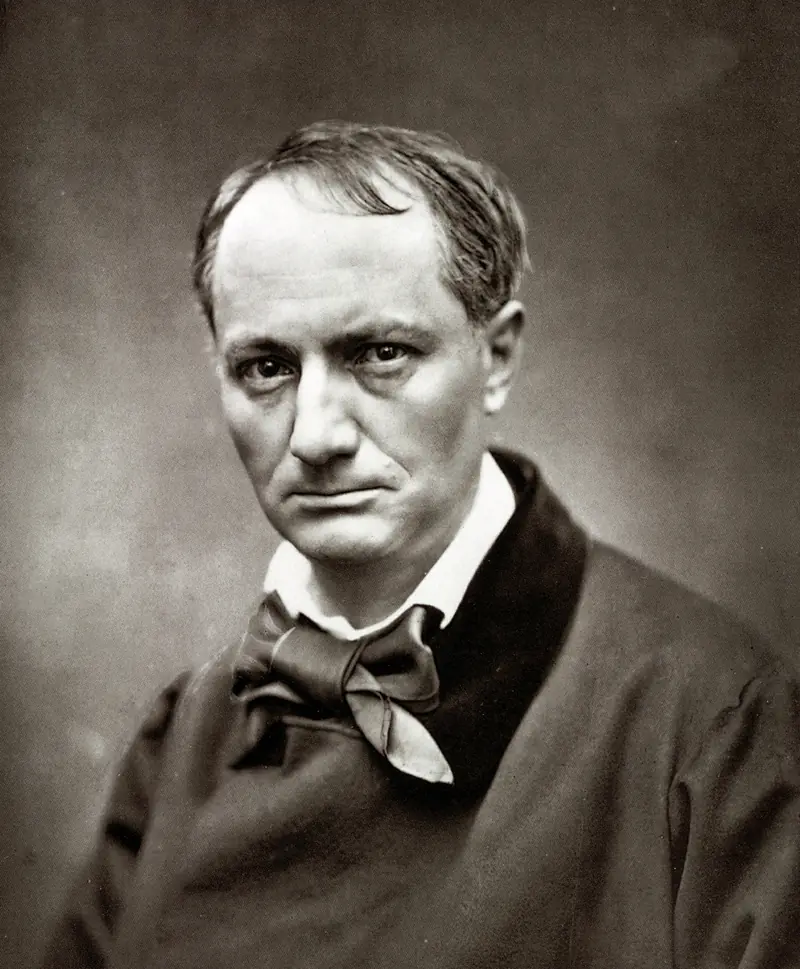
| 75 Quotes | |
| Occup. | Poet |
| From | France |
| Born | April 9, 1821 |
| Died | August 31, 1867 |
| Aged | 46 years |
Charles Baudelaire was born in Paris on April 9, 1821, the only child of Joseph-Francois Baudelaire, a civil servant and amateur artist, and Caroline Archenbaut Defayis. His father died when Charles was still a child, and his mother soon remarried Jacques Aupick, an army officer who rose to become a general and diplomat. The remarriage shaped much of Baudelaire's inner life: he adored his mother yet resented the discipline and careerist values represented by Aupick. Moves between Paris and Lyon and studies at demanding schools gave him a polished classical education, but also deepened his dislike of conformity and sharpened a taste for independence, elegance, and provocation.
Formative Years and First Writings
In 1841 his family tried to redirect him with a long sea voyage. Baudelaire sailed toward the Indian Ocean, experiencing Mauritius and Reunion, absorbing vivid tropical impressions that later surfaced in poems and prose. On returning to Paris he came into his inheritance. A period of extravagant living followed: refined clothes, artworks, and a succession of rented rooms, including at the Hotel Pimodan on the Ile Saint-Louis, where he moved in bohemian circles and discussed art, literature, and new intoxicants. Debts mounted, and his family placed his funds under legal guardianship administered in part by a notary named Ancelle, a constraint he never forgave.
The mid-1840s brought his first important criticism. In the Salons of 1845 and 1846 he defended modern painting and praised Eugene Delacroix, articulating a vision of modern beauty grounded in the present and in the city. He developed the figure of the flaneur, the artist-observer of the crowd, and a refined ethics of dandyism. He also began translating and championing writers whose sensibility he felt matched his own, notably Edgar Allan Poe, whose tales and poems he rendered into French with meticulous care.
Personal Relations and Parisian Circles
Baudelaire's life unfolded in intense attachments. The actress and dancer Jeanne Duval, of Caribbean origin, was his companion for many years, a source of desire, conflict, and recurring inspiration. He also formed relationships with Marie Daubrun and with the salon hostess Apollonie Sabatier, to whom he addressed fervent poems. He frequented gatherings where figures such as Theophile Gautier, Gerard de Nerval, and Nadar explored new ideas in art and sensation; he tested the limits of perception with hashish and opium, experiences he later examined soberly in essays.
The upheavals of 1848 drew him briefly into the streets, but politics never replaced his commitment to art. He cultivated friendships and rivalries in letters and painting, wrote about Daumier and Delacroix, and observed with wary sympathy the ambitions of younger realists like Gustave Courbet.
Les Fleurs du mal and Censorship
His major book of poems, Les Fleurs du mal, appeared in 1857 through the publisher Auguste Poulet-Malassis. Its organization into cycles of Spleen and Ideal, Parisian scenes, revolt, wine, and death proposed a new architecture for lyric experience, uniting musical language with the starkness of modern urban life. The authorities prosecuted the book for offense to public morals; Baudelaire and his publisher were fined, and six poems were banned. A revised and enlarged edition followed in 1861, adding the Tableaux parisiens and reinforcing his image of the city as both infernal and sublime. Theophile Gautier received the dedication, a public sign of gratitude to a poet he esteemed. Victor Hugo, from exile, recognized in the book a new intensity and defended its artistic necessity, while Gustave Flaubert, himself recently tried for Madame Bovary, offered solidarity.
Criticism, Aesthetics, and Translations
Beyond verse, Baudelaire shaped modern aesthetics. He translated Poe across the 1850s and 1860s, helping to secure Poe's standing in France and refining his own prose through the discipline of translation. In The Painter of Modern Life (1863), inspired by the sketches of Constantin Guys, he defined modernity as the ephemeral made memorable by art's eternal element. He wrote on music and defended Richard Wagner after the Paris scandal around Tannhauser, grasping how orchestral color might parallel poetic suggestion. Petits poemes en prose, later known as Le Spleen de Paris, experimented with a flexible, urban prose form, capturing fleeting perceptions, marginal lives, and the shock of the crowd. Les Paradis artificiels (1860) investigated intoxication, not as mere scandal, but as a study in the costs and illusions of heightened sensation, in dialogue with Thomas De Quincey.
Health, Hardship, and Exile
Chronic illness, bouts of depression, and relentless financial pressure shadowed his productivity. The guardianship over his inheritance persisted, and creditors were a constant presence. Weariness with Parisian battles led him to leave for Belgium in 1864, hoping to lecture and find new support. Brussels, however, disappointed him; he drafted bitter notes on the country and on his own condition, published posthumously under the title Pauvre Belgique!. In 1866, during a visit to Namur, he suffered a stroke that left him with partial paralysis and aphasia. He was brought back to Paris under his mother's care, but his health did not recover.
Death and Burial
Charles Baudelaire died in Paris on August 31, 1867. He was buried in Montparnasse Cemetery, in the family tomb with his mother and stepfather, the same figures whose love and authority had marked his earliest years. Friends and fellow writers, among them Theophile Gautier and others of the Parisian literary world, mourned the loss of a poet whose work had already begun to reshape the possibilities of the lyric.
Legacy
Baudelaire's legacy is vast. He provided a language for modern urban existence, for ennui and ecstasy, for the moral ambiguity of beauty. His critical writings gave future artists a method to read their age without nostalgia. His poems, with their exact music and startling images, influenced the Symbolists, including Stephane Mallarme, Paul Verlaine, and Arthur Rimbaud, and reached beyond France to later modernists in many languages. As translator of Poe, ally of Delacroix, defender of Wagner, and observer of photographers like Nadar, he stood at the crossroads of multiple arts. The censored poet of 1857 emerged, after his death, as a central figure in the modern imagination, a writer who transformed scandal into form and fleeting moments into lasting art.
Our collection contains 75 quotes who is written by Charles, under the main topics: Witty One-Liners - Motivational - Ethics & Morality - Wisdom - Truth.
Other people realated to Charles: T. S. Eliot (Poet), Walter Benjamin (Critic), Gaston Bachelard (Philosopher)
Charles Baudelaire Famous Works
- 1869 Le Spleen de Paris (Prose Collection)
- 1860 Les Paradis artificiels (Essay)
- 1857 Les Fleurs du mal (Poetry Collection)
Source / external links