
Henry Ward Beecher Biography Quotes 92 Report mistakes
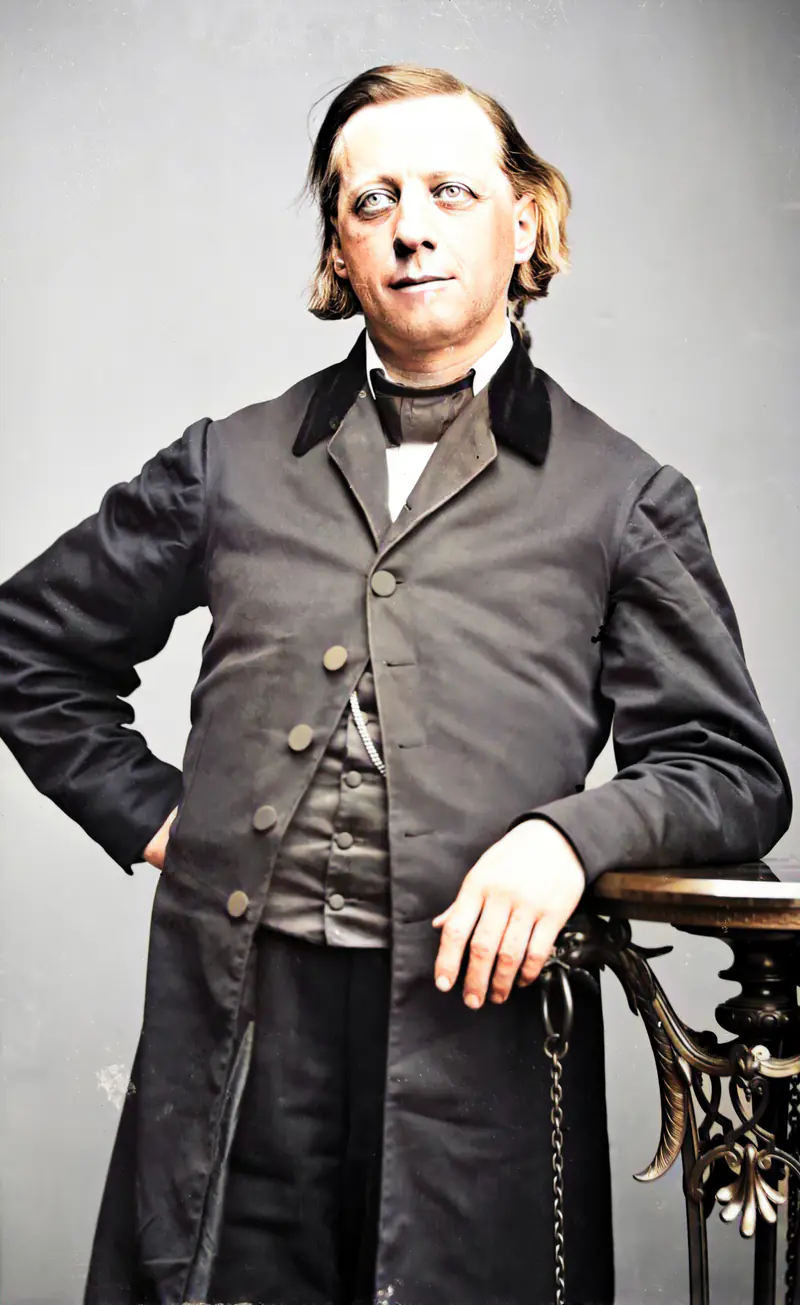
| 92 Quotes | |
| Occup. | Clergyman |
| From | USA |
| Spouse | Eunice White Beecher (1837) |
| Born | June 24, 1813 Litchfield, Connecticut, USA |
| Died | March 8, 1887 Queens, New York, USA |
| Aged | 73 years |
Henry Ward Beecher was born on June 24, 1813, in Litchfield, Connecticut, into a household where religion was not merely belief but public mission. His father, Lyman Beecher, was one of the era's most prominent Congregational ministers, a fierce moral reformer whose pulpit campaigns against intemperance and theological drift helped define the Second Great Awakening. The Beecher home was crowded, ambitious, and intellectually militant, producing a cluster of consequential children: Harriet Beecher Stowe, Catharine Beecher, and later Isabella Beecher Hooker among them. From the start, Henry lived inside a family drama of conscience and performance, where private feeling was expected to harden into social purpose.
The early nineteenth-century New England he inherited was a place of revival meetings and village discipline, but also a nation widening westward, testing the limits of slavery, and inventing mass politics. Beecher's childhood was marked by his mother's death when he was still young, a loss that deepened his lifelong sensitivity to the emotional texture of domestic life and worship. He grew up observing how his father's certainty could move crowds - and how a minister's authority depended on voice, presence, and timing as much as on doctrine. That early exposure to public persuasion would later make him the most famous pulpit orator in America, and also place him at the center of a culture increasingly hungry for celebrities to embody its anxieties and ideals.
Education and Formative Influences
Beecher studied at Amherst College, graduating in 1834, and then at Lane Theological Seminary in Cincinnati, where his father served as president. Lane was a furnace of debate over revivalism, modern learning, and, above all, slavery; the city itself sat on the border of slave and free worlds, and the question was impossible to keep theoretical. Beecher absorbed the rhetoric of moral suasion and the techniques of evangelical address, but he also learned to distrust purely scholastic religion. He was influenced by the era's emphasis on individual experience - the idea that faith should be felt, not merely assented to - and he began developing a preaching style that prized narrative, humor, and emotional immediacy over tight Calvinist argument.
Career, Major Works, and Turning Points
Ordained in the 1830s, Beecher served pastorates in Indiana before being called in 1847 to Plymouth Church in Brooklyn, New York, where he transformed a congregation into a national platform. In Brooklyn he became a leading public voice for antislavery, supporting the Free Soil cause and later the Union; his fame extended through lecture tours and an expanding print culture, including the widely read Independent and, after the Civil War, his own weekly, the Christian Union. He backed the Republican ascent and was sent to England during the Civil War to argue for the Union against pro-Confederate sentiment, relying on sheer oratorical dominance in hostile halls. His life then pivoted from triumph to ordeal in the 1870s amid the sensational adultery allegations and the Beecher-Tilton scandal, culminating in an 1875 trial that ended without a verdict. Though his church largely stood by him and he continued preaching, the controversy permanently altered how Americans understood clerical authority, privacy, and the costs of fame.
Philosophy, Style, and Themes
Beecher's theology was a liberalizing evangelicalism - still biblical and conversion-minded, but less obsessed with inherited guilt and more with spiritual growth, social sympathy, and the moral imagination. He preached a God who could be trusted as much as feared, and he treated the church as a workshop for character rather than a tribunal of orthodoxy. His language was colloquial, image-rich, and startlingly modern in its willingness to borrow from everyday life, commerce, and the theater. Beneath the buoyant delivery lay a psychological urgency: he needed religion to reach the whole person, including appetite, grief, and desire, because he sensed how easily piety could become performance without inner change.
That insistence on lived faith shaped the aphorisms that distilled his worldview. He framed love as the basic current of moral life - "Love is the river of life in the world". - not as sentimentality but as the energy that makes reform, forgiveness, and family possible. He also warned against moral shortcuts and public holiness unbacked by private discipline: "It is not well for a man to pray cream and live skim milk". And he believed that progress in thought is often misrecognized in the moment, captured in his confidence that "The philosophy of one century is the common sense of the next". Taken together, these lines reveal a man trying to reconcile appetite with conscience and to keep reform from hardening into self-righteousness - a tension that made his preaching vivid, and his private life a magnet for scrutiny.
Legacy and Influence
Beecher died on March 8, 1887, in Brooklyn, having helped remake the American minister into a public intellectual, celebrity, and moral entrepreneur. He advanced an emotionally expressive Protestantism that fed later Social Gospel currents, helped legitimate antislavery activism from the pulpit, and demonstrated how mass media could amplify religious leadership - and expose it. His scandal did not erase his influence; it complicated it, leaving later generations to debate whether charisma can substitute for character and how institutions should handle moral failure. In American memory, Beecher endures as both a master of persuasive speech and a case study in the perilous marriage of religion, politics, and fame.
Our collection contains 92 quotes who is written by Henry, under the main topics: Witty One-Liners - Motivational - Ethics & Morality - Wisdom - Friendship.
Source / external links