
J.B. Priestley Biography Quotes 39 Report mistakes
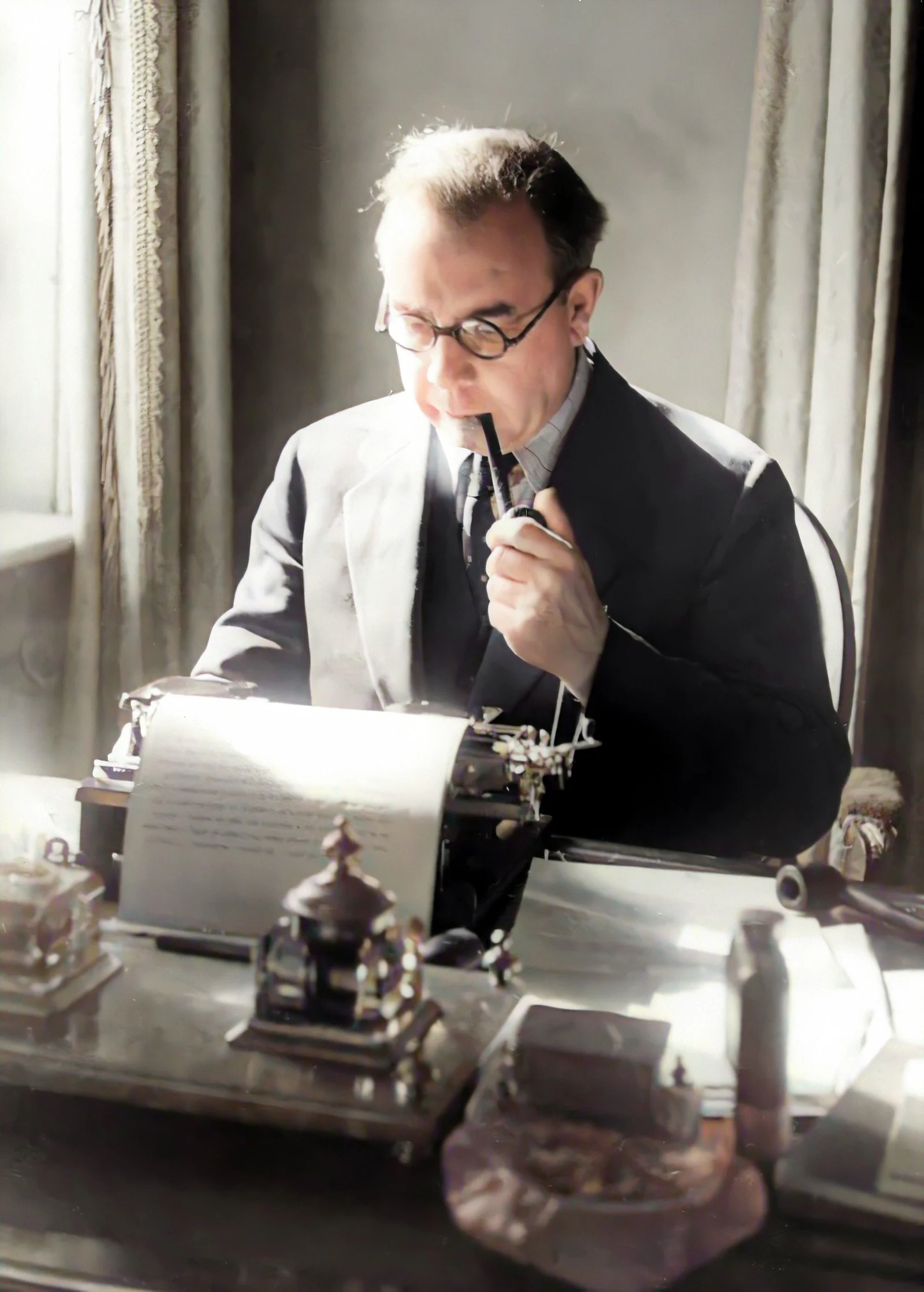
| 39 Quotes | |
| Born as | John Boynton Priestley |
| Known as | Joseph Priestley |
| Occup. | Writer |
| From | United Kingdom |
| Born | September 13, 1894 Bradford, West Riding of Yorkshire, England |
| Died | August 14, 1984 Stratford-upon-Avon, Warwickshire, England |
| Aged | 89 years |
| Cite | |
Citation Formats
APA Style (7th ed.)
J.b. priestley biography, facts and quotes. (2026, February 1). FixQuotes. https://fixquotes.com/authors/jb-priestley/
Chicago Style
"J.B. Priestley biography, facts and quotes." FixQuotes. February 1, 2026. https://fixquotes.com/authors/jb-priestley/.
MLA Style (9th ed.)
"J.B. Priestley biography, facts and quotes." FixQuotes, 1 Feb. 2026, https://fixquotes.com/authors/jb-priestley/. Accessed 31 Mar. 2026.
Early Life and Background
John Boynton Priestley was born on September 13, 1894, in Manningham, Bradford, in the West Riding of Yorkshire, a city shaped by the late-Victorian wool trade and by a dissenting, self-improving civic culture. His mother died when he was an infant, leaving a quiet wound that later surfaced in his sensitivity to domestic loss, moral luck, and the precariousness of ordinary happiness. Raised largely by his father, Jonathan Priestley, a headmaster with strong Nonconformist values, Priestley absorbed the plain speech and ethical seriousness of northern England - the voice that would become both his literary instrument and his public authority.As a teenager he worked as a clerk in the wool offices, watching commerce and class from the inside and collecting the textures of working life he would later render with uncommon immediacy. The Edwardian world around him promised progress but carried hard edges: labor unrest, social stratification, and a growing sense that modern life was speeding up without becoming wiser. That tension - between the dream of improvement and the lived reality of people pinched by systems - would remain a central engine of his writing and politics.
Education and Formative Influences
Priestley read voraciously and wrote early, publishing pieces in local papers before the First World War remade his generation. In 1914 he enlisted, served with the Duke of Wellington's Regiment, and was wounded; trench experience, comradeship, and the arbitrary distribution of suffering deepened his distrust of complacent authority and sharpened his ear for the way institutions justify themselves. After demobilization he studied at Trinity Hall, Cambridge, as part of the cohort of veterans trying to translate war into meaning; he also learned the London literary marketplace, journalism, and the discipline of writing to deadline, all while carrying an outsider's accent into metropolitan rooms.Career, Major Works, and Turning Points
In the 1920s Priestley built a career as an essayist and critic, but his breakthrough came with The Good Companions (1929), whose expansive picaresque energy captured a public hungry for warmth and community after the austerities of war. He followed with the memoir-like English Journey (1934), a social survey that mapped the Depression's human cost and helped push him toward democratic socialism and a moral critique of economic orthodoxy. As a dramatist he achieved lasting stature with the time-bending thriller An Inspector Calls (1945) and the experimental Time and the Conways (1937), plays that fused entertainment with ethical reckoning. During the Second World War his BBC radio "Postscripts" made him one of the nation's most recognizable voices, praising endurance while challenging privilege, and his later decades - essays, fiction, and advocacy for nuclear disarmament - showed a writer unwilling to retire from argument.Philosophy, Style, and Themes
Priestley's signature stance was humane, skeptical, and fiercely attentive to the everyday. He distrusted grandiose rhetoric and fashionable cleverness, preferring a clear sentence that carried the sound of a real voice in a real room. Even when he played with time theories and metaphysical puzzles, the point was rarely abstraction; it was to reveal how people evade responsibility, how comfort breeds blindness, and how moral choices echo outward into others' lives. His comedy is rarely weightless, because laughter, for him, is a social instrument: “Comedy, we may say, is society protecting itself - with a smile”. That line captures his dramaturgy - amusement that disarms, then exposes.Beneath the public moralist was a temperament drawn to hope and renewal, not naively but as a discipline against despair. “I have always been delighted at the prospect of a new day, a fresh try, one more start, with perhaps a bit of magic waiting somewhere behind the morning”. This recurring faith in second chances informs his best work: families forced to relive decisions, prosperous diners made to face their victims, nations asked to imagine a fairer postwar settlement. Yet he also saw modernity's paradox, in which technical progress can hollow out human intimacy: “The more we elaborate our means of communication, the less we communicate”. In Priestley, optimism and warning coexist - an inner life balancing enchantment with a stubborn awareness of how easily societies talk past their own conscience.
Legacy and Influence
Priestley died on August 14, 1984, in the United Kingdom, leaving a body of work that still bridges the gap between popular storytelling and moral inquiry. An Inspector Calls has become a modern classic on stage and in classrooms, not because it flatters virtue but because it dramatizes complicity with thrilling economy; English Journey remains a touchstone for writers trying to read a nation through its streets and workplaces. As a broadcaster he helped define wartime public speech, and as a democratic socialist he pressed for a Britain that matched its rhetoric with justice. His enduring influence lies in the way he made ethics theatrical, history intimate, and ordinary voices authoritative - insisting that the private life and the public order are, finally, the same story told at different volumes.Our collection contains 39 quotes written by Priestley, under the main topics: Witty One-Liners - Truth - Wisdom - Puns & Wordplay - Sarcastic.
Other people related to Priestley: David Rittenhouse (Scientist)
Frequently Asked Questions
- JB Priestley Awards: J.B. Priestley received the James Tait Black Memorial Prize and the Order of Merit, among other awards and honorary degrees.
- JB Priestley Achievements: Some of J.B. Priestley's achievements include writing successful novels, plays, essays, and founding the 1941 Committee to support the welfare state.
- JB Priestley Parents: J.B. Priestley's parents were Jonathan Priestley, a schoolmaster, and Emma Holt, a seamstress.
- Why did JB Priestley Reject Knighthood: J.B. Priestley rejected a knighthood in 1965 due to his opposition to the British honours system and his political beliefs.
- JB Priestley Family: J.B. Priestley was married three times and had six children: four with his first wife Emily, and two with his second wife Jane.
- JB Priestley Political Views: J.B. Priestley was a socialist, Labour Party supporter, and proponent of the welfare state.
- How old was J.B. Priestley? He became 89 years old
J.B. Priestley Famous Works
- 1965 Lost Empires (Novel)
- 1947 The Linden Tree (Play)
- 1946 Bright Day (Novel)
- 1945 An Inspector Calls (Play)
- 1939 Johnson Over Jordan (Play)
- 1939 Let the People Sing (Novel)
- 1938 When We Are Married (Play)
- 1937 I Have Been Here Before (Play)
- 1937 Time and the Conways (Play)
- 1934 Eden End (Play)
- 1934 English Journey (Non-fiction)
- 1932 Dangerous Corner (Play)
- 1930 Angel Pavement (Novel)
- 1929 The Good Companions (Novel)
- 1927 Benighted (Novel)
Source / external links