
Nicola Abbagnano Biography Quotes 1 Report mistakes
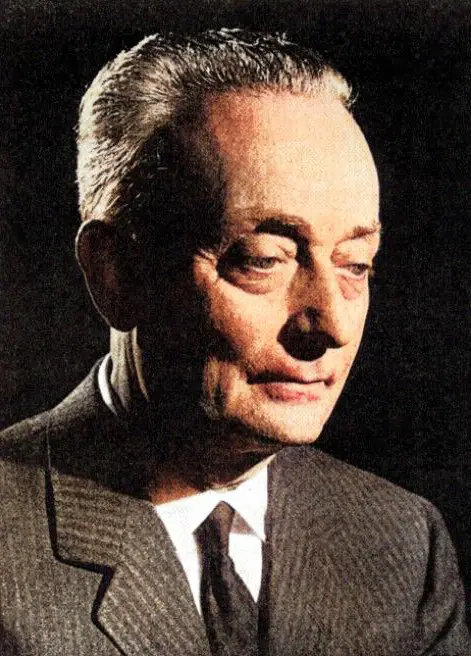
| 1 Quotes | |
| Occup. | Philosopher |
| From | Italy |
| Born | July 15, 1901 Salerno, Kingdom of Italy |
| Died | September 9, 1990 Milan, Italy |
| Aged | 89 years |
Nicola Abbagnano was an Italian philosopher best known for shaping a distinctive, constructive form of existentialism within the twentieth-century European context. Born in 1901 in southern Italy, he studied philosophy at the University of Naples. There he came under the influence of Antonio Aliotta, whose openness to scientific method and critical inquiry helped orient Abbagnano away from the prevailing idealisms of Benedetto Croce and Giovanni Gentile. From the outset he showed interest in the interface between rigorous analysis and the lived problems of human existence, a balance that would become his signature. His early research combined historical study with systematic aims, engaging classical sources alongside contemporary currents emerging from phenomenology and the new existential philosophies.
Academic formation and move to Turin
In the late 1920s and 1930s Abbagnano's writings began to situate Italian debates in a broader European frame. Responding to phenomenology and the emerging existentialisms of Martin Heidegger, Karl Jaspers, and Gabriel Marcel, he argued that the existential condition need not be read in purely tragic or irrationalist terms. By the mid-1930s he was appointed to teach the history of philosophy at the University of Turin, the institution with which his career would be most closely associated. Turin's faculty and intellectual milieu placed him in conversation with figures such as Norberto Bobbio, Ludovico Geymonat, Luigi Pareyson, and Augusto Guzzo. This environment, enriched by historians, jurists, scientists, and literary scholars, provided an ideal setting for Abbagnano's effort to keep philosophy in dialogue with method, science, and public life.
Positive existentialism and the category of possibility
Abbagnano's most original contribution is often called positive existentialism, sometimes summarized as a philosophy of possibility. Against the despairing tones he found in some readings of Heidegger or in the literature associated with Jean-Paul Sartre, he proposed that human existence is best understood through the category of possibility: each person is situated, constrained, and finite, yet always confronted by real alternatives that can be critically appraised and chosen. Freedom is not an abstract absoluteness, but the disciplined capacity to select among possibilities responsibly, with attention to the limits imposed by context, institutions, knowledge, and other people. This orientation preserved existentialism's focus on choice, anxiety, responsibility, and temporality, while resisting irrationalism and emphasizing method, verification, and learning.
Major works and scholarly profile
Abbagnano gave this view systematic form in books that became touchstones in Italy and beyond. La struttura dell'esistenza and Introduzione all'esistenzialismo presented his constructive revisions of twentieth-century existential themes and set them against the historical backdrop of classical and modern philosophy. Over the ensuing decades he developed the program in essays and monographs that explored choice, probability, method, and the relation between scientific inquiry and human decision. He also produced a widely used Dizionario di filosofia, a compact yet authoritative reference that distilled complex debates into clear entries and signaled his commitment to accessible scholarship. His multi-volume Storia della filosofia offered a balanced historical map of the discipline; later editions and updates involved the collaboration of Giovanni Fornero, ensuring continuity for new generations of readers.
Teaching, collaborations, and the Turin milieu
At Turin, Abbagnano cultivated an inclusive seminar culture that welcomed historical erudition and methodological clarity in equal measure. He often worked alongside Norberto Bobbio, whose analyses of law and democracy complemented Abbagnano's insistence on responsibility and rational choice, and with Ludovico Geymonat, whose philosophy of science provided a robust interlocutor for connecting existential themes to scientific practice. He also engaged, sometimes critically and sometimes convergently, with Luigi Pareyson, whose hermeneutic existentialism shaped students such as Gianni Vattimo and Umberto Eco. Although these thinkers pursued different paths, their proximity fostered a distinctive Turinese conversation about freedom, interpretation, modernity, and the public role of philosophy.
Public intellectual and civic presence
In the postwar era Abbagnano emerged as an influential public voice. He wrote for major newspapers and cultural journals, contributing columns that translated complex philosophical issues into discussions intelligible to a broad readership. His interventions argued for a democratic, secular, and reform-minded culture grounded in education, open debate, and institutional responsibility. He encouraged dialogue between the humanities and the sciences and took part in initiatives that brought philosophers into contact with mathematicians, jurists, and historians. While critical of dogmatisms across the political spectrum, he kept the focus on practical reason: how citizens and institutions might recognize genuine possibilities, avoid wishful thinking, and commit to choices that could be progressively corrected by experience.
International context and interlocutors
Abbagnano's position resonated with European debates without simply echoing them. He learned from Heidegger, Jaspers, Marcel, and Sartre, but rejected the temptation to interpret contingency as fatalism or authenticity as solitary heroism. He defended a concept of rationality adequate to human finitude: one that remains experimental, probabilistic, and corrigible. This stance allowed him to converse with currents as diverse as neo-Kantianism, phenomenology, and analytic discussions of language and method, while retaining a consistent existential core centered on decision and responsibility.
Later years and legacy
Through the 1960s, 1970s, and into the 1980s, Abbagnano continued to revise and expand his works, updating entries in the Dizionario di filosofia and refining the historical judgments in the Storia della filosofia. He remained a reference point for teachers, students, and readers seeking a lucid account of both philosophical problems and the intellectual traditions that addressed them. He died in 1990, leaving a body of work that sustained Italian philosophy's international visibility and provided a distinctive alternative within existential thought.
Abbagnano's legacy lies not only in specific theses but in a temper: the conviction that philosophy can be simultaneously historical and systematic, existentially serious and empirically responsible. By integrating choice with method, and by situating possibility within real constraints, he offered a model for thinking in conditions of uncertainty. The colleagues around him in Turin and the interlocutors across Europe helped shape that model, but the voice that emerges from his books is unmistakably his own: sober, patient, and committed to the hard work of choosing well among the possibilities that human life affords.
Our collection contains 1 quotes who is written by Nicola, under the main topics: Reason & Logic.
Nicola Abbagnano Famous Works
- 1961 Dictionary of Philosophy (Book)
- 1957 Outline of Philosophy (Book)
- 1950 Possibility and Necessity in Modern Philosophy (Book)
- 1948 Existentialism (Book)
- 1946 History of Philosophy (Book)
- 1942 The Problem of Art (Book)
Source / external links