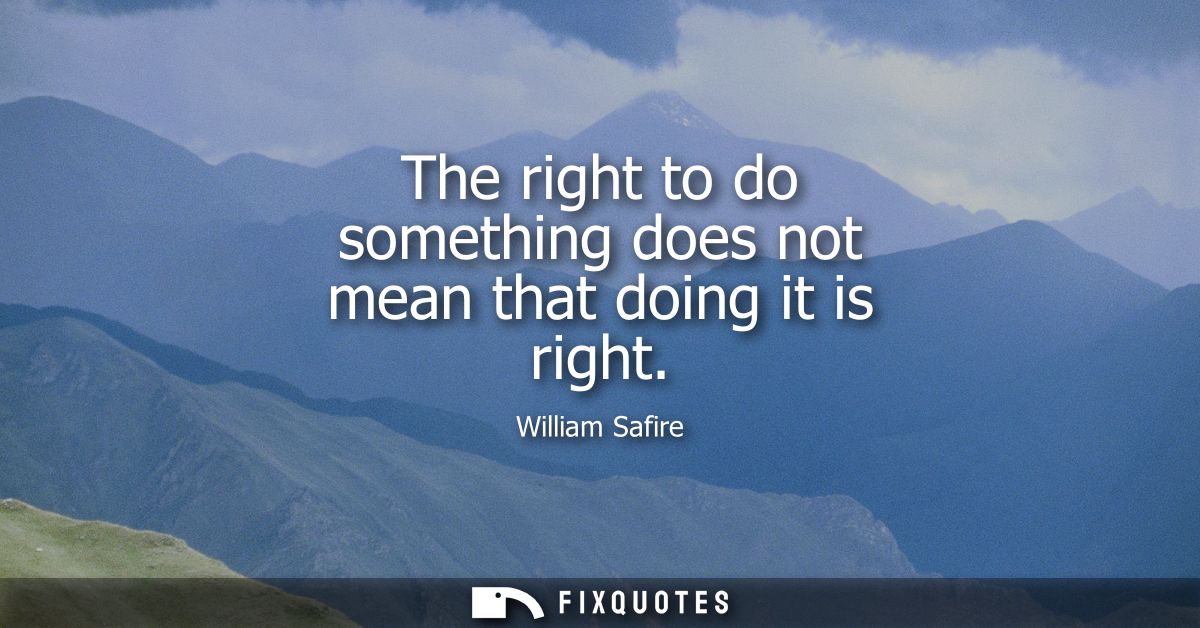
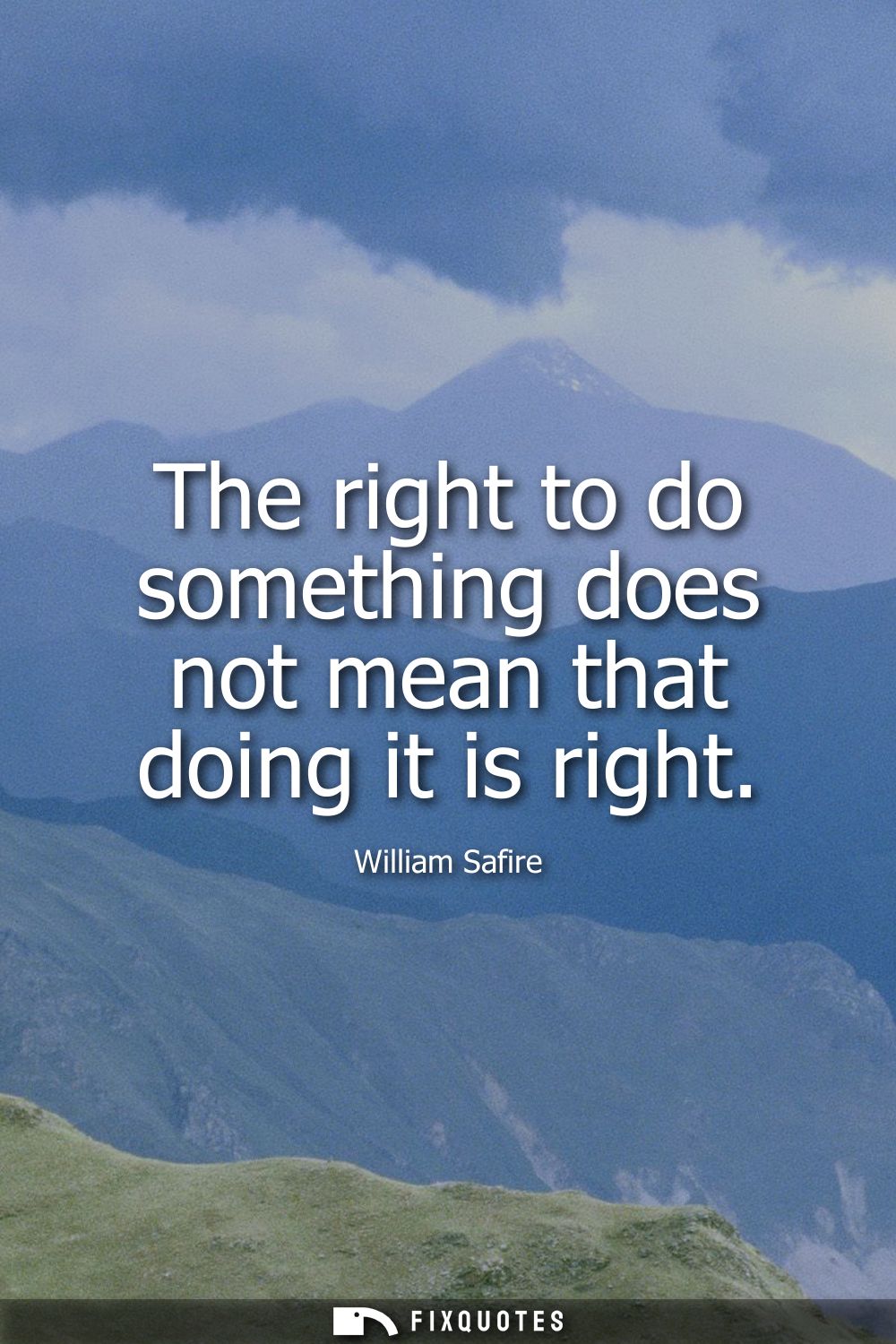
"The right to do something does not mean that doing it is right"
About this Quote
Legal permission and moral correctness often travel on separate paths. The ability to exercise a right, granted by law, does not automatically confer ethical sanction. Rules and statutes define what is permissible within a society, setting boundaries to protect freedom and order. Yet, morality springs from nuanced considerations: empathy, consequences, and values not always codified in legal systems. Thus, the letter of the law can permit actions that the spirit of ethics finds wanting.
Choosing to do what is lawful but statically disregards the welfare or dignity of others can erode trust and undermine human decency. For instance, a law may permit speech that is cruel, deceitful, or hateful, championing free expression while potentially inflicting harm. Just because one has the power and legal right to speak, act, or consume resources in a particular way does not necessarily justify such use. The broader question remains whether such actions foster harmony, progress, and fairness within communities and in our personal lives.
Rights imply the agency to choose, not merely the green light to proceed. This agency comes bundled with responsibility: to reflect, to understand context, and to weigh effects beyond personal gain. Exercising rights with no regard for the greater good leads to a transaction-based existence, not a community-based one. Ethics ask us to look beyond ourselves, to consider the unseen cost of our choices, on relationships, on institutions, on society as a whole.
The interplay between rights and righteousness is where true character is forged. Restraint, humility, and compassion transform the exercise of rights into acts of civic virtue and humanity. Instead of simply claiming entitlements, individuals and societies are called to inquire: Is this action just, or merely allowed? The distinction, though subtle, marks the boundary between a world governed by law and one uplifted by conscience.
Choosing to do what is lawful but statically disregards the welfare or dignity of others can erode trust and undermine human decency. For instance, a law may permit speech that is cruel, deceitful, or hateful, championing free expression while potentially inflicting harm. Just because one has the power and legal right to speak, act, or consume resources in a particular way does not necessarily justify such use. The broader question remains whether such actions foster harmony, progress, and fairness within communities and in our personal lives.
Rights imply the agency to choose, not merely the green light to proceed. This agency comes bundled with responsibility: to reflect, to understand context, and to weigh effects beyond personal gain. Exercising rights with no regard for the greater good leads to a transaction-based existence, not a community-based one. Ethics ask us to look beyond ourselves, to consider the unseen cost of our choices, on relationships, on institutions, on society as a whole.
The interplay between rights and righteousness is where true character is forged. Restraint, humility, and compassion transform the exercise of rights into acts of civic virtue and humanity. Instead of simply claiming entitlements, individuals and societies are called to inquire: Is this action just, or merely allowed? The distinction, though subtle, marks the boundary between a world governed by law and one uplifted by conscience.
Quote Details
| Topic | Ethics & Morality |
|---|
More Quotes by William
Add to List