
George S. Patton Biography Quotes 34 Report mistakes
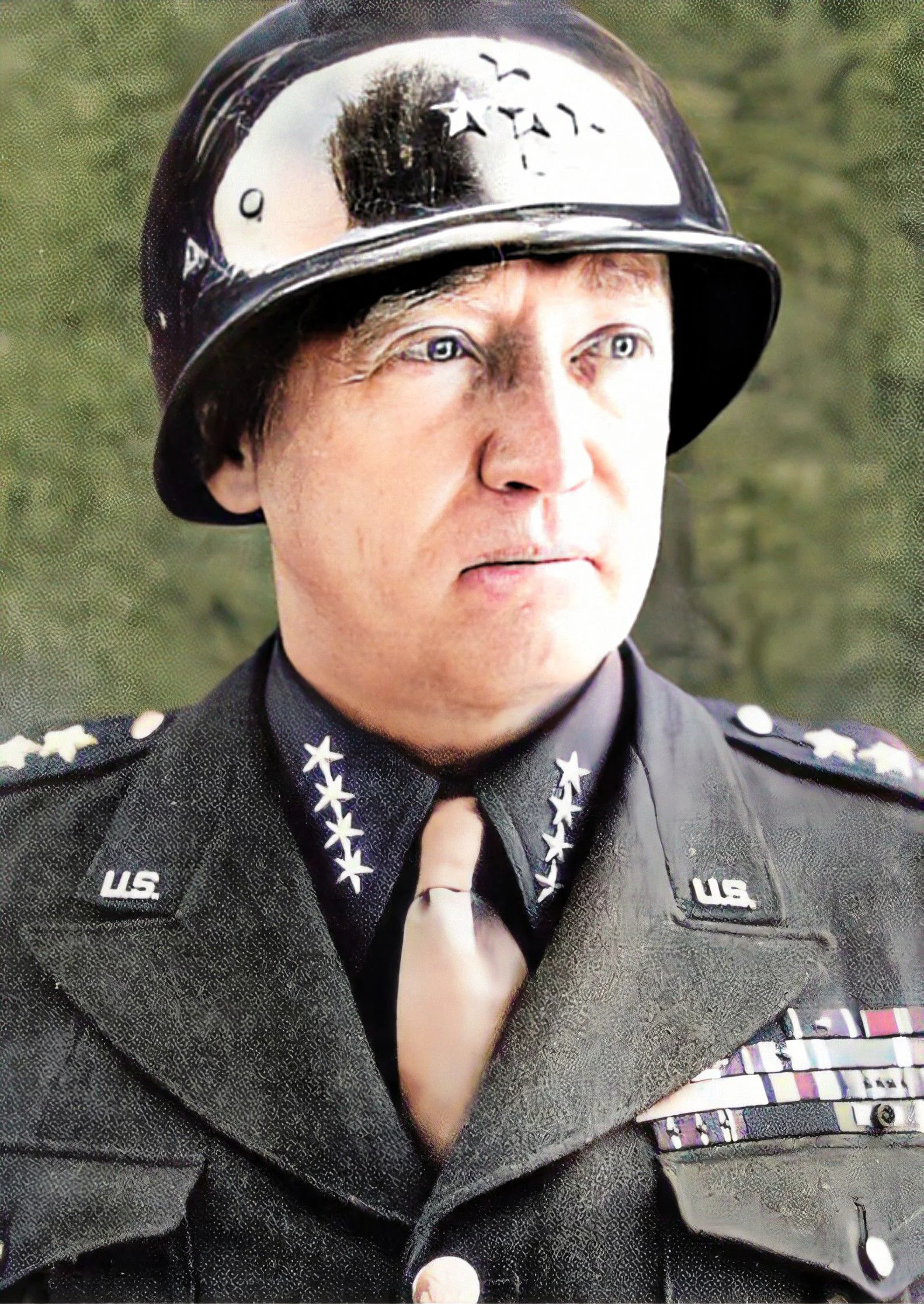
| 34 Quotes | |
| Occup. | Soldier |
| From | USA |
| Born | November 11, 1885 San Gabriel, California |
| Died | December 21, 1945 |
| Aged | 60 years |
| Cite | |
Citation Formats
APA Style (7th ed.)
George s. patton biography, facts and quotes. (2026, February 1). FixQuotes. https://fixquotes.com/authors/george-s-patton/
Chicago Style
"George S. Patton biography, facts and quotes." FixQuotes. February 1, 2026. https://fixquotes.com/authors/george-s-patton/.
MLA Style (9th ed.)
"George S. Patton biography, facts and quotes." FixQuotes, 1 Feb. 2026, https://fixquotes.com/authors/george-s-patton/. Accessed 18 Feb. 2026.
Early Life and Background
George Smith Patton Jr. was born on November 11, 1885, in San Gabriel, California, into a family that treated military memory as inheritance. His father, George S. Patton Sr., and his mother, Ruth Wilson Patton, raised him on stories of Confederate service and of an older American martial tradition that prized daring, honor, and command. That romance of war did not make him placid; it made him urgent, competitive, and theatrically self-aware, a boy who wanted not merely to serve but to be seen serving.He grew up with advantages of class and expectation, yet also with private obstacles that sharpened his will. Patton struggled with reading and spelling, likely dyslexia, and compensated by drilling himself through repetition and sheer effort. The tension between his cultivated destiny and his fear of inadequacy became a lifelong engine: he craved mastery, staged his own toughness, and treated discipline as a form of self-rescue. Even before he wore a uniform, he was learning to convert anxiety into aggression and ritual.
Education and Formative Influences
After time at Virginia Military Institute, Patton entered the U.S. Military Academy at West Point (Class of 1909), where he improved steadily rather than brilliantly, and learned to treat preparation as a moral act. He distinguished himself as an athlete and soldierly stylist, fencing and riding with intensity that hinted at his later fixation on speed, shock, and momentum. In 1912 he competed in the modern pentathlon at the Stockholm Olympics, finishing strongly despite controversy over his pistol shooting. The pentathlon, with its demand for varied skills under pressure, reinforced his belief that leaders must be versatile and relentless. Mentors and institutions shaped him, but so did the era: an Army modernizing unevenly, a world sliding toward mechanized war, and a culture that still mythologized cavalry even as engines began to replace horses.Career, Major Works, and Turning Points
Patton first saw combat in 1916 on John J. Pershing's Punitive Expedition into Mexico, then in World War I became one of the U.S. Army's earliest armor advocates, forming and leading tank units in France and being wounded at Saint-Mihiel in 1918. Between wars he wrote and argued for mechanization, served on staffs, and honed a doctrine of rapid movement and violent initiative, even while the Army starved for funds and attention. World War II made him famous and costly: he led Western Task Force in Operation Torch (1942), then Seventh Army in Sicily (1943), where battlefield success collided with scandal after he slapped hospitalized soldiers suffering from what would now be called combat stress, forcing apologies and temporarily sidelining him. Restored for the Normandy campaign, he commanded Third Army after the breakout, executing one of the war's most spectacular operational drives across France (1944), then pivoted north in the Battle of the Bulge with a speed that became legend. In 1945 he fought across the Rhine into Germany, but his blunt anti-Soviet warnings and undiplomatic remarks created political friction in the fragile peace. He died on December 21, 1945, in Heidelberg, Germany, after injuries from a December 9 car accident, a commander abruptly silenced at the moment he most wanted to shape the postwar world.Philosophy, Style, and Themes
Patton's inner life was a mix of romantic fatalism and practical obsession. He believed he was made for war, and he pursued that calling with almost religious intensity, collecting battlefield relics, keeping a war diary, and cultivating a persona - pearl-handled pistols, profane speeches, immaculate uniforms - that turned command into theater. Yet the theater had a purpose: it disciplined his own fear and signaled certainty to others. He worked harder than his legend admits, reading maps, rehearsing movements, and pressuring subordinates for speed because he expected the battlefield to punish hesitation without mercy.His themes were offensive spirit, decisive action, and the moral economics of preparation. “A good plan violently executed now is better than a perfect plan executed next week”. That line captures his impatience with bureaucratic delay and his conviction that uncertainty is best beaten by momentum. Likewise, “A pint of sweat, saves a gallon of blood”. The aphorism reveals a commander who processed compassion through efficiency: he accepted casualty as inevitable, but tried to purchase survival with training, maintenance, and rehearsal. Even his harshest credo - “Nobody ever defended anything successfully, there is only attack and attack and attack some more”. - was less bloodlust than a psychological strategy: he believed the attacking force seizes the enemy's mind, and that leadership is the art of keeping men moving when fear would prefer stillness.
Legacy and Influence
Patton endures as both model and warning: the archetype of the aggressive field commander whose operational brilliance can coexist with moral blind spots and political self-sabotage. In U.S. Army doctrine, his insistence on tempo, initiative, and combined-arms coordination helped shape modern maneuver warfare, while his Sicily scandal became a case study in command climate and the treatment of psychological wounds. Public memory, amplified by wartime journalism and later by the 1970 film "Patton", preserves the mask - the swagger, the profanity, the pistols - but his deeper influence lies in how he married preparation to audacity and made leadership a performance meant to steady others. He remains a symbol of American martial energy in the age when war became industrial and fast, and when a commander had to be both technician and mythmaker.Our collection contains 34 quotes written by George, under the main topics: Motivational - Wisdom - Leadership - Work Ethic - Overcoming Obstacles.
Other people related to George: Creighton W. Abrams, Jr. (Soldier), George C. Scott (Actor)
Source / external links