
William Makepeace Thackeray Biography Quotes 31 Report mistakes
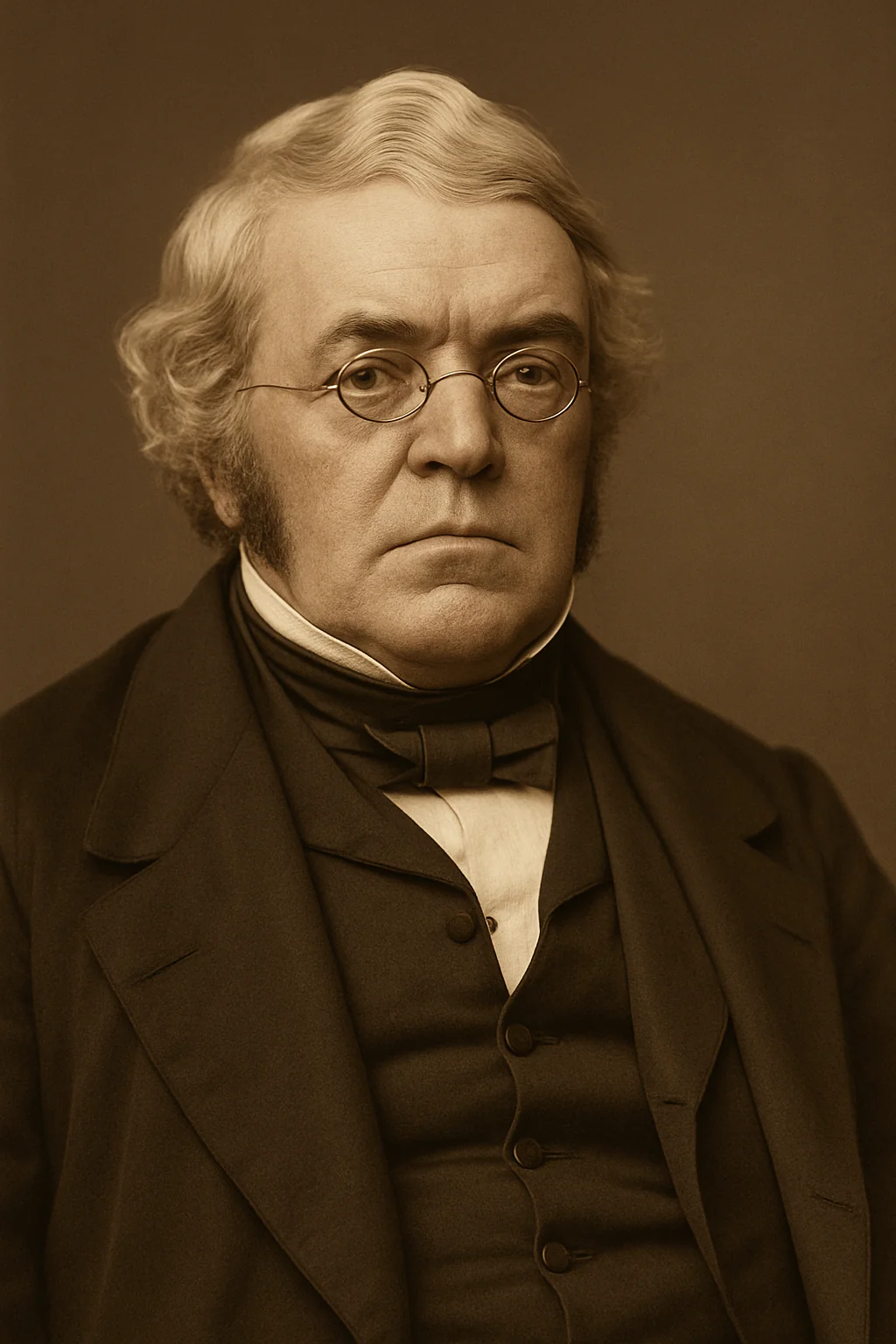
| 31 Quotes | |
| Occup. | Novelist |
| From | United Kingdom |
| Born | July 18, 1811 Calcutta, Bengal Presidency, British India |
| Died | December 24, 1863 London, England, United Kingdom |
| Cause | Stroke |
| Aged | 52 years |
| Cite | |
Citation Formats
APA Style (7th ed.)
William makepeace thackeray biography, facts and quotes. (2026, February 11). FixQuotes. https://fixquotes.com/authors/william-makepeace-thackeray/
Chicago Style
"William Makepeace Thackeray biography, facts and quotes." FixQuotes. February 11, 2026. https://fixquotes.com/authors/william-makepeace-thackeray/.
MLA Style (9th ed.)
"William Makepeace Thackeray biography, facts and quotes." FixQuotes, 11 Feb. 2026, https://fixquotes.com/authors/william-makepeace-thackeray/. Accessed 1 Apr. 2026.
Early Life and Background
William Makepeace Thackeray was born on July 18, 1811, in Calcutta, in the East India Company world where British power, commerce, and private longing coexisted uneasily. His father, Richmond Thackeray, worked in the Company; his mother, Anne Becher, was still young when widowhood arrived - Richmond died in 1815 - and the boy absorbed early the sense that security could vanish without warning. That undertone of loss, later masked by comic surface, never left him.Sent to England in 1816, Thackeray grew up between guardians, schools, and the half-belonging status of many Anglo-Indian children returned "home" to a country they barely knew. Anne remarried in 1822 to Major Henry Carmichael-Smyth, a union that stabilized the household but also sharpened Thackeray's eye for social choreography: who is admitted, who is merely endured, and how affection can be formalized into propriety. The future satirist learned early to read faces for what they concealed.
Education and Formative Influences
He was educated at Charterhouse School, where the cruelty and caste system of boy culture became a lifelong reference point, then attended Trinity College, Cambridge (1829-1830) without taking a degree; he also spent time studying art in Paris. A sizable inheritance briefly promised freedom, but speculative losses and gambling forced him toward paid work, turning aesthetic ambition into professional discipline and giving him an intimate, unromantic knowledge of money - the subject that Victorian society pretended was vulgar even as it organized everything around it.Career, Major Works, and Turning Points
Thackeray entered journalism and comic writing in the 1830s, contributing to Fraser's Magazine and Punch, and honing a voice that could praise, puncture, and pity in the same breath. His early successes included The Yellowplush Papers (1837-1838) and Barry Lyndon (1844), experiments in unreliable narration and moral self-exposure. The breakthrough was Vanity Fair (1847-1848), published in serial form and subtitled "A Novel without a Hero", where Becky Sharp and Amelia Sedley dramatize ambition and sentiment under the pressure of class. After the death of his wife Isabella Shawe (not by death but by severe mental illness beginning in 1840, which ended their marriage in all but name), he built a public life as author, editor, and lecturer, producing Pendennis (1848-1850), Henry Esmond (1852), and The Newcomes (1853-1855), and later the public-school recollection The Adventures of Philip (1861-1862). He became a prominent Victorian man of letters, though political candidacy failed and his health declined; he died in London on December 24, 1863.Philosophy, Style, and Themes
Thackeray's art is often described as satire, but its engine is moral perception rather than cruelty. He wrote from inside the drawing room and the counting house, alert to the ways people explain themselves into comfort. His recurring target was "snobbery" - not merely love of rank, but the habit of arranging human worth by social price. “It is impossible, in our condition of Society, not to be sometimes a Snob”. The sentence reads like confession and diagnosis: he distrusts purity because he has watched compromise become a second nature, including in himself, and he gives his narrators the uneasy authority of witnesses who have also been tempted.His tone balances tenderness with exposure, and the balance is his psychology: he could not bear illusions, yet he could not live without them. Under the comedy sits a skepticism about the consolations people sell each other - patriotism, romance, respectability - and an even deeper hunger for humane warmth amid disillusion. “A good laugh is sunshine in the house”. Laughter, for him, is not escape but shelter, a domestic light that makes the bitter facts inhabitable. At the same time his fiction repeatedly returns to the figure of the mother and the child's need for absolute refuge, a need adulthood cannot satisfy without self-deception: “Mother is the name for God in the lips and hearts of little children”. That equation explains much of his tenderness toward weakness and his impatience with grand moral posturing - he writes as someone who knows that what people most crave is not virtue displayed but care embodied.
Legacy and Influence
Thackeray helped define the Victorian realist novel as a social instrument: a form capable of mapping class, money, and self-justification with novelistic intimacy. Vanity Fair remains his central monument, but his longer influence lies in his narrator's method - the cultivated voice that interrupts, judges, forgives, and implicates the reader in the same ethical weather. Later novelists learned from his refusal to reward charm with innocence and from his insistence that character is made where desire meets circumstance. He left behind not a system but a sensibility: amused, bruised, and lucid about the costs of pretending, yet still searching - in laughter, in remembered tenderness, in small decencies - for something like grace inside the everyday world he anatomized.Our collection contains 31 quotes written by William, under the main topics: Witty One-Liners - Motivational - Ethics & Morality - Truth - Wisdom.
Other people related to William: Edward Fitzgerald (Poet), Leslie Stephen (Author), Douglas Jerrold (Playwright), John Leech (Artist)
Frequently Asked Questions
- William Makepeace Thackeray pronunciation: WIL-yum MAYK-pees THAK-uh-ree.
- William Makepeace Thackeray writing style: Satirical realism; irony, social critique, omniscient narration, focus on manners and class.
- William Makepeace Thackeray wife: Isabella Gethin Shawe (m. 1836).
- William Makepeace Thackeray died: 24 December 1863, London (stroke).
- William Makepeace Thackeray children: Three daughters: Anne Isabella (Anny), Jane (died in infancy), and Harriet Marian “Minny.”
- William Makepeace Thackeray descendants: Through daughters Anne (Lady Ritchie) and Minny (wife of Leslie Stephen); granddaughter: Laura Makepeace Stephen.
- William Makepeace Thackeray famous works: Vanity Fair; Barry Lyndon; Henry Esmond; The Newcomes; The Virginians; The Rose and the Ring.
- William Makepeace Thackeray books: Vanity Fair; Barry Lyndon; Pendennis; Henry Esmond; The Newcomes; The Virginians; The Book of Snobs.
- How old was William Makepeace Thackeray? He became 52 years old
William Makepeace Thackeray Famous Works
- 1864 Denis Duval (Novel)
- 1861 The Adventures of Philip (Novel)
- 1860 Roundabout Papers (Collection)
- 1858 The Virginians (Novel)
- 1855 The Newcomes (Novel)
- 1855 The Rose and the Ring (Children's book)
- 1852 The History of Henry Esmond (Novel)
- 1850 Pendennis (Novel)
- 1848 The Book of Snobs (Essay)
- 1848 Vanity Fair (Novel)
- 1844 The Luck of Barry Lyndon (Novella)
- 1843 The Irish Sketch Book (Non-fiction)
- 1840 The Paris Sketch Book (Non-fiction)
- 1840 A Shabby-Genteel Story (Novella)
Source / external links