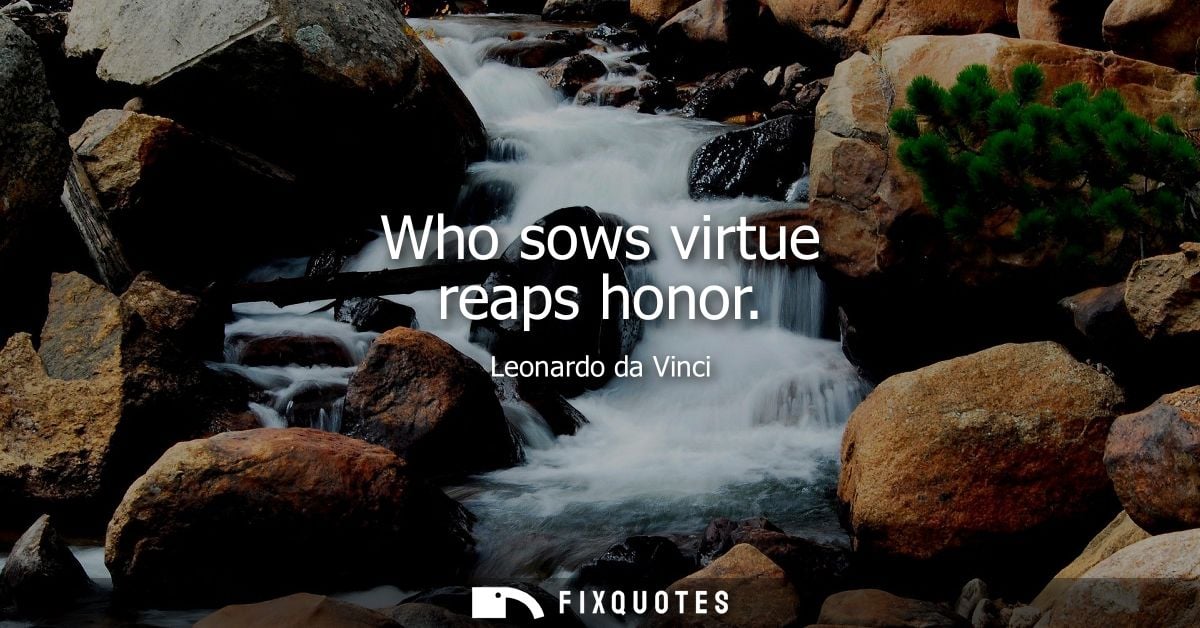
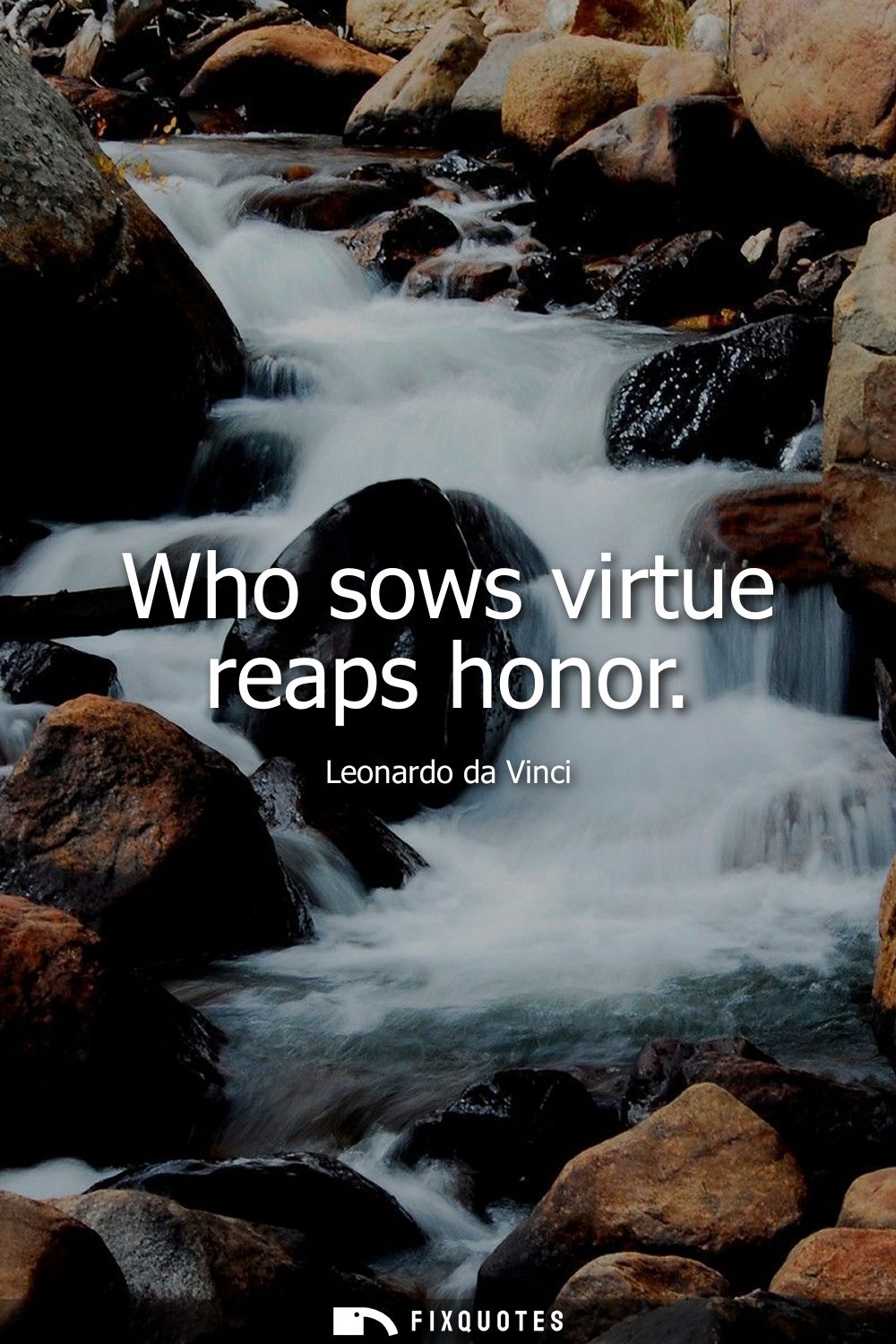
"Who sows virtue reaps honor"
About this Quote
A Renaissance mind is smuggling a moral economy into a single agrarian image: plant virtue, harvest honor. It’s deceptively gentle, almost homespun, but it carries the hard practicality you’d expect from Leonardo da Vinci - an artist who was also an engineer, anatomist, and court operator. “Sows” and “reaps” turn ethics into craft. Virtue isn’t a halo; it’s a practice, repetitive and seasonal, something you cultivate with the patience of a farmer or the discipline of a studio.
The subtext is strategic. Honor here isn’t just inner peace; it’s social credit, the currency that buys access, patrons, commissions, protection. In the Italian courts of Leonardo’s life, reputations were made and unmade by intrigue as much as by talent. He’s offering a formula that flatters power without groveling to it: be useful, be reliable, be excellent, and the world will - ideally - respond with recognition. That “ideally” matters. The line works because it’s both a promise and a nudge, implying that honor is the rightful payout of good conduct, even in systems that often reward spectacle or bloodline.
There’s also a quiet defense of the artist’s position. In a culture where painters were clawing their way from artisan status toward intellectual prestige, tying virtue to honor reframes artistry as moral labor. Not just decoration, but discipline worthy of esteem. The sentence is short because it wants to feel like common sense - the most persuasive form of ambition.
The subtext is strategic. Honor here isn’t just inner peace; it’s social credit, the currency that buys access, patrons, commissions, protection. In the Italian courts of Leonardo’s life, reputations were made and unmade by intrigue as much as by talent. He’s offering a formula that flatters power without groveling to it: be useful, be reliable, be excellent, and the world will - ideally - respond with recognition. That “ideally” matters. The line works because it’s both a promise and a nudge, implying that honor is the rightful payout of good conduct, even in systems that often reward spectacle or bloodline.
There’s also a quiet defense of the artist’s position. In a culture where painters were clawing their way from artisan status toward intellectual prestige, tying virtue to honor reframes artistry as moral labor. Not just decoration, but discipline worthy of esteem. The sentence is short because it wants to feel like common sense - the most persuasive form of ambition.
Quote Details
| Topic | Ethics & Morality |
|---|
More Quotes by Leonardo
Add to List