
Alfred North Whitehead Biography Quotes 48 Report mistakes
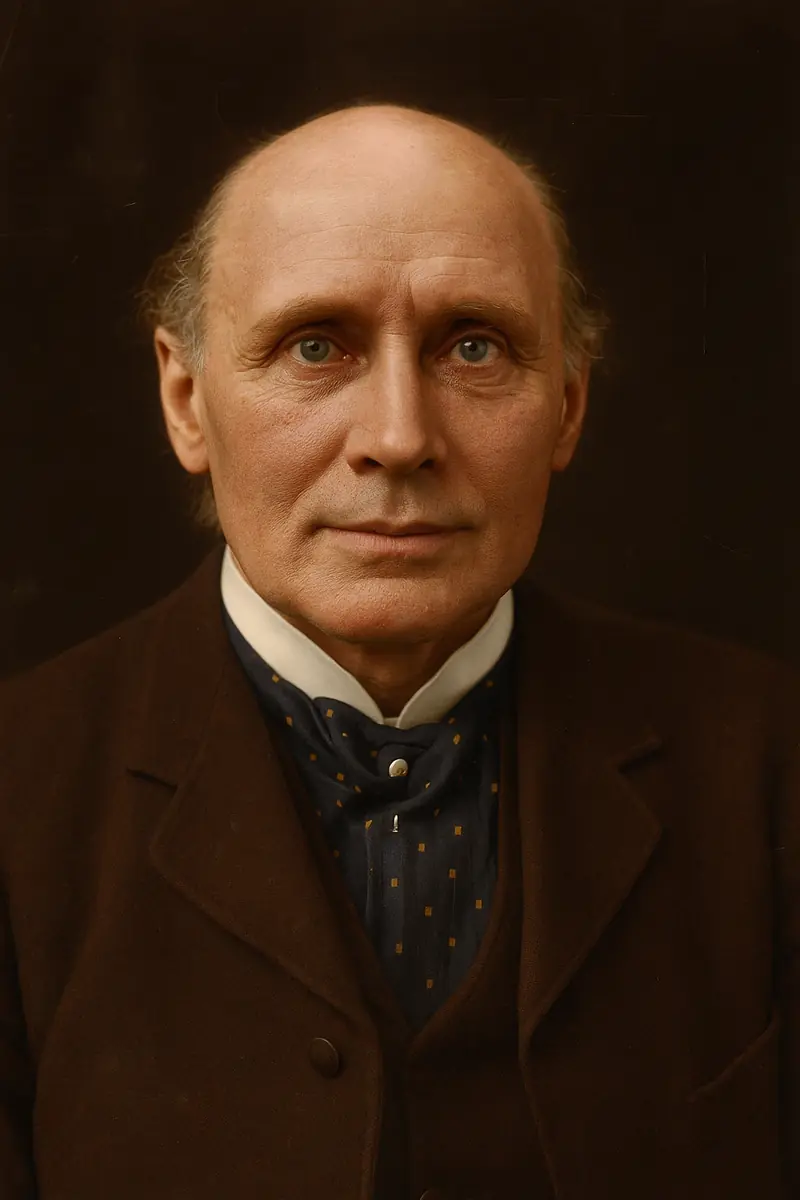
| 48 Quotes | |
| Occup. | Mathematician |
| From | England |
| Born | February 15, 1861 Ramsgate, Kent, England |
| Died | December 30, 1947 Cambridge, Massachusetts, U.S. |
| Aged | 86 years |
Alfred North Whitehead (1861-1947) was born in England and came of age in the rigorous intellectual culture of Victorian Britain. From an early point he showed unusual aptitude for mathematics and a taste for abstract reasoning. He entered Trinity College, Cambridge, where he immersed himself in the mathematical sciences and the philosophical issues they raised. Cambridge at the time fostered a powerful culture of logic and analysis, and Whitehead excelled within it. After earning his degree, he was elected to a fellowship and began a long period of teaching and research at Trinity, joining a circle that, over the years, included figures such as G. E. Moore and, soon enough, the young Bertrand Russell.
Mathematics at Cambridge
Whitehead's early scholarship revolved around algebra and the foundations of mathematics. His A Treatise on Universal Algebra (1898) attempted a synoptic unification of diverse algebraic systems, presenting a conceptual map that would later be echoed in twentieth-century movements toward structural thinking. He also wrote on geometry, notably The Axioms of Projective Geometry (1906), and crafted an accessible overview of the field in An Introduction to Mathematics (1911). His Cambridge lectures combined technical precision with an uncommon philosophical sensitivity, and among those influenced by his teaching was Russell, who would become both collaborator and friend. The intellectual climate around them drew from continental advances by Giuseppe Peano and Gottlob Frege, and Whitehead followed these developments closely, seeing in them the prospect of grounding mathematics in logic.
Principia Mathematica and the Foundations of Logic
The collaboration with Bertrand Russell culminated in Principia Mathematica, issued in three volumes between 1910 and 1913. Its ambition was sweeping: to demonstrate that the truths of arithmetic and much of mathematics could be derived from purely logical principles. To avoid contradictions such as those revealed by Russell's paradox, Whitehead and Russell developed a theory of types and employed a refined logical notation influenced by Peano. The work's detailed derivations became legendary, emblematic of an age convinced that conceptual clarity and formal method could secure the foundations of knowledge. Even as colleagues and visitors at Cambridge, including the young Ludwig Wittgenstein, pressed searching questions about meaning and method, Principia Mathematica stood as a monument to logical analysis. Later results by Kurt Godel would complicate the foundational hopes pursued in the project, yet the achievement remained central in the history of logic and the philosophy of mathematics.
London Years and the Philosophy of Nature
In 1910 Whitehead left Cambridge for posts within the University of London, including significant work at what is now Imperial College London. The shift marked a broadening of his interests from pure mathematics toward physics and the philosophy of nature. In An Enquiry Concerning the Principles of Natural Knowledge (1919) and The Concept of Nature (1920), he reflected on space, time, measurement, and the status of events in experience and science. His The Principle of Relativity (1922) proposed an alternative gravitational theory and engaged critically yet constructively with Albert Einstein's relativity. Arthur Eddington and other contemporaries debated these themes in the vibrant scientific milieu of the period. Whitehead also devoted time to academic leadership and philosophical discussion in London, serving among other roles as president of the Aristotelian Society, where he interacted with a broad spectrum of thinkers bridging analytic and scientific traditions.
Harvard and the Turn to Metaphysics
In 1924 Whitehead accepted an invitation to move to the United States and joined Harvard University as a professor, turning decisively to systematic philosophy. The American setting, shaped by the legacy of William James and conversations with colleagues such as C. I. Lewis and William Ernest Hocking, proved fertile. Science and the Modern World (1925) offered a sweeping reinterpretation of the scientific revolution and its consequences for metaphysics and civilization. Religion in the Making (1926) explored the interplay of faith, value, and rational inquiry. His Gifford Lectures, delivered in 1927-1928 and published as Process and Reality (1929), articulated the process philosophy for which he is best known: a vision of a world composed of events rather than inert substances, where becoming is more fundamental than being, and where relations and creativity are basic features of reality. Later works, including Adventures of Ideas (1933) and Modes of Thought (1938), extended these themes, weaving together aesthetics, ethics, history, and the sciences.
Ideas, Influence, and Interlocutors
Whitehead's metaphysics emphasized that experience is pervasive, that value and fact are intertwined, and that philosophy should harmonize, rather than oppose, scientific insight and human meaning. He introduced a novel account of God as an element within the metaphysical scheme, not as an external lawgiver but as a principle bearing on order and value, a theme later developed by Charles Hartshorne and others in process theology. His lectures attracted students and younger scholars; Susanne Langer drew inspiration from his analyses of symbolism and feeling, while figures in the Harvard atmosphere, among them W. V. Quine, encountered his demanding seminars and the contrast they posed to the rising currents of logical empiricism. Beyond philosophy proper, his work influenced discussions in physics, biology, education, and social thought. He conversed across boundaries, engaging the legacies of Frege and Peano from his earlier phase, and reflecting on Einstein and Eddington in the philosophy of science, while maintaining a respectful distance from narrower forms of positivism and from purely linguistic approaches to philosophical problems.
Character and Method
Whitehead's prose, by turns technical and lyrical, matched his conviction that philosophy is a speculative endeavor constrained by coherence, adequacy to experience, and logical clarity. He distrusted system for its own sake, yet he believed that without a systematic vision, human knowledge fragments into disconnected specialties. The method he advocated sought a reciprocal adjustment between abstract categories and concrete facts, a continual revision in light of science, history, and ordinary life. Even critics found the scope of his ambitions singular: to render a worldview in which physics, biology, mind, art, and ethics occupy places in one evolving order.
Later Years and Legacy
Whitehead retired from Harvard in 1937 but remained in Cambridge, Massachusetts, continuing to write, correspond, and advise. He died in 1947. Personally reserved and wary of publicity, he discouraged biographical attention and left relatively few personal papers, a fact that has made his life more difficult to document than his published thought. Yet his influence endured. In logic and mathematics, Principia Mathematica remained a touchstone for subsequent debates about formal systems and the limits of axiomatization. In philosophy, his process metaphysics seeded schools of thought in North America, Europe, and beyond, informing theology, environmental philosophy, and interdisciplinary studies. His effort to reconcile scientific understanding with a rich account of experience continued to resonate with scholars seeking alternatives to reductionism. Surrounded in his lifetime by interlocutors ranging from Russell and Moore to Eddington and Lewis, and read by later generations confronting new scientific and cultural horizons, Alfred North Whitehead left a body of work that invites rigorous analysis and imaginative reconstruction in equal measure.
Our collection contains 48 quotes who is written by Alfred, under the main topics: Motivational - Ethics & Morality - Wisdom - Meaning of Life - Writing.
Other people realated to Alfred: Alfred Korzybski (Scientist), Carol P. Christ (Educator), Susanne Langer (Philosopher)
Alfred North Whitehead Famous Works
- 1947 Essays in Science and Philosophy (Collection)
- 1938 Modes of Thought (Collection)
- 1933 Adventures of Ideas (Book)
- 1929 Process and Reality (Book)
- 1929 The Function of Reason (Book)
- 1929 The Aims of Education and Other Essays (Collection)
- 1927 Symbolism, Its Meaning and Effect (Book)
- 1926 Religion in the Making (Book)
- 1925 Science and the Modern World (Book)
- 1920 The Concept of Nature (Book)
- 1919 The Principles of Natural Knowledge (Book)
- 1911 An Introduction to Mathematics (Book)
- 1910 Principia Mathematica (Book)
- 1898 A Treatise on Universal Algebra (Book)