
Camille Paglia Biography Quotes 33 Report mistakes
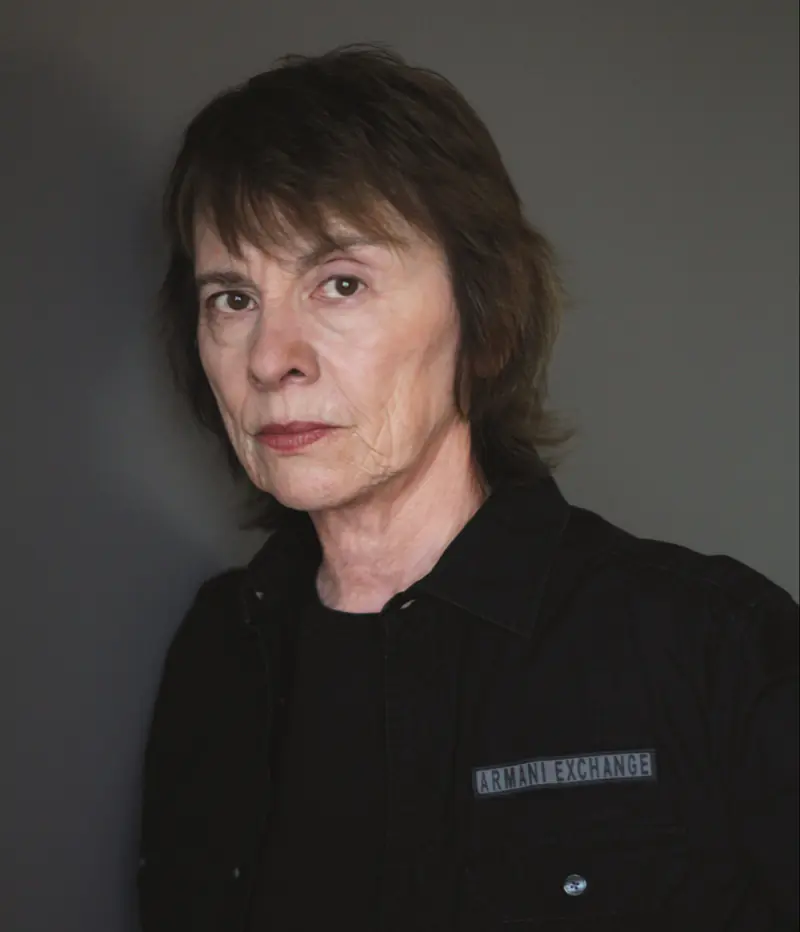
| 33 Quotes | |
| Occup. | Author |
| From | USA |
| Born | April 2, 1947 Endicott, New York |
| Age | 78 years |
Camille Paglia was born on April 2, 1947, in Endicott, New York, into an Italian American family. From an early age she immersed herself in libraries, classical mythology, and cinema, interests that would become the foundation of her later criticism. She studied at the State University of New York at Binghamton (then Harpur College), where she gravitated toward literature, art history, and classics. She pursued graduate study at Yale University, working under the eminent critic Harold Bloom, whose expansive view of the Western canon and emphasis on poetic influence resonated with her own developing approach. Her doctoral research on androgyny, decadence, and the classical tradition laid the groundwork for the arguments and examples that would later appear in her first major book.
Academic Formation and Sexual Personae
Paglia built a career as a teacher and lecturer while sharpening a distinctive critical voice that fused classical erudition with pop-cultural range. She joined the University of the Arts in Philadelphia, where she taught literature, art, and media studies for decades, becoming known to generations of students for her rapid-fire lectures linking Sappho and Shakespeare to Hollywood, rock music, and fashion. The publication of Sexual Personae: Art and Decadence from Nefertiti to Emily Dickinson in 1990 made her a national and international figure. The book advanced a sweeping thesis about Western art as a dialectic between Apollonian form and Dionysian energy, drawing on figures from antiquity to modernity and treating high art and popular culture as a continuous field. Its fearless tone and canonical scope earned praise from some quarters and sharp criticism from others, positioning Paglia at the center of debates about the humanities in the late twentieth century.
Public Intellectual and Media Presence
In the 1990s and beyond, Paglia emerged as a public intellectual far beyond academic confines. She wrote essays and cultural commentary for magazines and newspapers, became a columnist for Salon, and appeared on television and radio to debate contemporary culture and politics. She often crossed swords with prominent feminists such as Gloria Steinem, Andrea Dworkin, Catherine MacKinnon, and Naomi Wolf, arguing for a sex-positive, libertarian-leaning feminism that emphasized individual agency, the power of nature, and the pull of erotic imagery in art and media. She also discussed popular icons like Madonna and David Bowie, treating them as serious cultural catalysts rather than mere celebrities. Regular appearances on programs hosted by Bill Maher and long-form conversations, including a widely viewed dialogue with Jordan Peterson, showcased her taste for extended argument, historical framing, and heterodox positions.
Themes, Method, and Style
Paglia's writing is marked by grand synthesis and an unapologetically comparative method. She reads literature and art through classical antiquity, mythology, and the history of religion, insisting that sexuality, violence, and the sublime are central to the arts and to human nature. She draws on Friedrich Nietzsche, Sigmund Freud, and a broad survey of art history to build arguments that cut against prevailing academic fashions. Skeptical of high theory, she has been a vocal critic of poststructuralism and of Michel Foucault's influence in the humanities, advocating instead for close reading, visual analysis, and firsthand engagement with works. Her prose is polemical yet attentive to form, moving from Egyptian statuary and Renaissance painting to film noir, rock lyrics, and contemporary advertising. In the classroom and on the page, she links Emily Dickinson's compressed lyric power to the monumentalities of ancient art, or Alfred Hitchcock's cinematic grammar to the iconography of myth, thereby collapsing boundaries between elite and popular art.
Books and Major Essays
Beyond Sexual Personae, Paglia has published several collections that extend her commentary across literature, film, visual culture, and contemporary politics. Sex, Art, and American Culture and Vamps & Tramps gathered essays and interviews that captured her early-1990s prominence and her arguments for free expression and artistic risk. Break, Blow, Burn presented close readings of poems ranging from Shakespeare and Donne to modern and contemporary writers, reviving a classroom staple with her signature clarity and intensity. She turned to art history in Glittering Images, a guided tour from ancient artifacts to modern cinema that proposes careful looking as a corrective to distraction. In Free Women, Free Men and Provocations, she assembled decades of journalism and cultural criticism, including her Salon columns, offering a sustained defense of the Western canon, liberal education, and robust public debate. She has also written a compact monograph on Hitchcock's The Birds, demonstrating how film analysis can join hands with mythic and visual traditions.
Controversy and Debate
Paglia's outspokenness has ensured that she remains a lightning rod. Admirers cite her independence of mind, capacious knowledge, and ability to connect classical learning to everyday culture. Critics contest her readings, her assessments of contemporary feminism, and her clashes with academic orthodoxy. She has acknowledged the contentiousness of her stance, arguing that a living culture depends on vigorous disagreement and that the arts flourish when critics preserve both memory and candor. Encounters with contemporaries such as Gloria Steinem and Naomi Wolf, and exchanges with figures far outside the academy, have shaped the reception of her work and situate her within a larger, ongoing culture war over sex, censorship, and the humanities.
Teaching and Mentorship
For her students, Paglia modeled a participatory humanism: showing slides, quoting poetry by memory, and urging firsthand encounters with museums and live performance. She championed the studio arts and performance alongside literary study, reflecting her long tenure at an arts-focused institution. Students recall her insistence that reading and looking are physical acts requiring discipline, and that artists from Botticelli and Michelangelo to Bob Dylan and Madonna are part of a single, evolving conversation. Even those who disagreed with her conclusions often credit her with sharpening their analytical skills and widening their frame of reference.
Identity and Influence
Openly lesbian and culturally Catholic in sensibility, Paglia has written about androgyny, eroticism, and the interface of nature and culture throughout her career. She frames sexuality as a force embedded in art and ritual rather than only a subject of politics or identity, a view that informs both her admiration for classical art and her readings of modern media. Her influence can be seen in writers and critics who blend historical breadth with pop-cultural fluency, and in defenders of free speech in the arts and on campus. Whether assessing Emily Dickinson's metaphysics, praising Madonna's command of image, or debating Jordan Peterson about the fate of the humanities, she has remained committed to the idea that argument itself is a creative act and that the richest traditions invite confrontation rather than conformity.
Legacy
Camille Paglia stands as a rare figure who traversed the academy, the media, and the art world, insisting on connections among them. Her body of work encourages readers to see the classical past alive in the present, to treat popular culture with seriousness, and to accept controversy as the cost of intellectual vitality. Through books, essays, lectures, and spirited public encounters with allies and adversaries alike, she has kept alive an old-fashioned yet urgent conviction: that the study of art and literature matters because it illuminates human nature in all its splendor and danger.
Our collection contains 33 quotes who is written by Camille, under the main topics: Witty One-Liners - Wisdom - Truth - Justice - Music.
Other people realated to Camille: Germaine Greer (Activist)
Camille Paglia Famous Works
- 2012 Glittering Images: A Journey Through Art from Egypt to Star Wars (Book)
- 2005 Break, Blow, Burn: Camille Paglia Reads Forty-Three of the World's Best Poems (Book)
- 1998 The Birds (Book)
- 1994 Vamps & Tramps: New Essays (Book)
- 1992 Sex, Art, and American Culture: Essays (Book)
- 1990 Sexual Personae: Art and Decadence from Nefertiti to Emily Dickinson (Book)
Source / external links