
Helen Rowland Biography Quotes 50 Report mistakes
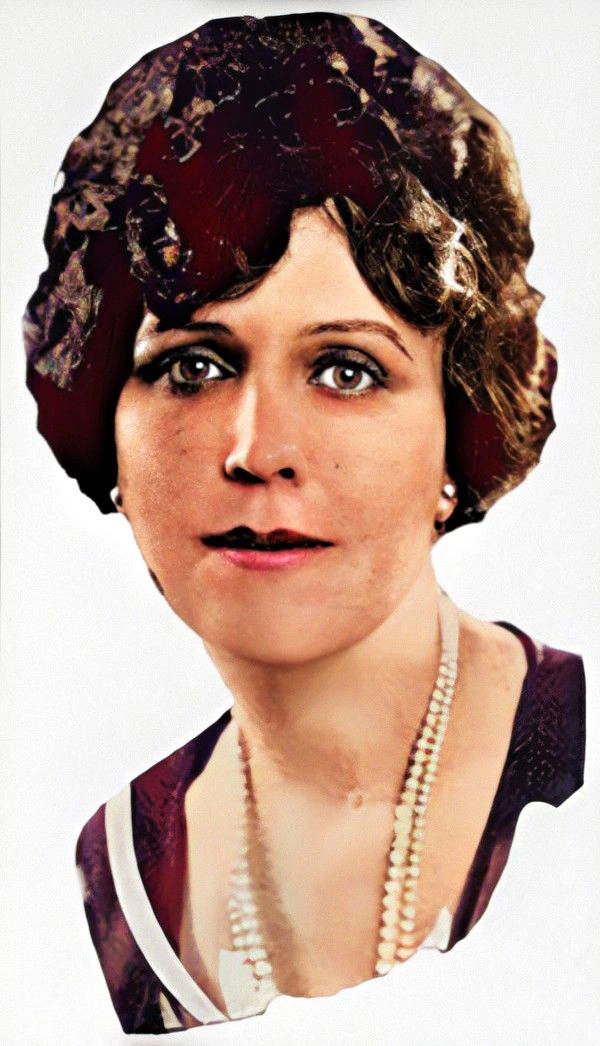
| 50 Quotes | |
| Occup. | Journalist |
| From | USA |
| Born | 1875 USA |
| Died | 1950 USA |
| Cite | |
Citation Formats
APA Style (7th ed.)
Helen rowland biography, facts and quotes. (2026, February 11). FixQuotes. https://fixquotes.com/authors/helen-rowland/
Chicago Style
"Helen Rowland biography, facts and quotes." FixQuotes. February 11, 2026. https://fixquotes.com/authors/helen-rowland/.
MLA Style (9th ed.)
"Helen Rowland biography, facts and quotes." FixQuotes, 11 Feb. 2026, https://fixquotes.com/authors/helen-rowland/. Accessed 1 Apr. 2026.
Early Life and Background
Helen Rowland was an American journalist and aphorist whose sharp, socially literate one-liners about love, marriage, and the theater of manners made her a widely quoted voice of the early 20th century. She was born in the United States in the late 19th century (often given as 1875) and died around mid-century (often given as 1950), a lifespan that stretched from the Victorian afterglow into the age of radio, advertising, and modern celebrity. That long arc mattered: Rowland wrote as courtship migrated from parlor supervision to urban anonymity, as divorce and women earning wages became more visible facts, and as the press learned to sell personality as much as information.The surviving record of her private life is thinner than her public persona, which is itself revealing. Rowland cultivated the stance of the amused, unsentimental observer - the woman in the room who notices the tiny negotiations beneath the grand vows. Her recurring subject was not romance as destiny but romance as social contract: who is allowed to want what, who pays, who pretends, who settles. In an era that alternately sentimentalized and policed women, she made frankness a kind of power, turning the supposedly trivial domain of love talk into a laboratory for motives.
Education and Formative Influences
Rowland came of age when the mass-circulation magazine and the syndicated newspaper column were reshaping American reading habits, and when "women's pages" offered both a platform and a cage. She learned to write for speed, clarity, and impact - skills rewarded in New York journalism, where her byline became associated with the kind of compressed wit that could travel across papers. The late-19th-century mix of Victorian moral language, Gilded Age materialism, and emerging "New Woman" independence helped form her tonal signature: a moralist without piety, a realist without bitterness, and a comedian who understood that jokes often carry the truth people resist hearing plainly.Career, Major Works, and Turning Points
Rowland built her reputation through journalism and the short, quotable forms that periodicals prized, eventually gathering her best material in books such as Reflections of a Bachelor Girl (1909) and A Guide to Men (1922). These collections, circulating widely in the United States and beyond, condensed her newsroom-honed instincts into a portable philosophy of modern intimacy. A key turning point was the cultural appetite for candid commentary on marriage during the Progressive Era and the 1920s - decades of shifting gender expectations, rising consumer culture, and increasingly public debates about divorce. Rowland did not argue like a reformer; she observed like a reporter, treating courtship as a system with incentives, blind spots, and predictable outcomes.Philosophy, Style, and Themes
Rowland's style is engineered for memorability: short declarative sentences, parallel structure, and reversals that flip a familiar ideal into a social fact. Her wit works by translating private disappointment into public language, giving readers permission to admit what they had been coached to deny. She writes as if romance is not a sacred mystery but a set of rituals whose purpose is to manage uncertainty. “Nowadays love is a matter of chance, matrimony a matter of money and divorce a matter of course”. The line is funny because it is too neat - and persuasive because it captures how modern life can make intimacy feel like an arrangement between institutions (money, law, status) as much as between hearts.Under the jokes runs a psychological portrait of negotiation: women learning strategic speech, men learning strategic silence, and both sides learning how little language can be trusted when desire is at stake. “A wise woman puts a grain of sugar into everything she says to a man, and takes a grain of salt with everything he says to her”. Rowland is not simply cynical; she is describing survival tactics inside unequal scripts, where praise, criticism, and confession have consequences. Her suspicion of over-honesty is especially modern: “Between lovers a little confession is a dangerous thing”. In that warning is her core theme - intimacy is not only truth-telling, it is also timing, self-control, and an awareness of how words can become weapons after the music stops.
Legacy and Influence
Rowland endures less as a single biography than as a voice - a shorthand for the early 20th-century woman observer who refused to be either sentimental mascot or scolding moralist. Her aphorisms helped define a lineage that runs through Dorothy Parker-era urban wit, advice-column candor, and modern relationship commentary that treats romance as both emotion and economics. If she is sometimes reduced to "quips about men", the better reading is that she documented, in miniature, the pressures and bargains of her age, leaving behind a portable sociology of love that still sounds contemporary whenever ideals collide with incentives.Our collection contains 50 quotes written by Helen, under the main topics: Witty One-Liners - Motivational - Love - Live in the Moment - Mother.
Helen Rowland Famous Works
- 1922 A Guide to Men: Being Encore Reflections of a Bachelor Girl (Book)
- 1910 The Widow (To Say Nothing of the Man) (Novel)
- 1909 Reflections of a Bachelor Girl (Book)
Source / external links