
Honore de Balzac Biography Quotes 84 Report mistakes
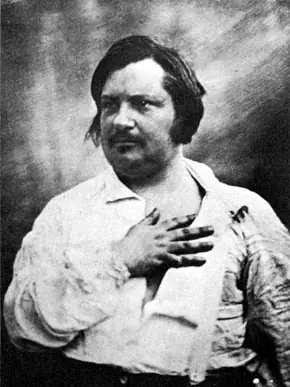
| 84 Quotes | |
| Occup. | Novelist |
| From | France |
| Born | May 20, 1799 Tours, France |
| Died | August 18, 1850 |
| Aged | 51 years |
Honore de Balzac was born on May 20, 1799, in Tours, in the wake of the French Revolution and during the rise of Napoleon - a political atmosphere that made ambition feel both necessary and dangerous. His father, Bernard-Francois Balzac, was a self-made administrator who had climbed from provincial origins into respectable office; his mother, Anne-Charlotte Laure Sallambier, was younger, practical, and emotionally distant in ways Balzac later seemed to transmute into his fiction's cool-eyed anatomies of family feeling. In a France reorganizing itself through law, property, and bureaucracy, Balzac absorbed early the idea that society was a machine with winners and casualties.
Childhood for Balzac carried a recurring sense of exile. He was placed as an infant with a wet nurse outside Tours and later sent to boarding school, experiences he remembered as hardening and isolating. That early separation - from home, from steady tenderness, from uncomplicated belonging - helps explain why his mature work obsesses over substitutes for family: patrons, salons, creditors, lovers, and networks of influence. His private life would repeat the pattern, seeking intimacy while fearing the costs of it, and treating money as both a threat and a pledge of safety.
Education and Formative Influences
From 1807 Balzac attended the severe College de Vendome, then moved to Paris with his family in 1814 as the restored Bourbon monarchy tried to stitch old hierarchies onto new realities. He studied law at the Sorbonne and trained in legal offices, learning the language of contracts, inheritance, and procedure that would become the invisible grammar of his novels. At the same time he devoured theater, philosophy, and contemporary journalism, and he decided - against family expectations - to attempt a literary life, persuaded that Paris rewarded not virtue but penetration and stamina.
Career, Major Works, and Turning Points
Balzac's early 1820s were a grind of hack writing and commercial experiments that ended in heavy debt, including a disastrous printing-and-publishing venture that taught him how paper, credit, and reputation circulate together. The debt never stopped chasing him; instead it became a brutal engine for productivity and a source of psychological pressure he converted into narrative energy. His breakthrough came with "Les Chouans" (1829), followed by the 1830s surge of stories and novels that mapped Restoration and July Monarchy France: "Gobseck", "La Peau de chagrin" (1831), "Eugenie Grandet" (1833), "Le Pere Goriot" (1835), and "Illusions perdues" (1837-1843). He bound these into the vast project he named "La Comedie humaine", interlinking hundreds of characters across social strata, and turning Paris into a living laboratory. In his personal life, the long, letter-driven relationship with the Polish noblewoman Ewelina Hanska provided both aspiration and delay; they married in 1850, only months before Balzac died in Paris on August 18, 1850, exhausted by work, illness, and the very pace that had made him indispensable.
Philosophy, Style, and Themes
Balzac wrote like an investigator with a poet's appetite for total explanation. He believed individuals are made - and unmade - by institutions: inheritance law, banking, the press, the church, the army, and the salon. His style is famously crowded with inventories of furniture, fabrics, streets, and faces, not as decoration but as evidence: objects reveal class position, desire, and fear. He treated money as a moral climate rather than a mere motive; in his universe, credit is character and bankruptcy is biography. His recurring protagonists - Rastignac, Vautrin, Lucien de Rubempre - embody the social physics of a century when titles, capital, and publicity were competing forms of power.
Underneath the vast social map runs a tight psychological claim: society rewards predation unless conscience becomes strategy. "Behind every great fortune lies a great crime". That sentence is less a slogan than a diagnosis of how Balzac felt modern success was assembled - through quiet coercions, legal cunning, and the ruthless exploitation of sentiment. He also distrusted the supposed neutrality of institutions: "Laws are spider webs through which the big flies pass and the little ones get caught". This is Balzac's inner rage made lucid, shaped by his own collisions with contracts and creditors, and by his empathy for the obscure lives crushed by polished authority. Even love, in his work, is rarely pure refuge; it is an arena where need masquerades as devotion and where tenderness can become leverage. "Love is a game in which one always cheats". The bleakness is not cynicism for its own sake, but an insistence that emotions in a market society are continually priced, traded, and sometimes counterfeited.
Legacy and Influence
Balzac became one of the founding architects of literary realism, not by rejecting imagination but by applying it to the structures that govern everyday life. "La Comedie humaine" influenced novelists across Europe and beyond - from Dickens's social panoramas to Flaubert's exacting disillusion, from Zola's naturalism to Proust's memory-soaked sociology - and it remains a masterclass in how recurring characters can model a whole civilization. He left behind not only famous plots and archetypes, but a method: to read a society through its money trails, its private rooms, its official paperwork, and the fragile hopes of people who sense, as Balzac did, that modern life is a contest between desire and the systems that monetize it.
Our collection contains 84 quotes who is written by Honore, under the main topics: Witty One-Liners - Ethics & Morality - Wisdom - Justice - Art.
Other people realated to Honore: Alexandre Dumas (Dramatist), Alphonse Karr (Critic), Theophile Gautier (Poet), Stendhal (Writer), Delphine de Girardin (Novelist), V. S. Pritchett (Writer), Eugene Sue (Novelist), Pierre Jean de Beranger (Musician)
Honore de Balzac Famous Works
- 1837 Lost Illusions (Novel)
- 1835 Père Goriot (Novel)
- 1833 Eugénie Grandet (Novel)
Source / external links